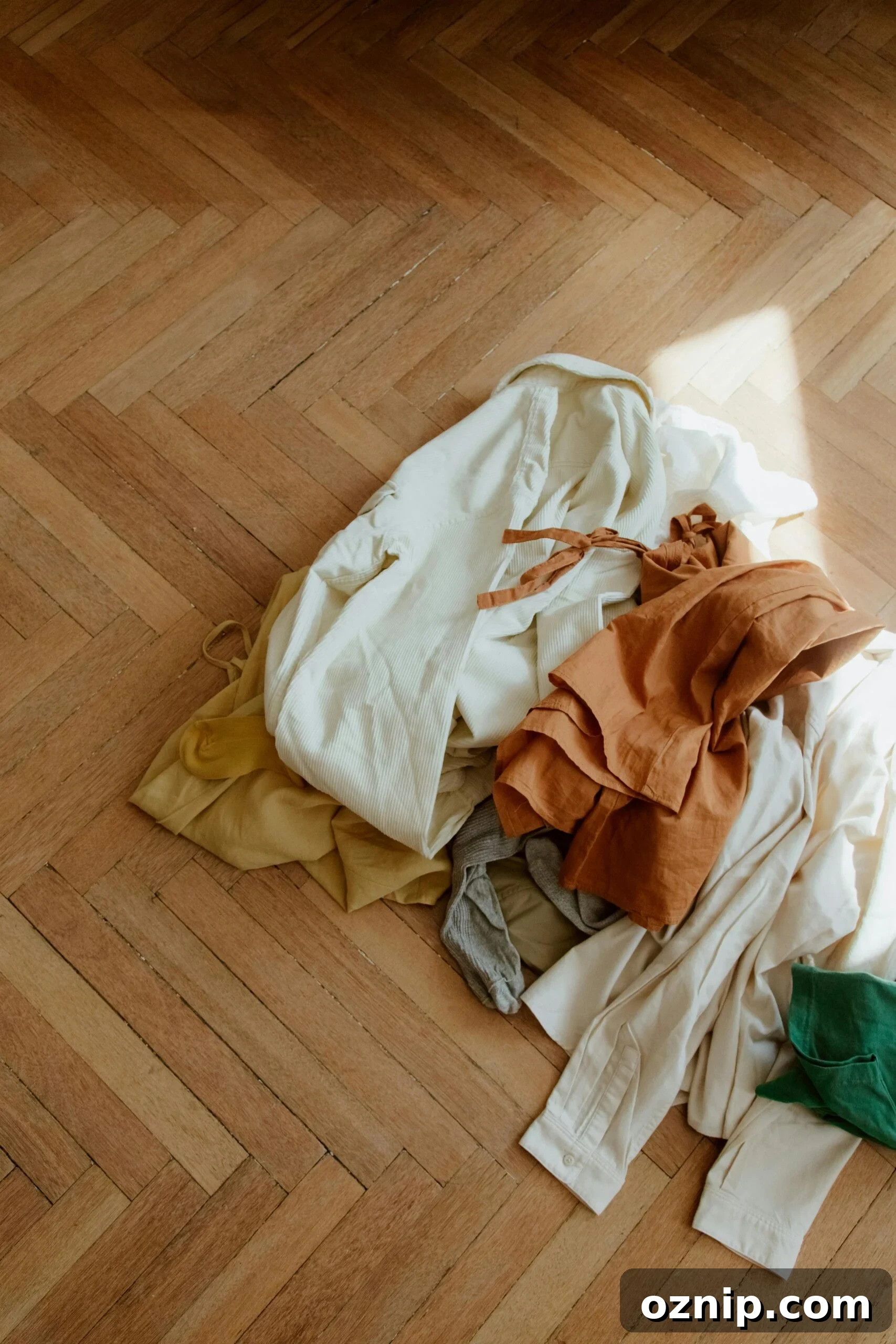
Do you find it difficult to let go of things you no longer use, even when they are taking up space in your home? The problem is often not the object itself. It is the decluttering mindset behind it. When you understand the thoughts and emotions that make letting go feel hard, decluttering becomes calmer, clearer, and much easier to manage.
Table of Contents
For nearly ten years, I kept a brand new Burberry wallet tucked away in a box in my closet.
It was a thoughtful gift from my husband, who bought it during a trip to Europe. The problem was simple: it was not my style. I could not imagine myself using it, but I also could not bring myself to let it go.
That wallet was not the only thing I held onto for longer than I needed to.
There were blazers and silk blouses from my San Francisco startup days. There were bags of worn-out clothing I did not know how to dispose of responsibly. There were items that no longer fit my life, my routines, or my home, yet they still felt strangely difficult to release.
Over time, I learned something important: the biggest obstacles to decluttering are rarely about the things themselves. More often, they are about the thoughts, guilt, fear, and identity we attach to those things.
Once I began recognizing those patterns, letting go became easier. The blazers and silk blouses were sold or donated. The worn-out clothing was sent for recycling. And after all those years, the wallet finally went to consignment.
After years of simplifying through moves, children, and different seasons of life, I have seen the same decluttering mindsets appear again and again. These are the thoughts that keep people stuck, even when they genuinely want a calmer, more organized home.
Here are seven common decluttering mindsets that make letting go harder, plus simple shifts that can help you move forward with more confidence.
#1: The “What If I Need It Someday?” Mindset
This mindset often appears when you pick up something you have not used in years. You start to wonder: What if I need this later? What if I regret getting rid of it? What if it turns out to be useful someday?
At first, this can sound practical. But in many cases, it is not true practicality. It is fear dressed up as preparation.
Why this mindset forms
Most of us dislike the feeling of losing something more than we enjoy the feeling of gaining something. Because of that, our brains often encourage us to hold on, even when an item is not serving us.
This is closely connected to a scarcity mindset: the belief that there may not be enough later, so we should keep everything just in case. This instinct can feel especially strong if you grew up with limited resources, were taught never to waste anything, or have lived through times when money felt tight.
Sometimes you may let something go and later wish you still had it. But in most decluttering experiences, that happens far less often than people expect. The daily cost of keeping too much is usually greater than the occasional inconvenience of replacing something.
A simple shift
Every item you keep has a cost: space, time, energy, attention, and mental load.
Instead of asking, “What if I need this?” try asking, “What is this costing me to keep?” You can also ask, “In what specific situation would I realistically use this, and how likely is that situation?”
For many just-in-case items, the burden of keeping them is higher than the risk of needing them later.
Try this:
- Use the 20/20 rule: If you could replace the item in under 20 minutes for under $20, it may be safe to let go. You might also be able to borrow it or find it secondhand if the need ever comes up.
- Change the question: Instead of “What if I need it?” ask, “What is this costing me to keep?”
#2: The “But I Paid So Much for It” Mindset
Maybe it is exercise equipment you used twice, a dress you bought for an event that never happened, or a kitchen gadget that did not live up to its promise. The moment you see it, you remember the price.
You are not using it, but letting it go feels like wasting money.
Why this mindset forms
This pattern is often called the sunk cost fallacy. It is the tendency to keep investing in something because of what you have already spent, even when keeping it no longer benefits you.
Holding onto the item will not bring the money back. It will not make the purchase more useful. But letting go can feel like admitting you made a mistake, and the more expensive the item was, the harder that can feel.
A simple shift
The money has already been spent whether the item stays in your home or not. If you are not using it, it has little practical value to you now. But it may still be costing you storage space, guilt, and energy.
When you let it go, you stop paying for it emotionally and physically.
Try this:
- Sell or consign it: If the item still has financial value, choose a realistic selling option and set a deadline. A box waiting in the garage for months is still clutter.
- Ask yourself if you would buy it again today. If the answer is no, it is probably time to release it.
#3: The “It Holds Too Many Memories” Mindset
This mindset usually appears with sentimental items: things connected to people you love, meaningful moments, special trips, or seasons of life you do not want to forget.
Why this mindset forms
We often attach memories to physical objects because objects are easier to hold than feelings. A sweater, a letter, a toy, or a piece of jewelry can begin to feel like proof that a person or moment mattered.
This can be especially true during grief, change, or loss. Letting go of the item may feel like letting go of the memory itself.
A simple shift
There is nothing wrong with keeping meaningful things. The goal of decluttering is not to remove everything sentimental from your home. The goal is to keep the items that truly honor your memories, rather than storing boxes of things you rarely look at.
Often, one carefully chosen keepsake can hold more meaning than an entire collection packed away and forgotten.
Try this:
- Ask whether a photo or journal entry could preserve the memory just as well.
- If the item is part of a larger group, keep one meaningful piece instead of the entire collection.
- Consider how you will use or display it. If it will stay hidden indefinitely, it may not be serving the memory in the way you hoped.
#4: The “Someone Special Gave It to Me” Mindset
This mindset often comes up with gifts, inherited furniture, family keepsakes, or items you never would have chosen for yourself but feel obligated to keep.
Why this mindset forms
Gifts carry emotional weight. When someone gives you something, the message underneath is usually, “I thought of you.” That message can make the object feel more important than it actually is in your daily life.
Letting go of a gift can feel like rejecting the person who gave it, even when they would never want you to feel burdened by it.
A simple shift
The purpose of a gift is to make you feel seen, loved, or cared for. If it did that when you received it, it has already fulfilled its purpose.
You can appreciate the giver without keeping every item. Most people who love you would want your home to feel peaceful, not crowded with things you keep out of guilt.
Try this:
- Pass it on to someone who will use and enjoy it. If it has value, consider selling or consigning it. If it helps, take a photo before letting it go.
- Remember that love is not stored in objects. You can honor someone without keeping everything they gave you.
#5: The “I Don’t Want It to End Up in a Landfill” Mindset
You care about waste and want to make responsible choices. So instead of letting something go, you wait until you can find the perfect place to donate, recycle, or rehome it.
Wanting to be thoughtful is a good thing. But waiting for the perfect solution can keep you from taking action at all.
Why this mindset forms
It is uncomfortable to think about waste, and some discomfort is healthy. It can help us become more intentional about what we buy and what we keep.
But perfection can become a trap. You may tell yourself you will deal with the item later, when you have more time or find the ideal option. Often, later never comes, and the clutter stays.
A simple shift
Done is better than perfect when you are trying to rehome things you no longer need. Donating, passing items to a friend, offering them for free, or recycling when possible is usually better than keeping them unused in your home.
The most powerful way to reduce waste is to become more careful about what you bring into your home in the first place.
Try this:
- Remind yourself that an unused item sitting in your home is not helping anyone. Give yourself a short deadline to donate, pass on, recycle, or responsibly dispose of it.
- Look for local recycling options for items that are difficult to donate, such as damaged textiles or broken toys.
- Keep a small dedicated bag or bin for items that need special handling, so you can deal with them together instead of making the same decision repeatedly.
#6: The “I Don’t Know Where to Start” Mindset
You look around the room and feel overwhelmed. Every pile seems important. Every drawer needs attention. Every item requires a decision. So you delay starting, and the clutter remains exactly where it is.
Why this mindset forms
This mindset is not about one item. It is about the entire experience of decluttering.
When clutter builds up over time, the number of decisions can feel paralyzing. Your brain sees too much at once and chooses avoidance because it feels easier than beginning.
If your energy is already low, or if guilt, fear, or sentimental attachment are also involved, decluttering can feel even harder.
A simple shift
You do not need a plan for the entire house. You only need a plan for the next ten or fifteen minutes.
Action reduces overwhelm. Starting with one small area creates momentum, and momentum makes the next decision easier. The goal is not to finish everything at once. The goal is simply to begin.
Try this:
- Set a timer for 10 to 15 minutes and choose one small area, such as a drawer, shelf, countertop, or basket.
- Start with easy decisions first, such as expired products, obvious trash, duplicates, or things you already know you do not want.
- Connect decluttering to an existing routine, such as clearing one surface while dinner cooks or spending five minutes resetting a room before bed.
#7: The “I Might Be That Person Again Someday” Mindset
This mindset often appears with clothing from a past lifestyle, hobby supplies you have not touched in years, or equipment for activities you keep meaning to return to.
You are not using these things now, but letting them go can feel like closing a door.
Why this mindset forms
Our belongings often become tied to identity. They remind us who we were, who we wanted to be, or who we hope to become again.
Because of that, letting go can feel like giving up on a version of yourself. This can be especially difficult during life transitions, when your identity may already feel uncertain.
A simple shift:
Keeping an aspiration in a closet is not the same as living it. Your home should support the life you are actually living now, not function as storage for every past or possible version of yourself.
If you truly want to return to a hobby, activity, or style, you can make that choice intentionally. You do not need to keep every object connected to it just in case.
Try this:
- Ask yourself: “If I did not already own this, would I bring it into my home today?”
- Be specific: Name the next realistic time you will use it. If you cannot, it may be time to let it go.
- Remind yourself that letting go is not failure. It simply means the item does not need to take up space in your current life.
A Simple Place to Start
Most people recognize themselves in at least two or three of these decluttering mindsets. You may struggle with just-in-case items, expensive mistakes, sentimental belongings, inherited gifts, or the feeling that you do not know where to begin.
The good news is that you do not have to solve every mindset before you start decluttering. You only need to notice what is happening in the moment.
Choose one item you have been stuck on. Pick it up, pause, and ask yourself what is making it hard to let go. Is it guilt? Fear? Sentiment? Money? Identity? Once you name the thought, it becomes easier to challenge it.
Decluttering is not about forcing yourself to get rid of everything. It is about making thoughtful choices so your home supports your real life. When your mindset shifts, letting go often feels less like loss and more like relief.
Ready for a Calmer, Easier-to-Manage Home?
Declutter coaching can help you simplify your belongings, create easier systems, and make your home feel calmer and more manageable.