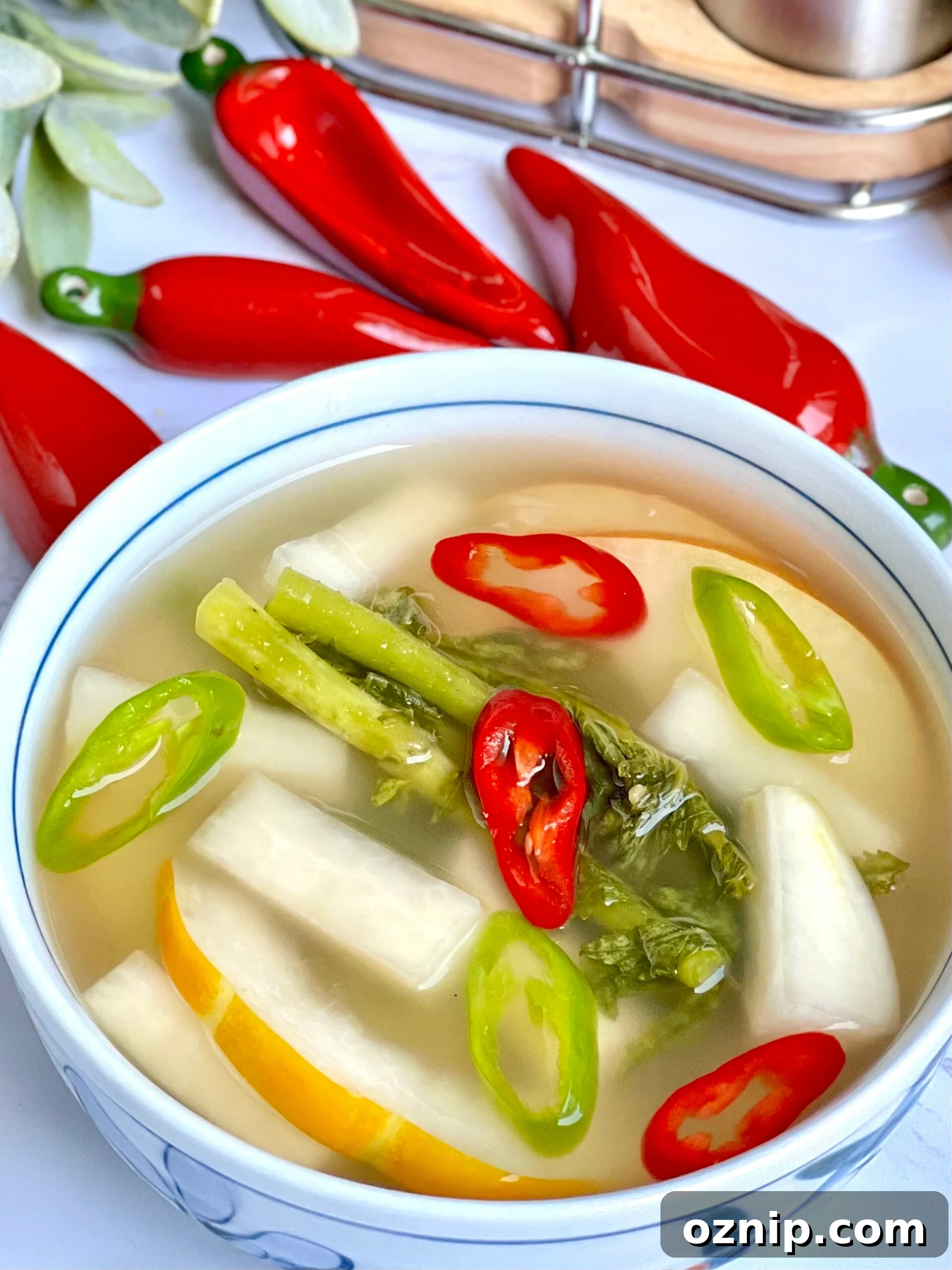
As part of a Korean summer dishes series, here is a fresh, quick version of dongchimi. Traditional dongchimi is a winter kimchi that ferments slowly, but this simplified summer recipe creates a bright, drinkable brine in just a couple of days. I make this lighter version because I often use the brine for other summer dishes like naengmyeon.
Dongchimi is a non-spicy water kimchi: tangy, mildly sweet, and extremely refreshing. It was my favorite kimchi as a child. My favorite pieces are the mu-chung — the radish greens — though many people prefer the radish root (mu). Both are delicious in their own way.
The brine is the star here. Chilled and icy, it’s wonderful to sip on its own. In Korea, dongchimi often appears as anju (bar food), and many people enjoy a spoonful of the brine alongside soju. Beyond drinking it, you can make dishes like dongchimi guksu (cold noodle soup) or use the brine as the base for traditional naengmyeon broth.
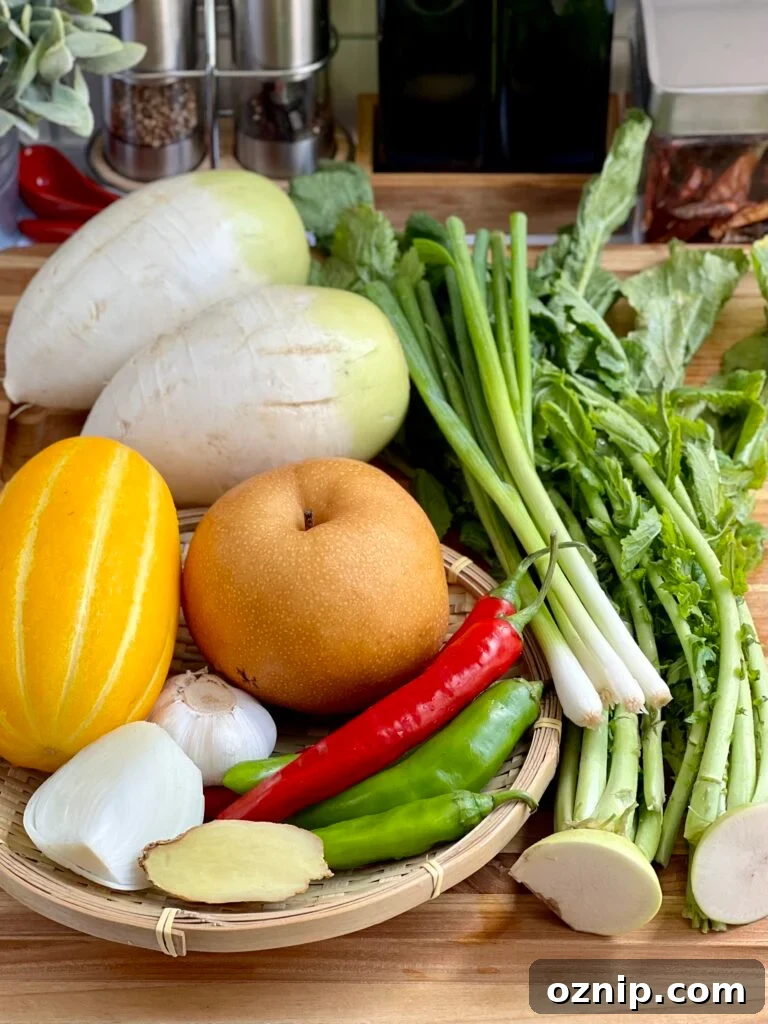
Ingredients:
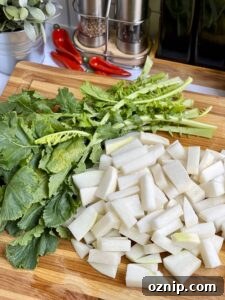
- Korean radish: Young winter radish is traditional, but regular radish works well in summer.
- Radish greens: Optional but highly recommended — they add flavor and nutrients and are a highlight in dongchimi.
- Korean sea salt: Best for fermenting. Coarse sea salt is an acceptable substitute if needed.
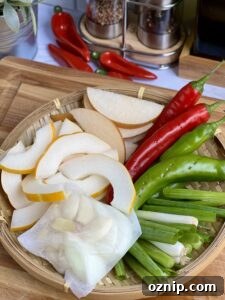
- Fruit: Asian pear is the classic choice for subtle sweetness. Korean melon (chamoe) is an excellent summer addition when in season, adding extra sweetness and depth to the brine.
- Peppers: Optional. Use mild Korean green peppers for little heat; red peppers add a touch of spice but the overall result is still mild.
- Aromatics: Smashed garlic, onion, fresh ginger, and green onions.
- Brine: One sheet of dried kelp soaked in water, plus plum syrup (maesil) and Korean sea salt. If you don’t have plum syrup, you can substitute a small amount of sugar to taste.
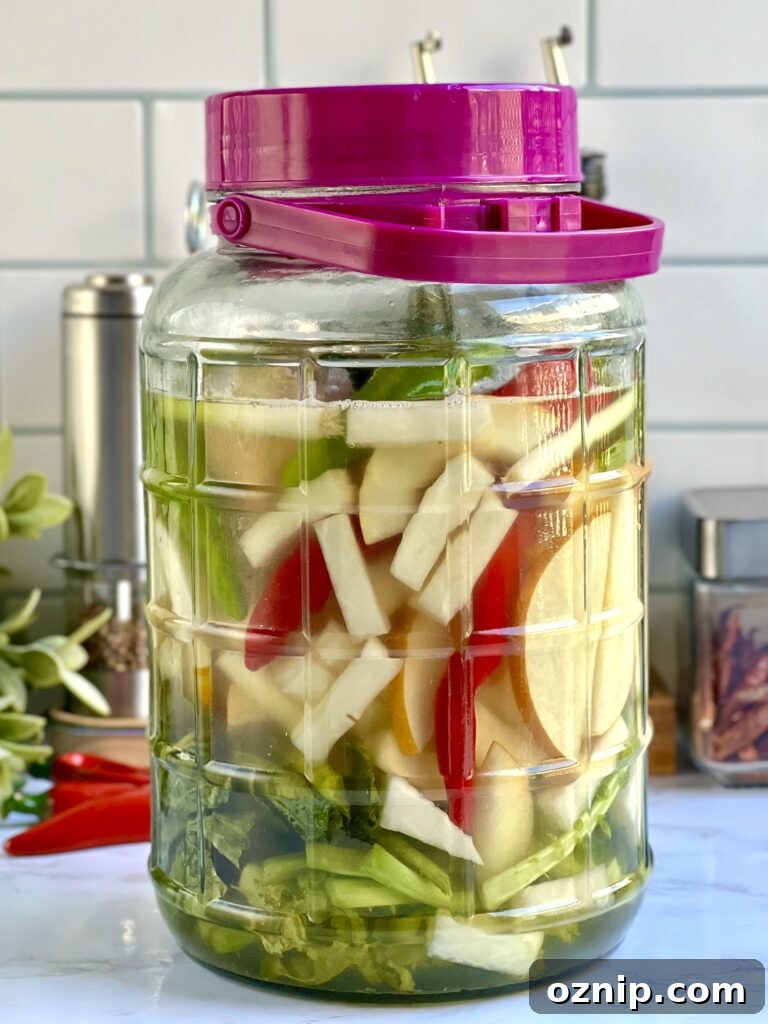
Fermentation Process
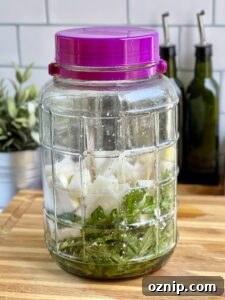
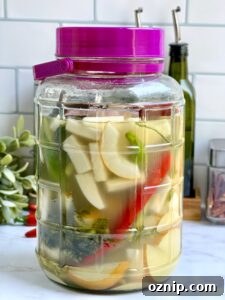
Place the filled jar on the counter at room temperature for 1–2 days, depending on how sour you like it. On day one you’ll start to see bubbles, and by day two there will be more active bubbling and a noticeable sour aroma. This indicates fermentation is underway.
I usually let mine ferment at room temperature for at least a couple of days. After that, transfer the jar to the refrigerator, where fermentation continues much more slowly. The flavor will develop further over time in the fridge.
Storage
Store dongchimi in the refrigerator for up to two months. It will keep fermenting slowly while chilled.
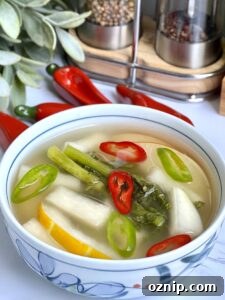
If the brine tastes too salty for your preference, simply add cold water to dilute it until you reach a flavor you like. To serve, slice the chilies, add a few ice cubes to the brine, and enjoy it very cold. If you used melon, try a piece — it’s an uncommon but delightful addition that adds sweetness and complexity.
Please note: some product recommendations in other versions of this post were affiliate links; they are not included here.
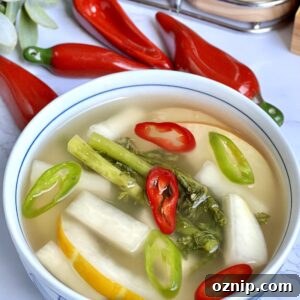
Dongchimi (Radish Water Kimchi)
By: Stella Navarro-Kim
Prep: 2 hrs 30 mins (including softening time) — Servings: 1 gallon
Ingredients (recipe quantities)
- 2 lbs Korean radish, cut into bite-sized uniform pieces
- 1/2 lb radish tops (greens), optional
- 2 tbsp Korean sea salt (for salting the vegetables)
- 1/4 Asian pear, thinly sliced
- 1/2 Korean melon (chamoe), thinly sliced (optional)
- 1 sheet dried kelp
- 10 cups cold water
- 1/3 cup plum syrup (maesil) or substitute sugar to taste
- 3 tbsp Korean sea salt (for the brine)
- 6 garlic cloves, smashed
- 1 tbsp fresh ginger, roughly chopped
- 1/4 onion
- 4 green onions, cut into 3-inch pieces
- 2 red chilies (optional)
- 2 Korean green chilies (optional)
Instructions
-
Wash the radish and greens thoroughly. Cut the radish into even, bite-sized pieces so they pickle uniformly.

-
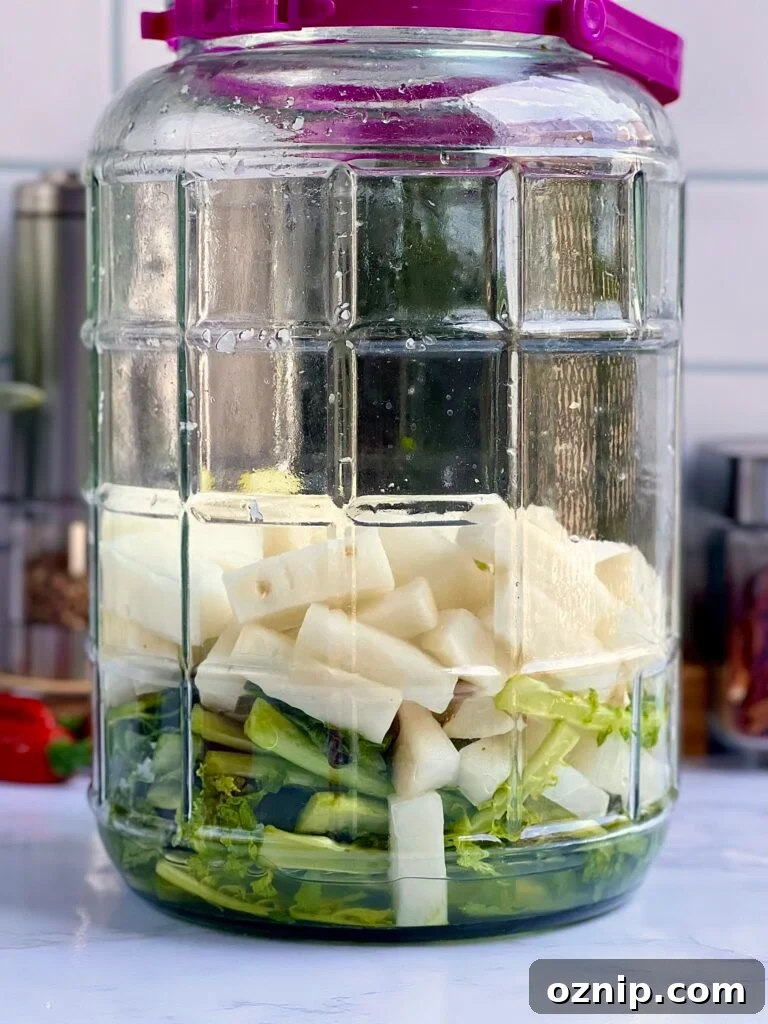
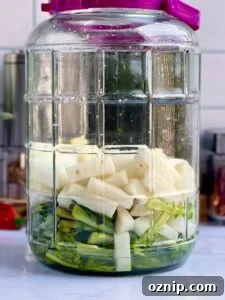
In a large glass jar, layer the greens on the bottom and the radish on top. Sprinkle 2 tablespoons of Korean sea salt over everything and shake or toss until well coated. Let sit on the counter for 1 hour to soften and draw out water.
-
Prepare the fruit and aromatics: halve the Korean melon, remove seeds, and slice thinly (peel if desired). Slice 1/4 Asian pear thinly. Poke a few holes in the chilies with a fork. Place garlic, ginger, and onion into a cheesecloth or herb bag. Trim green onions into 3-inch lengths.
-
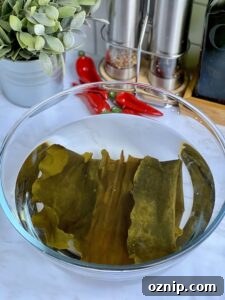
Soak the dried kelp in 10 cups of cold water for about 30 minutes.
-
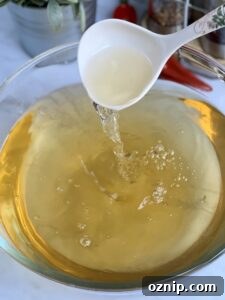
Remove the kelp (reserve it for another use if you like). Stir the plum syrup and 3 tablespoons of Korean sea salt into the kelp-soaked water until dissolved to make the brine.
-
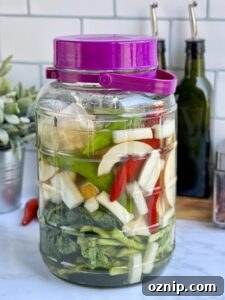
After the radish and greens have softened (about 1 hour), you’ll see a pool of liquid at the bottom — keep it, as it adds flavor. Add the chilies, melon, pear slices, the pouch of garlic/ginger/onion, green onions, and pour the prepared brine over everything until submerged.
-
Seal the jar and leave it at room temperature for 1–2 days, depending on your preferred sourness. Check for bubbling and a slightly darker, less translucent liquid — signs that fermentation is active.
-
Taste after a day; when it reaches your desired flavor, transfer to the refrigerator. Properly chilled, it will keep for up to two months.
-
To serve, slice the chilies, add ice if you want it extra cold, and enjoy the melon slices. The melon adds a pleasant sweetness and is an especially nice touch if you ever try a version from Busan or other coastal regions.
Nutrition information is approximate and calculated automatically in some tools; treat it as an estimate only.
Additional Info
- Author: Stella Navarro-Kim
- Course: Side Dish
- Cuisine: Korean
- Keyword: dongchimi, white radish kimchi