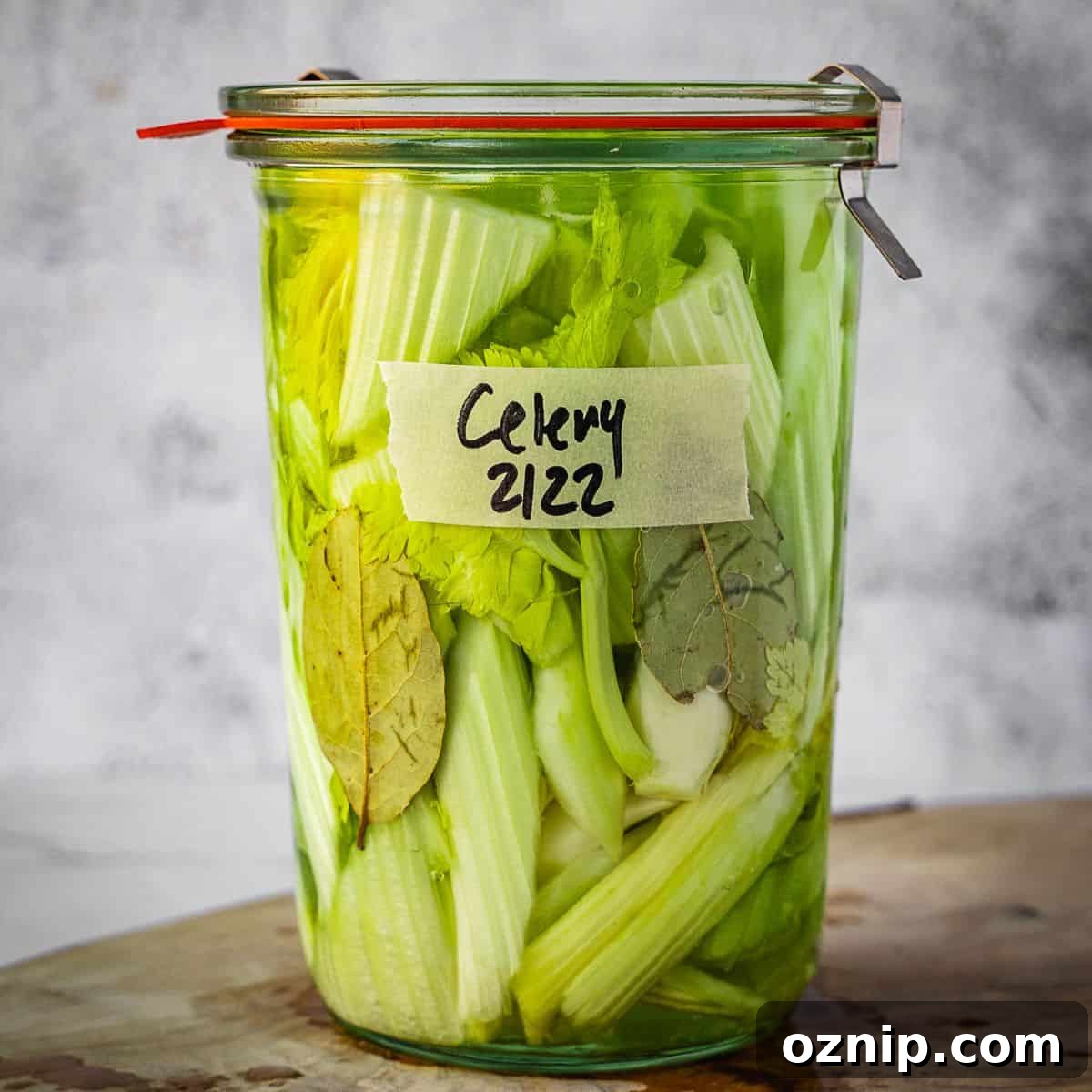
Fermented Celery is a bright, tangy way to turn ordinary celery into a flavorful, crunchy condiment. This guide covers everything you need to make a successful lacto-fermented celery jar—from ingredients and equipment to fermentation safety and storage. The recipe is straightforward and works well for beginners and experienced fermenters alike. With a few simple, fresh ingredients and some patience, you’ll have a tasty jar to enjoy on salads, sandwiches, or as a snack.
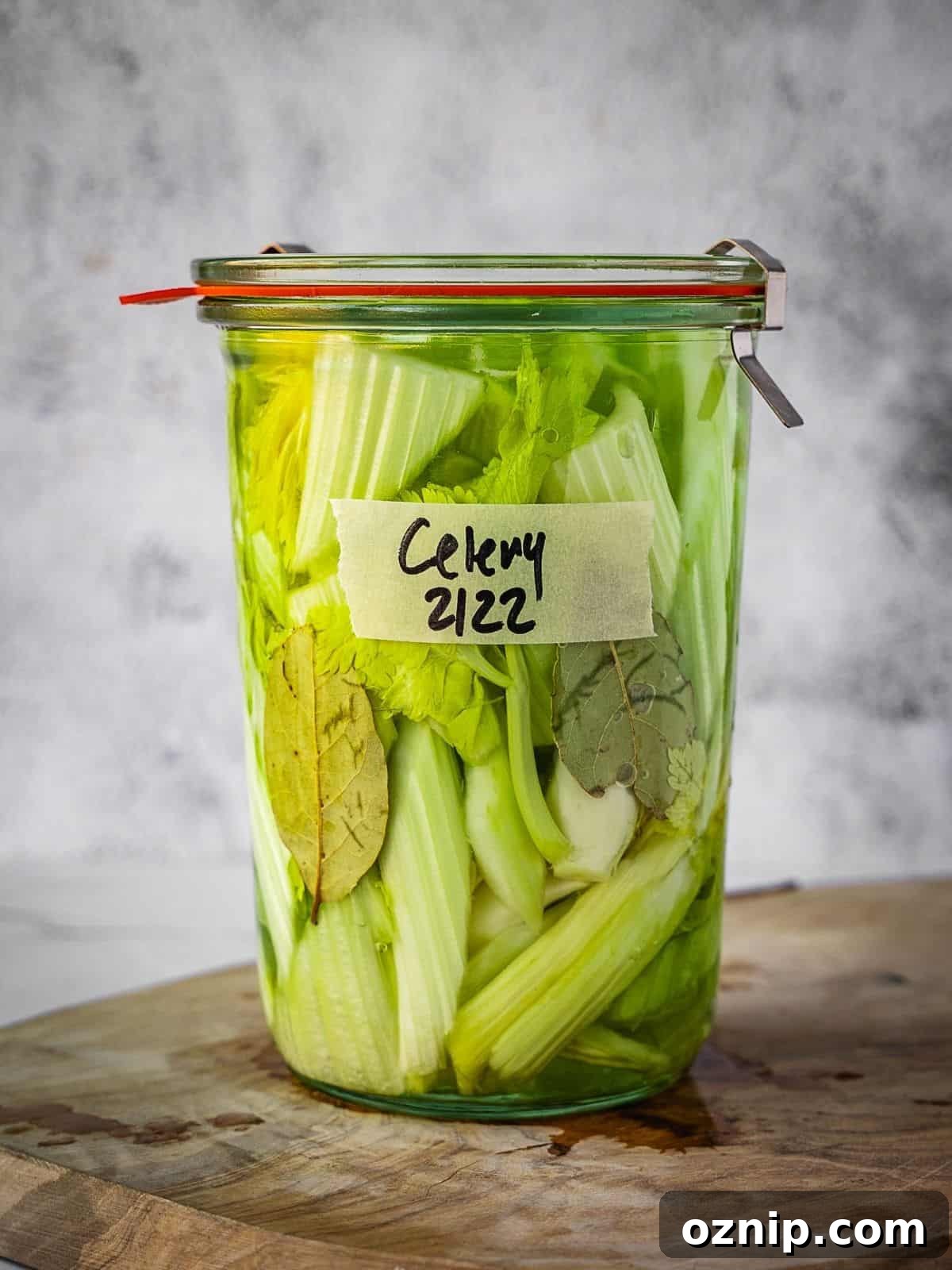
Table of Contents
- What is Lacto-Fermentation?
- Ingredients
- Salt and Water Ratio
- Equipment and Supplies
- How to Make Lacto Fermented Celery
- Fermentation Time, Safety and Storage
- Expert Tips
- Recipe FAQs
- Other Fermentation Recipes
- How to Make Fermented Celery (Easy and Delicious) Recipe
What is Lacto-Fermentation?
Lacto-fermentation, or lactic acid fermentation, is a time-honored preservation method that uses a saltwater brine to encourage beneficial bacteria to grow. Unlike vinegar pickling, which relies on acidic liquid to preserve, lacto-fermentation promotes lactic acid–producing microbes that naturally acidify the food, enhancing flavor and shelf life.
When done correctly, fermentation suppresses harmful bacteria and supports beneficial ones, producing probiotic-rich foods with a characteristic tang that differs from vinegar-based pickles. Many fermented foods—from kimchi to sauerkraut—share that lively, slightly fizzy acidity created by fermentation.
Fermented vegetables tend to be tangy rather than sharply sour. You may notice a subtle effervescence from carbon dioxide produced during fermentation; this is normal and indicates active microbial activity. If you are new to fermenting, reading a short primer on lacto-fermentation will boost confidence and ensure safe results.
Ingredients
Use the freshest, firmest celery you can find—this recipe showcases celery’s natural crunch and flavor. It’s ideal to make during peak celery season when stalks are crisp and aromatic.
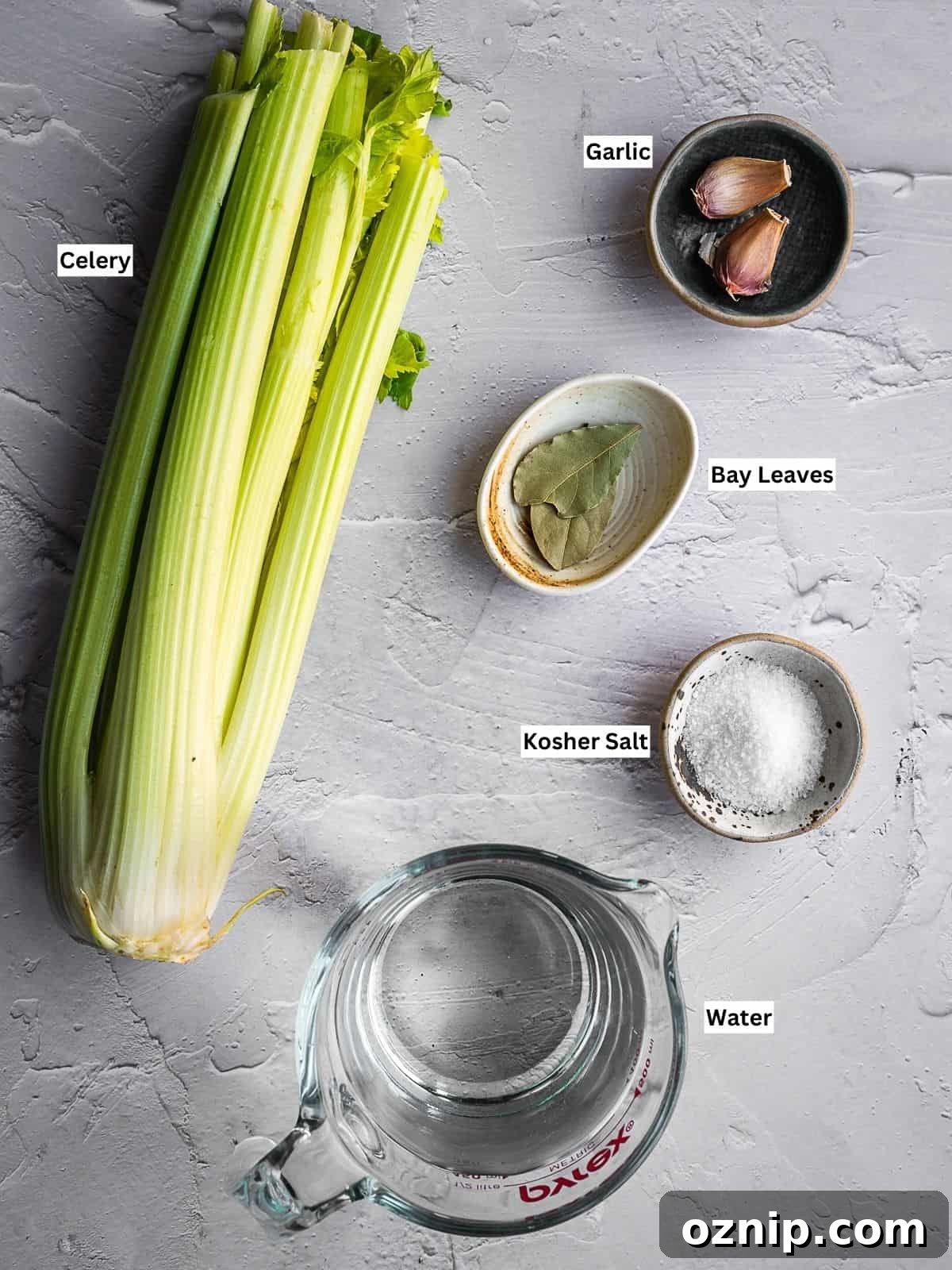
- Celery: Choose fresh, firm, blemish-free stalks. This recipe uses both stalks and inner leaves.
- Herbs and spices: Woody herbs work well. Bay leaf adds subtle flavor and tannins that help keep texture crisp. Other options include black peppercorns, pepper flakes, fresh dill, coriander seeds, or celery seed.
- Salt: Use kosher salt, pickling salt, or sea salt. Avoid iodized table salt, which can interfere with fermentation.
- Garlic: Optional but recommended if you like its flavor—use peeled cloves for each jar.
Quantities and full ingredient list are in the recipe card below.
Salt and Water Ratio
This recipe uses a saltwater brine to ferment the celery. Filtered or spring water is preferred over chlorinated tap water because chlorine can inhibit the fermentation microbes. Aim for a 3.5% salt solution: 3.5 grams of salt per 100 grams of water. A useful starting point is 1 tablespoon (about 17 g) of sea or kosher salt to 2 cups (about 475 g) of water, which yields roughly a 3.5% brine.
Equipment and Supplies
Recommended items:
- Wide-mouth mason jar (¾ quart / ~750 ml): makes packing and removing the ferment easy and fits many fermenting lids.
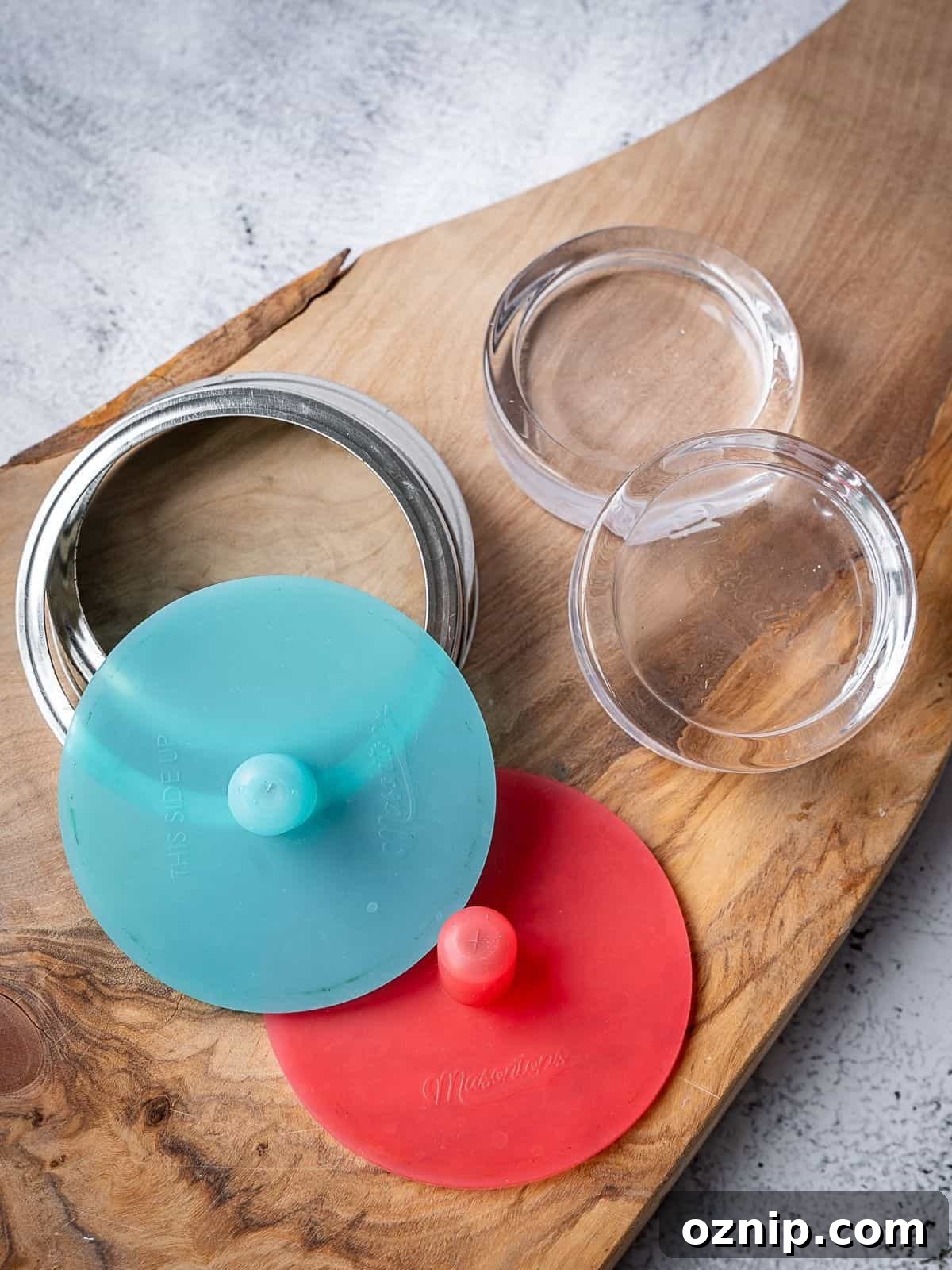
- Fermentation weight: a glass or ceramic weight keeps the celery submerged beneath the brine.
- Fermentation lid or airlock: not strictly required, but a lid that vents gas helps prevent spills and limits oxygen exposure.
- Regular canning lid: to store the finished ferment in the refrigerator.
Glass containers are preferred; avoid metal and most plastics. Cleanliness matters—wash jars and utensils in warm soapy water and air dry before use. Sterilizing by boiling is optional but gives extra assurance.
How to Make Lacto Fermented Celery
This is a simple, step-by-step process. Read through the steps before you start so everything is ready.
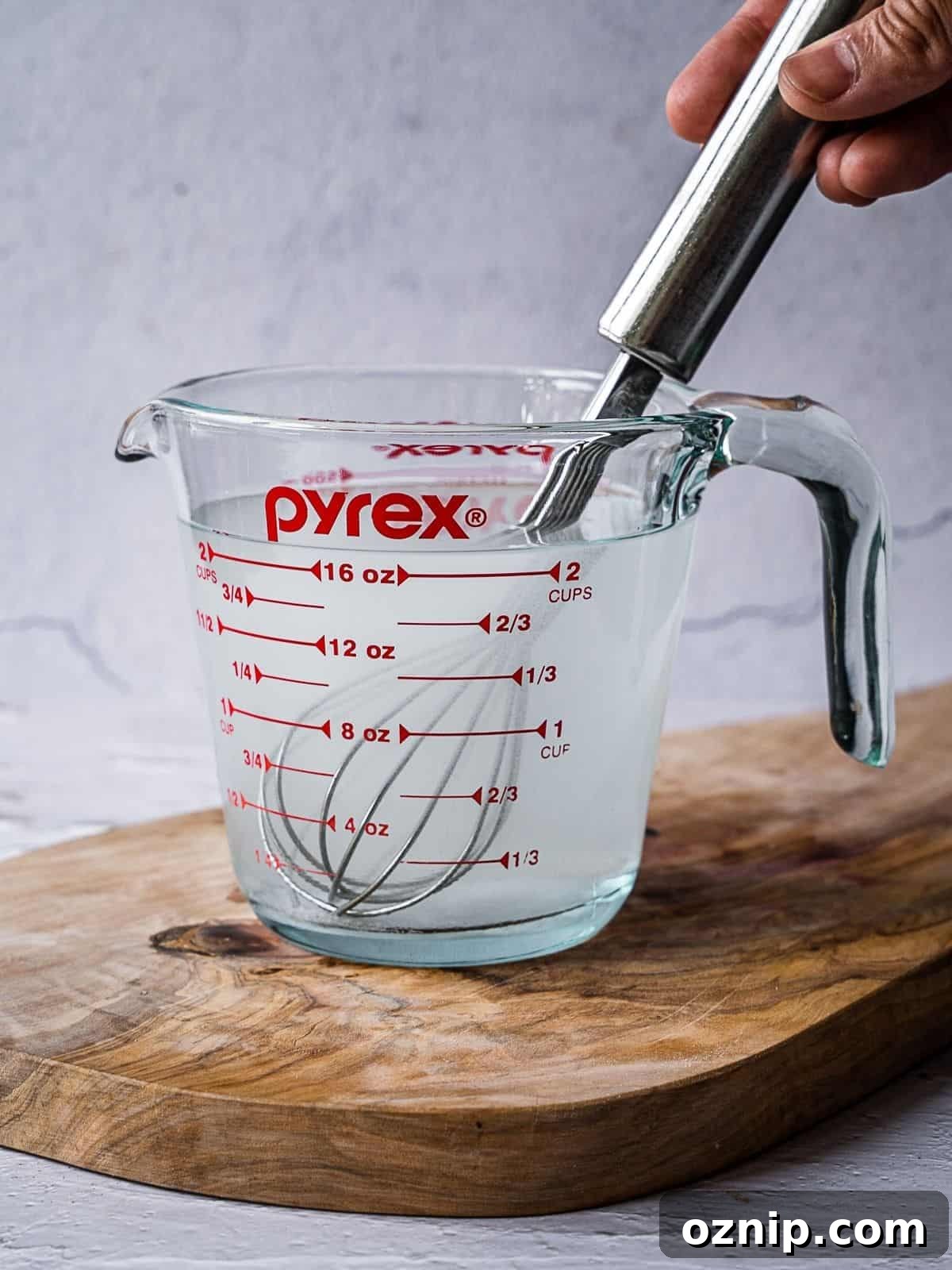
Step 1. Prepare the brine. In a measuring cup or jug, dissolve the salt in the water. Stir until fully dissolved.
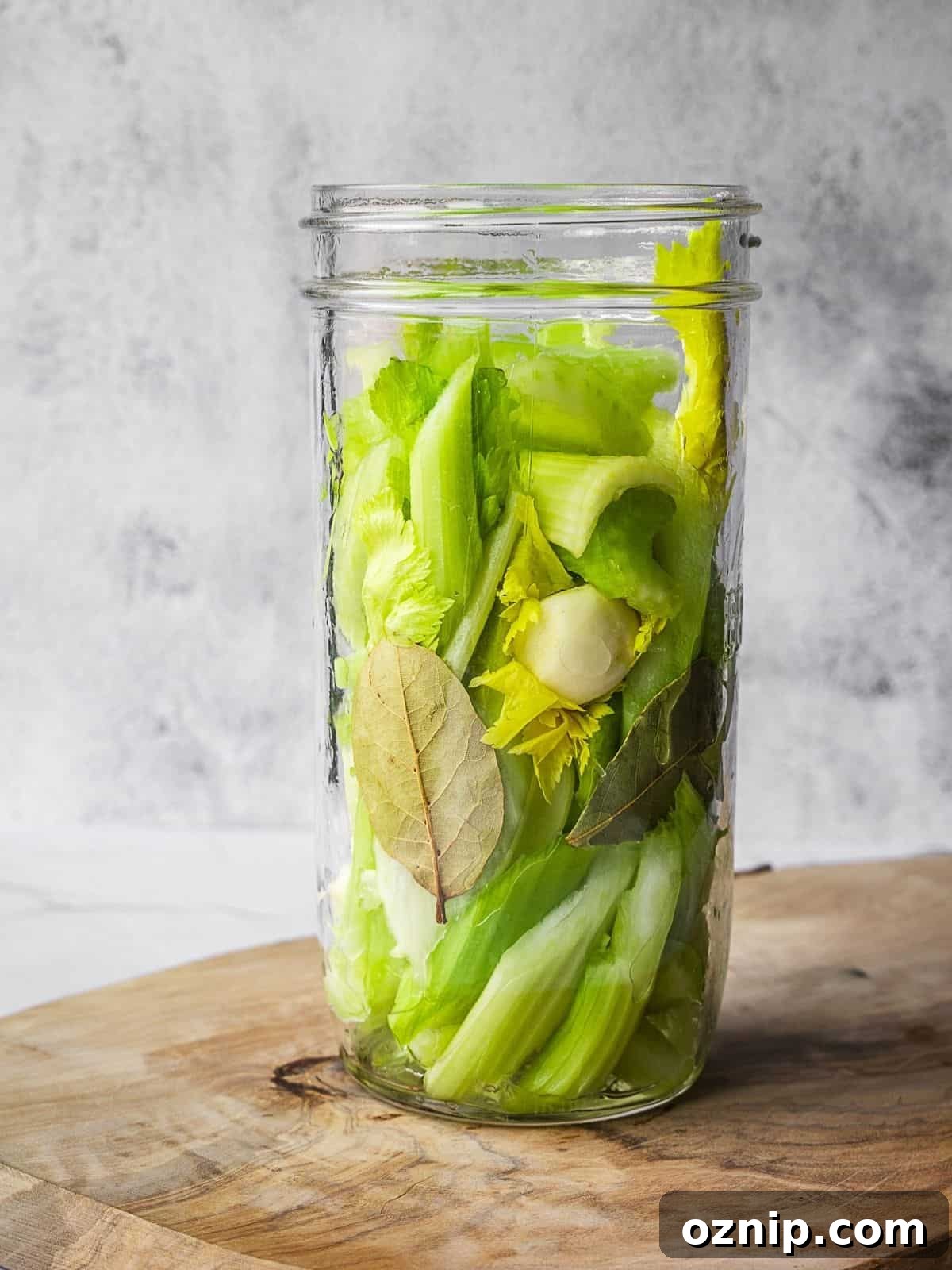
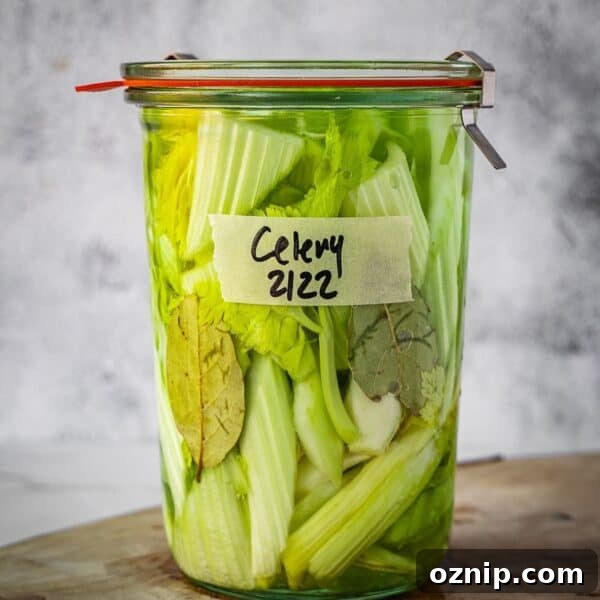
Step 2. Pack the jar. Place garlic cloves, chopped celery, and bay leaf into the mason jar. Pack tightly to minimize air pockets.
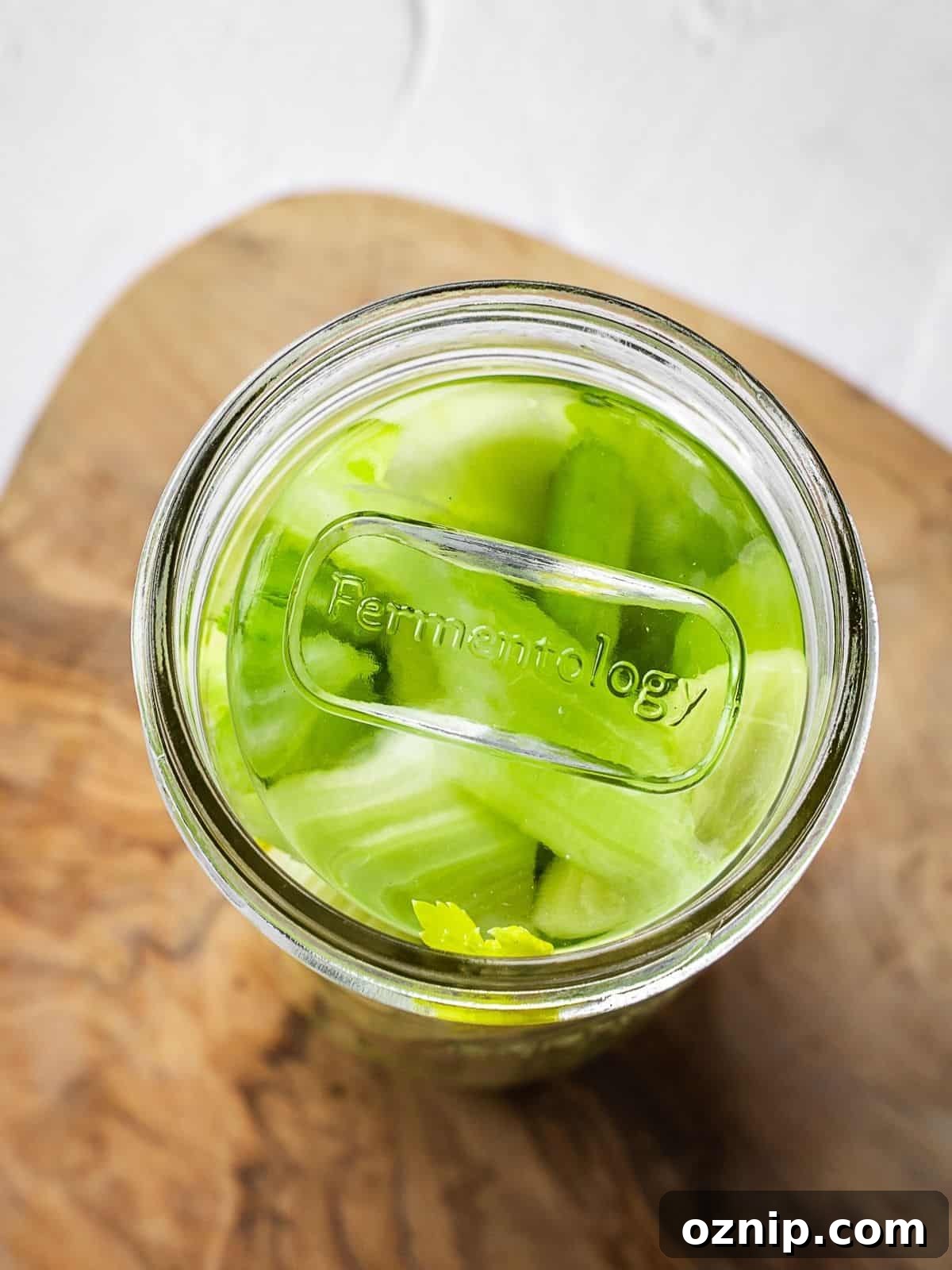
Step 3. Add the weight. Place the fermentation weight so the celery remains submerged. Ensure the weight stays below the jar rim.
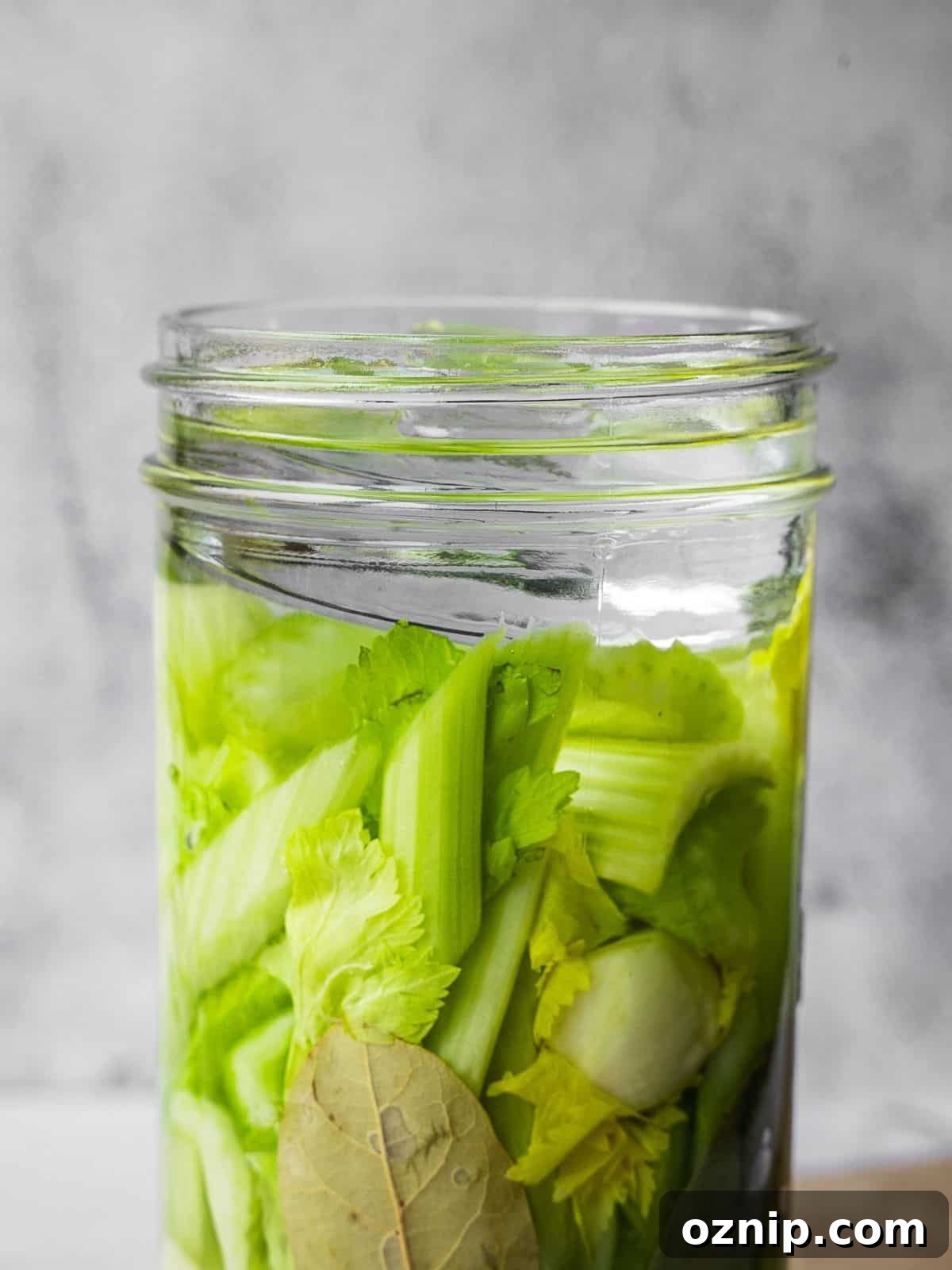
Step 4. Pour the brine. Carefully pour the brine into the jar so all the celery is submerged. Tap the jar gently to release trapped air bubbles.
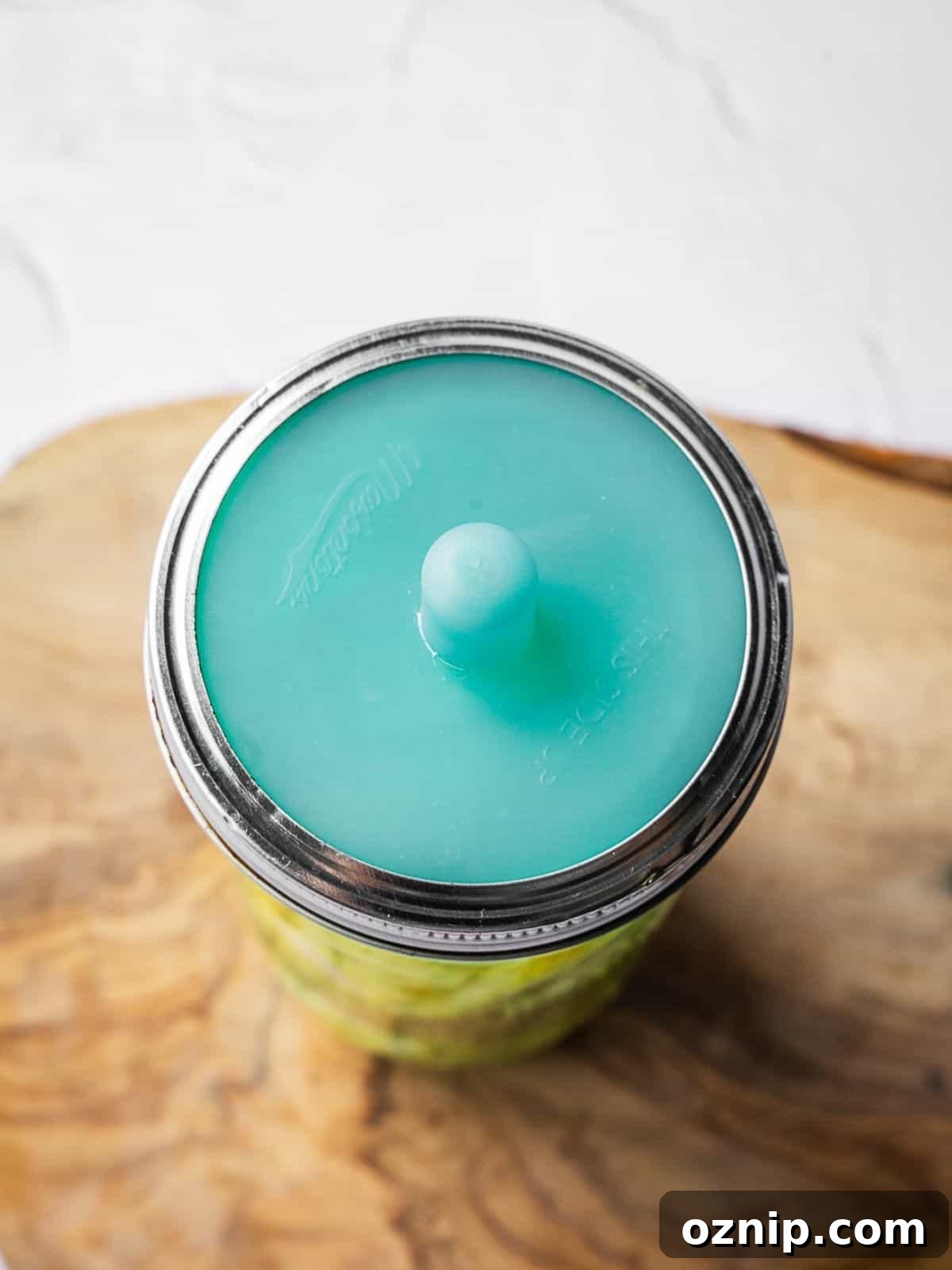
Step 5. Seal. Fit a fermentation lid or loosely screw a regular lid so gas can escape. If using a regular lid, open it briefly once or twice a day to release gas.
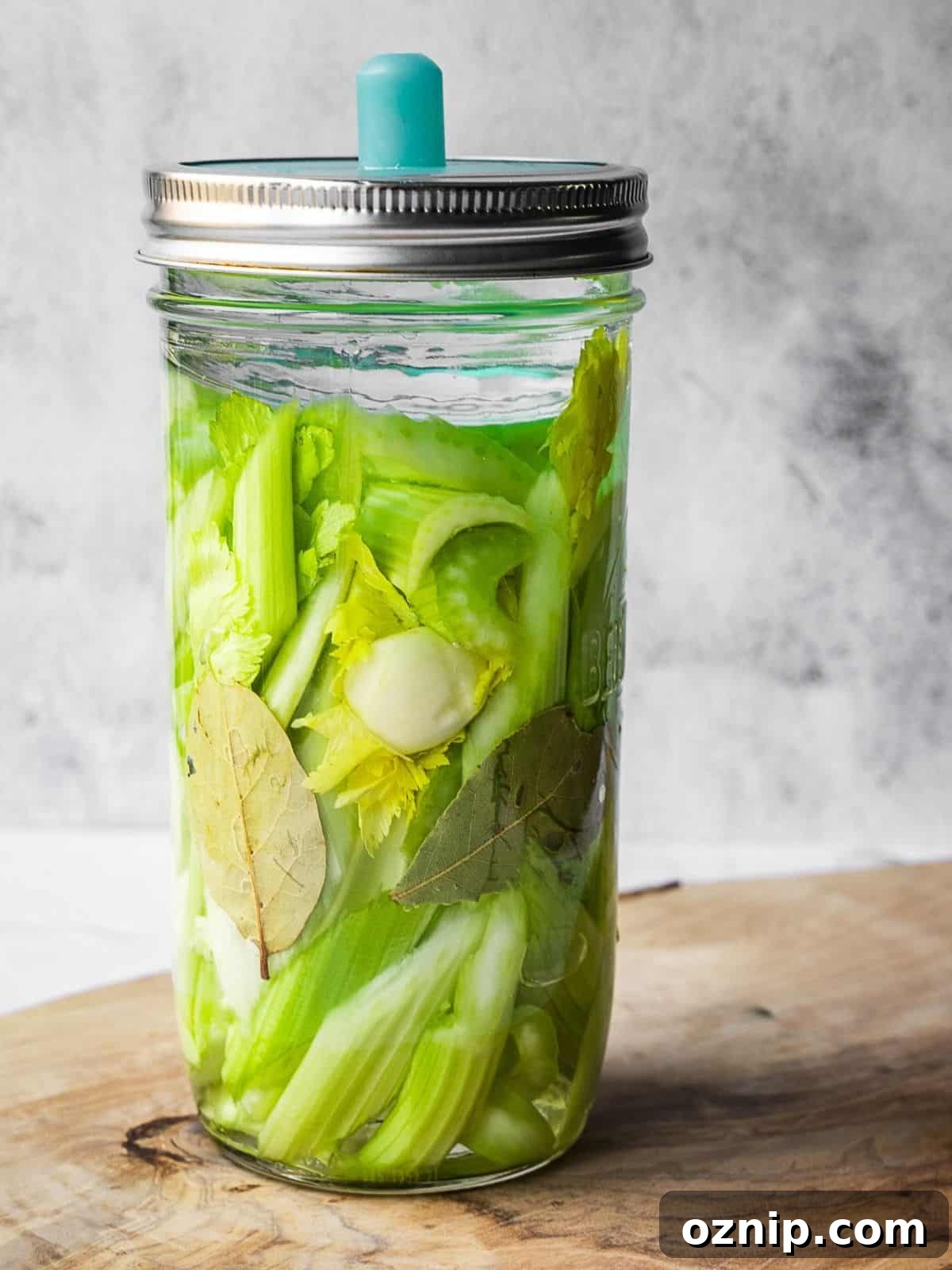
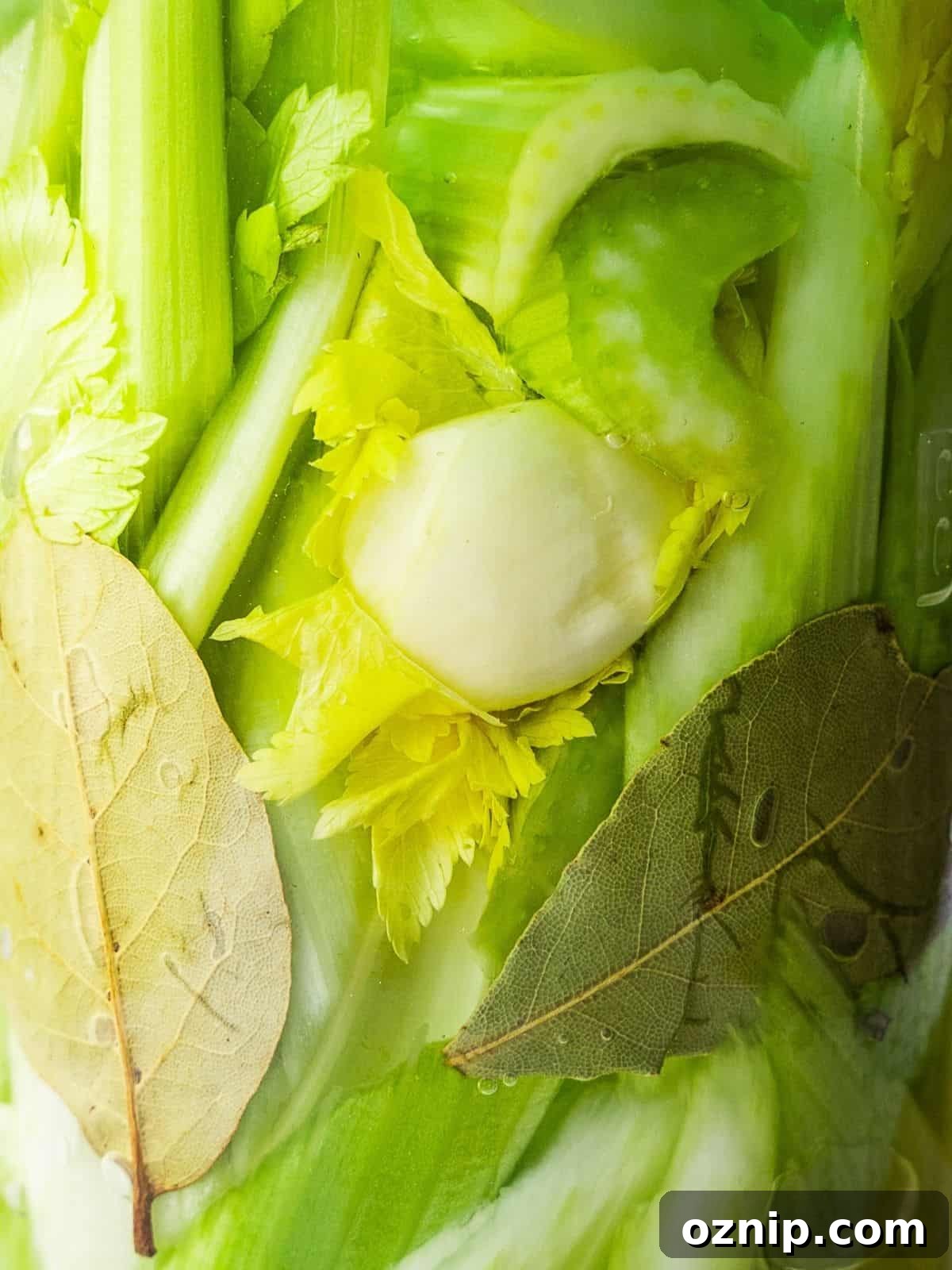
Step 6. Ferment. Leave the jar at room temperature away from direct sunlight for a minimum of 5 days. On day five, taste the celery. If you prefer a stronger tang, continue fermenting for several more days, up to about two weeks total. When the flavor is right, remove the weight and fermentation lid, seal with a regular lid, and refrigerate to slow fermentation.
Fermentation Time, Safety and Storage
Keep the ferment on the counter at typical room temperature—about 60°F to 75°F (15°C to 24°C). Fermentation pace depends on temperature and personal taste: warmer conditions speed it up, cooler ones slow it down. Expect the brine to become slightly cloudy; this is normal and usually indicates active fermentation.
Always trust your senses: if the aroma, color, or texture appears off, or if you detect strong unpleasant odors or fuzzy mold growth, discard the batch and start over. Once the desired acidity is reached, refrigerate the fermented celery. Chilled, it will keep for several months, though flavor and texture slowly evolve over time.
Expert Tips
- Customize freely. Add sliced onions, peppers, or other vegetables for variety. Coriander seed, black peppercorns, or fresh dill all complement celery.
- Keep things clean. Thoroughly wash jars and utensils before use. Sterilizing by boiling is optional but helpful.
- Mind the brine ratio. Maintaining the correct salt concentration is important for safe fermentation and consistent results.
- Scale as needed. This recipe adapts easily to larger or smaller jars; keep the brine percentage consistent.
- Use ideas. Fermented celery is excellent in salads, chicken salad, potato salad, egg salad, or as a crunchy snack.
Recipe FAQs
Cloudy brine is a common and normal sign of fermentation. Cloudiness often comes from microbial activity, yeast, or the breakdown of starches and proteins. Trust your senses: if the smell or appearance seems unpleasant or moldy, discard the batch.
Kahm yeast is a harmless, thin white film that can appear on the surface of fermented foods. While not dangerous, it may affect flavor or texture. If you spot kahm yeast, skim it off and ensure the ferment remains submerged beneath the brine.
Other Fermentation Recipes

15 Easy and Straightforward Fermentation Recipes

Fermented Passion Fruit Habanero Hot Sauce
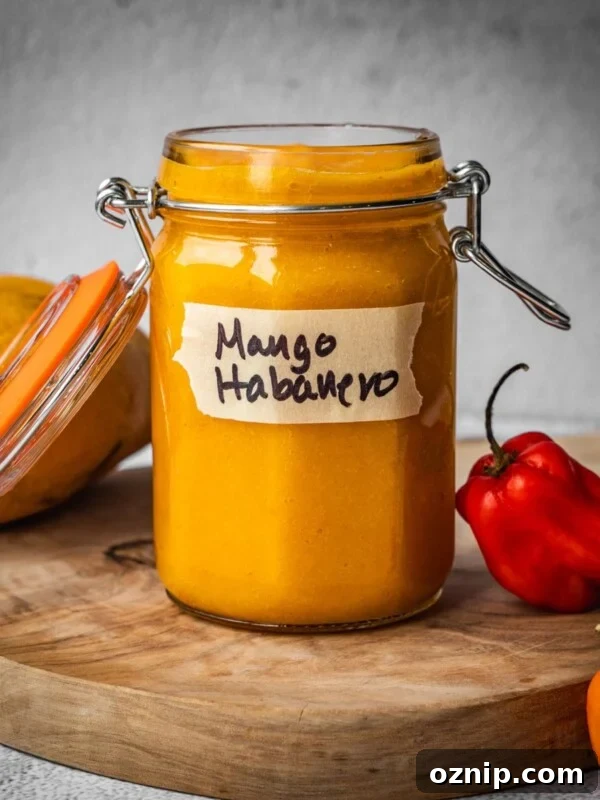
Fermented Mango Habanero Hot Sauce
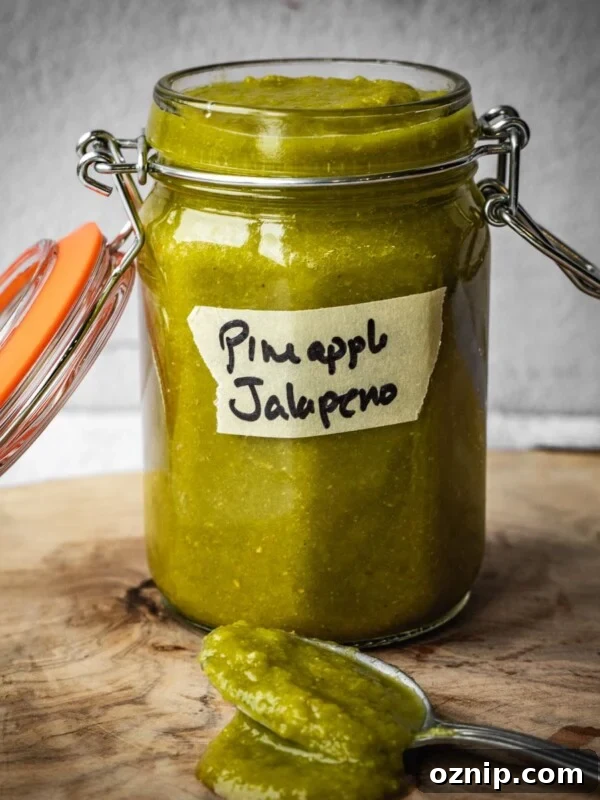
Fermented Pineapple Jalapeno Hot Sauce
How to Make Fermented Celery (Easy and Delicious)
Equipment
- ¾ quart mason jar (24 fl oz)
- Fermentation weight
- Fermentation lid or airlock
- Regular canning jar lid
Ingredients
- 2 cups fresh unchlorinated water
- 1 tbsp kosher salt, sea salt, or pickling salt
- ½ head of celery – cleaned, trimmed and cut into wedges or pieces
- 1–2 garlic cloves
- 1–2 bay leaves
Instructions
- Prepare the saltwater brine. In a jug, combine the water and salt. Stir until completely dissolved.
- Pack the jar. Add garlic cloves, chopped celery, and bay leaf. Pack tightly to reduce air pockets.
- Add the fermenting weight. Place the weight so the celery stays submerged and sits below the rim.
- Pour the brine. Carefully add brine to fully cover the celery. Tap the jar to remove air bubbles.
- Apply the fermentation lid. Fit a fermentation lid or loosely fit a regular lid to allow gas to escape.
- Ferment. Leave the jar at room temperature away from direct sunlight for at least 5 days. Taste on day 5 and continue fermenting if you want a stronger tang (up to two weeks). When done, replace the fermentation lid with a regular lid and refrigerate.
Notes
Refer to the images above for visual guidance. Important ingredient reminders:
- Celery: Use fresh, firm stalks. You can include inner leaves.
- Herbs and spices: Woody herbs like bay leaf help preserve crunch; try coriander, peppercorns, or sliced onion as additions.
- Salt: Use pickling, kosher, or sea salt. Avoid iodized table salt.
- Garlic: Optional; add according to taste.
Fermentation is a careful balance of salt, water, and sanitation. Pay attention to the salt-water ratio and your environment. If you’re new to fermenting, read a short lacto-fermentation primer and the safety notes above before starting.
Nutrition
Nutrition information is an approximation.
 Like this recipe? Try it, tweak it, and share your experience in the comments.