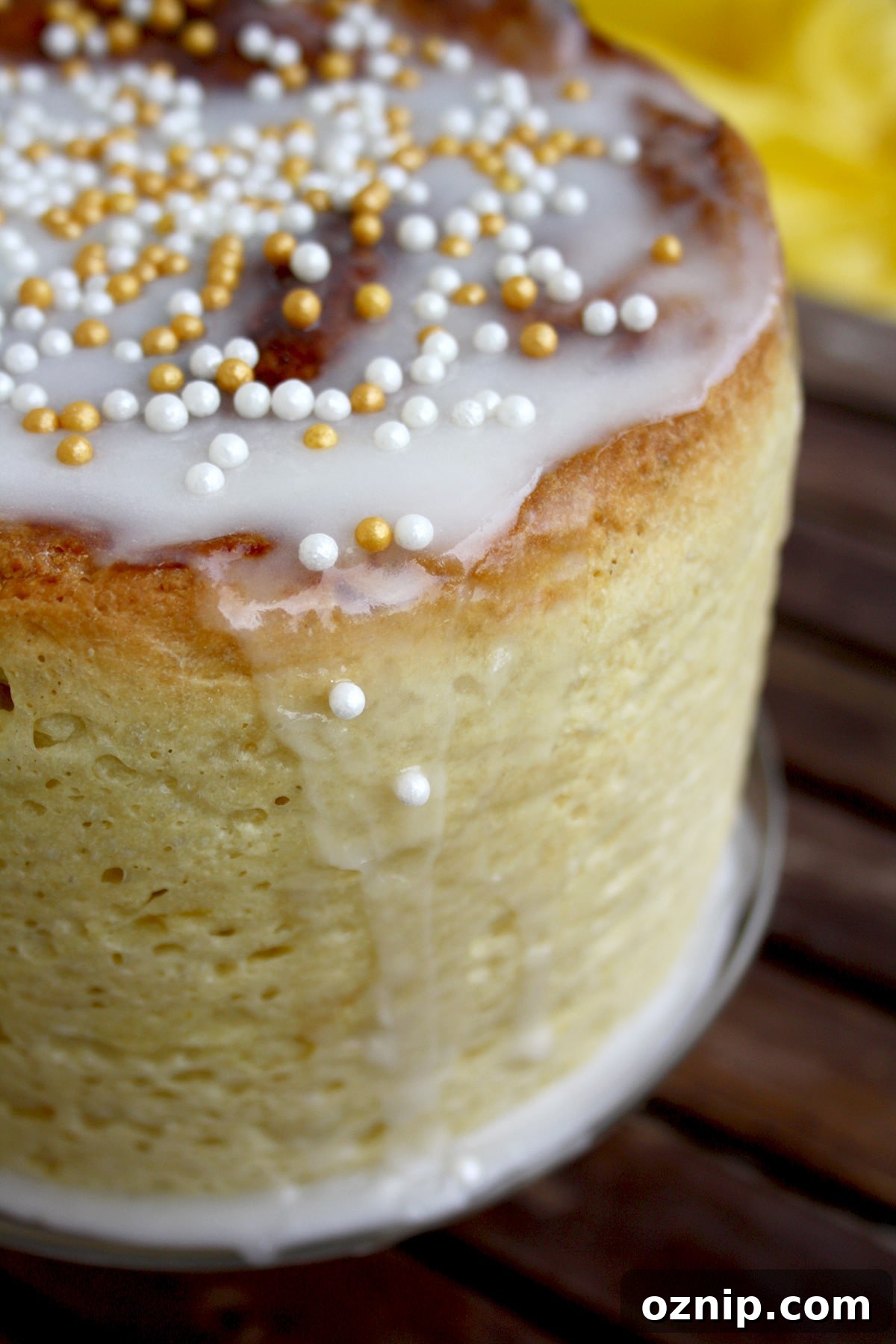
Russian Kulich (sweet Easter bread) is fluffy, fragrant, soft and aromatic. This version is a bit healthier and takes less time than the traditional recipe. It stays fresh for up to ten days when stored properly.
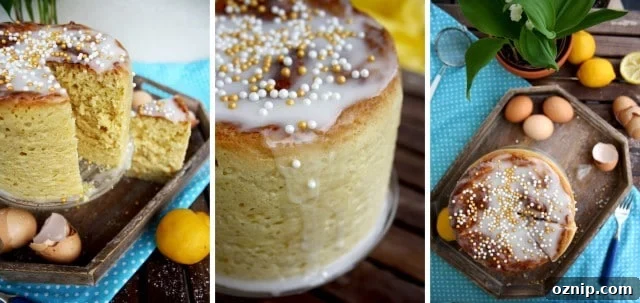
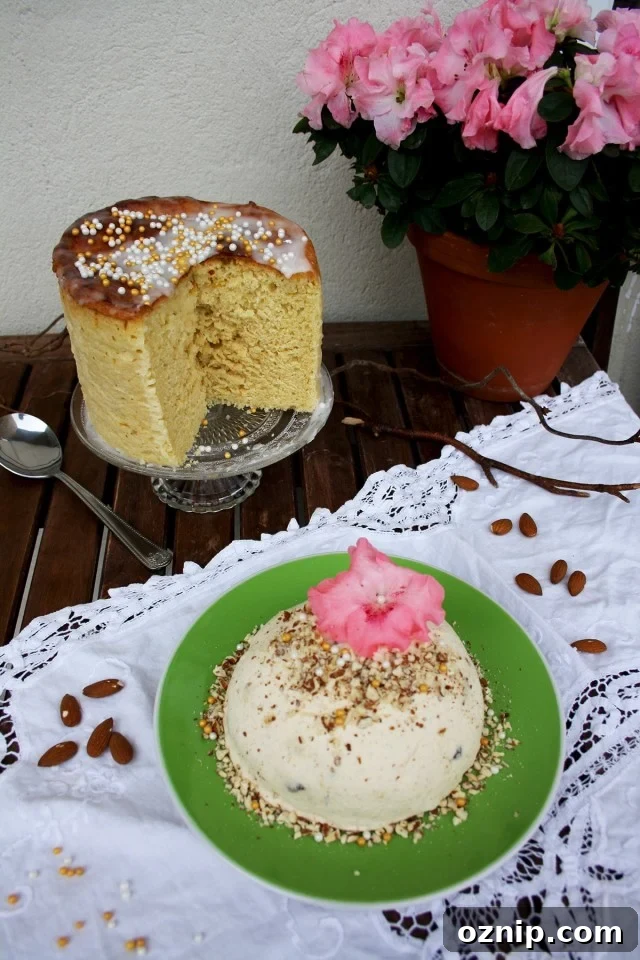
Kulich is a classic part of the Russian Easter table, served alongside naturally dyed eggs and creamy vanilla Paskha. This year I made a simplified version of the traditional kulich that keeps the same tall, cylindrical shape and tender crumb, but requires less hands-on time and uses a few healthier swaps.

Kulich: tradition and taste
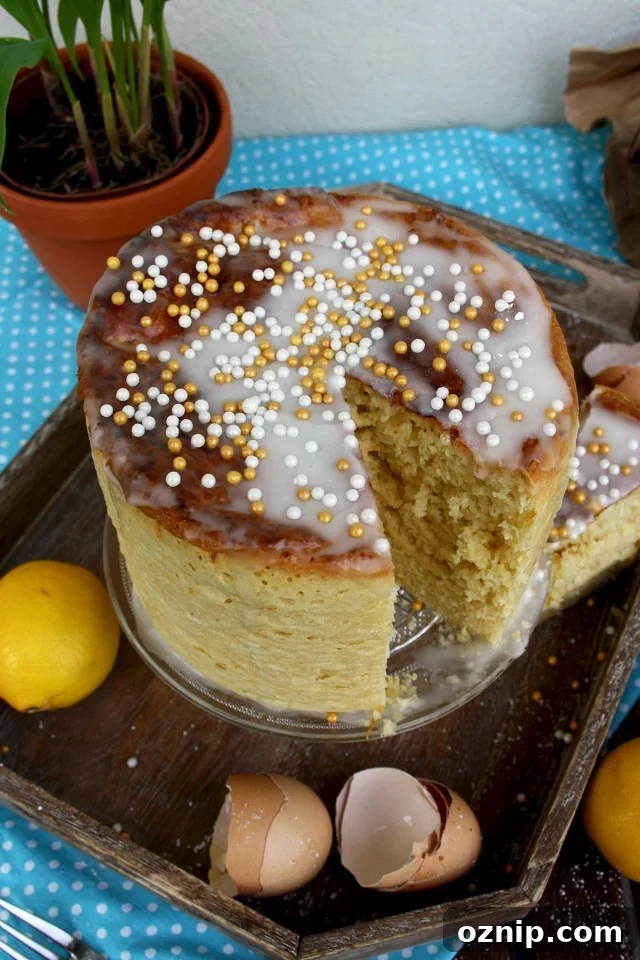
Kulich is typically tall and cylindrical, often studded with raisins or candied fruit and finished with a white glaze and colorful sprinkles. The interior is fluffy and delicate — the kind of bread that practically melts in your mouth.
The kulich has deep roots in Slavic spring baking traditions and later became associated with Orthodox Easter celebrations. Historically, special breads were baked for major seasonal holidays to mark the agricultural year: early spring to welcome planting season, autumn to celebrate harvest, and other important days. Today, kulich remains a celebratory bread that highlights rich ingredients like butter, eggs and dairy after the long Lenten fast.
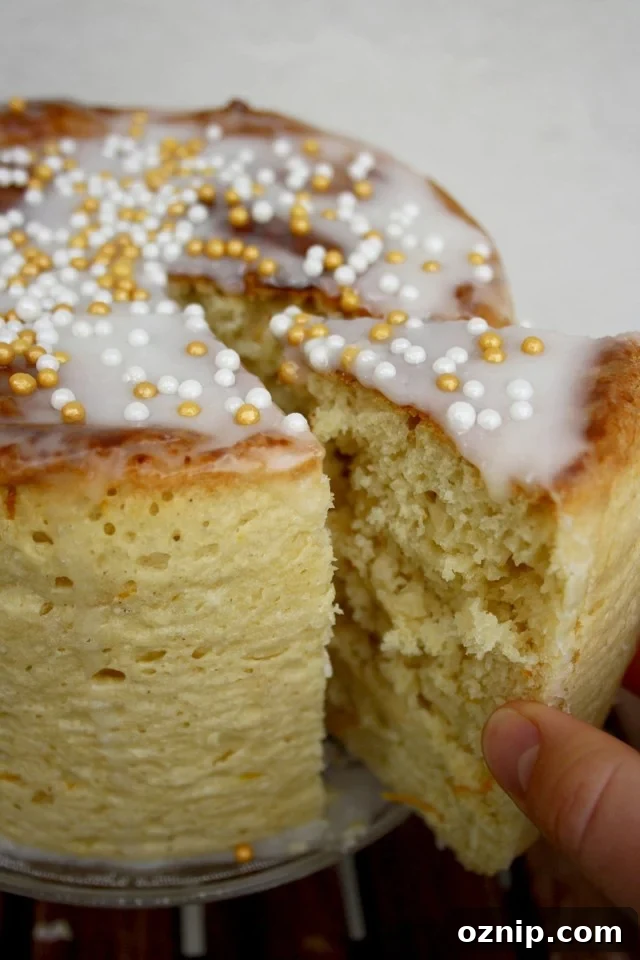
A lighter, simpler kulich
For this recipe I used butter, yeast, milk, eggs and flour, but made a few adjustments for a lighter result: agave nectar instead of granulated sugar, fresh citrus zest in place of candied fruit, and a mix of all-purpose and whole wheat flour. The result was pleasantly sweet, fragrant and soft, and remained moist for at least ten days when stored correctly.
I baked the kulich in an ordinary saucepan lined with parchment paper instead of a tall, specialized pan. You can also use tall paper panettone molds or a combination of a saucepan and paper molds if you prefer.
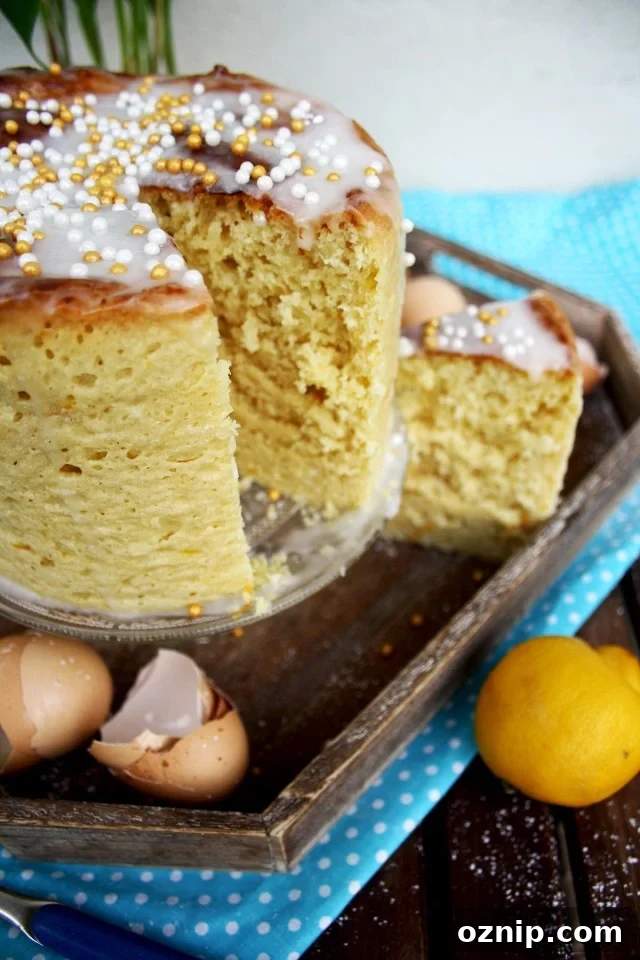
Why you should try this version
- Less active prep time — most of the time is waiting for the dough to rise.
- Healthier swaps that keep the texture and flavor intact.
- Flexible baking vessels — no special pan required.
- Keeps well: store in the refrigerator and use within 10 days, or repurpose slightly stale kulich for French toast.

Kulich – Sweet Russian Easter Bread
Summary: Russian Kulich is fluffy, fragrant and aromatic. This recipe is a bit healthier and quicker than the traditional one and stays fresh for up to ten days.
Course: bread
Cuisine: Russian
Prep time: 2 hours
Cook time: 45 minutes
Total time: 2 hours 45 minutes
Servings: 12
Calories: 276 kcal per serving
Ingredients
For the kulich
- 80 grams (about 1/3 cup) butter, at room temperature
- 42 grams (about 4 tbsp) fresh yeast (or 14 grams / 5 tsp dry yeast)
- 100 ml lukewarm milk + 1 tbsp
- 100 ml agave nectar
- 500 grams (around 4 cups) flour — I used a 1:1 ratio of all-purpose to whole wheat
- 3 eggs + 1 egg yolk
- Zest of 1 large orange and 1 large lemon
- 1 teaspoon ground cardamom
- A pinch of salt
For the glaze
- 80 grams (about 1/2 cup) powdered sugar
- 1 tablespoon lemon juice
- 1 tablespoon water (to thin the glaze if needed)
- Sugar pearls or sprinkles to garnish
Instructions
- In a medium bowl, whisk together the softened butter, crumbled fresh yeast (or dry yeast), lukewarm milk and agave nectar until combined.
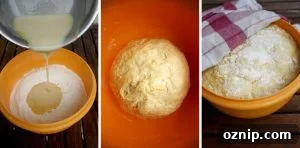
- Place the flour in a large bowl and make a well in the center. Pour the butter-yeast mixture into the well and knead until smooth. Let the dough rest for about 10 minutes.
- Meanwhile, whisk together three eggs, the orange and lemon zest, cardamom and a pinch of salt. Add this mixture to the dough and knead again until incorporated.
- Cover the dough and let it rise in a warm place for about 90 minutes, until noticeably puffed and airy.
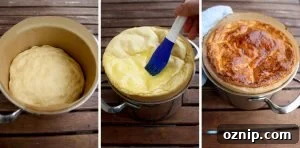
- Prepare a tall baking form, a saucepan lined with parchment paper, or paper panettone molds. Knead the dough briefly, transfer it to the prepared vessel, and let it rest for 30 more minutes.
- Preheat the oven to 200 °C (390 °F). Mix 1 tablespoon milk with the reserved egg yolk and brush the top of the kulich with this egg wash.
- Bake for about 25 minutes, or until the top is golden brown and a skewer inserted into the center comes out clean. Let the bread cool before removing it from the form or mold.
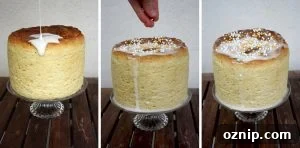
- To make the glaze, mix powdered sugar with lemon juice and add a little water to reach the desired consistency. Once the kulich is completely cool, pour the glaze over the top and sprinkle with sugar pearls or sprinkles before the glaze sets.
- Slice and serve with Paskha or other Easter dishes.
Notes
Active working time is about 20 minutes. Waiting for the dough to rise takes around 2 hours, and baking takes about 25 minutes.
Store kulich in an airtight container or plastic bag in the refrigerator for up to 10 days. If the bread becomes stale, use slices to make French toast or bread pudding.
Nutrition (per serving)
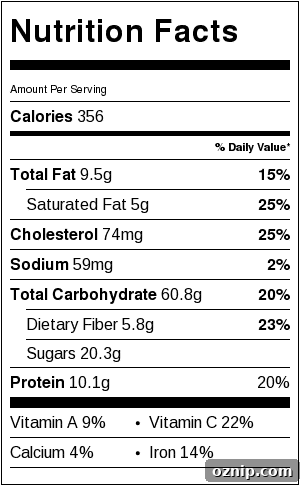
Calories: 276 kcal | Carbohydrates: 46 g | Protein: 6 g | Fat: 7 g | Saturated Fat: 3 g | Cholesterol: 56 mg | Sodium: 69 mg | Potassium: 91 mg | Fiber: 1 g | Sugar: 12 g | Vitamin A: 240 IU | Vitamin C: 0.5 mg | Calcium: 23 mg | Iron: 2.3 mg

What is your favorite Easter bread? Leave a comment below — I love hearing about your traditions and variations.
Happy Easter!
Elena