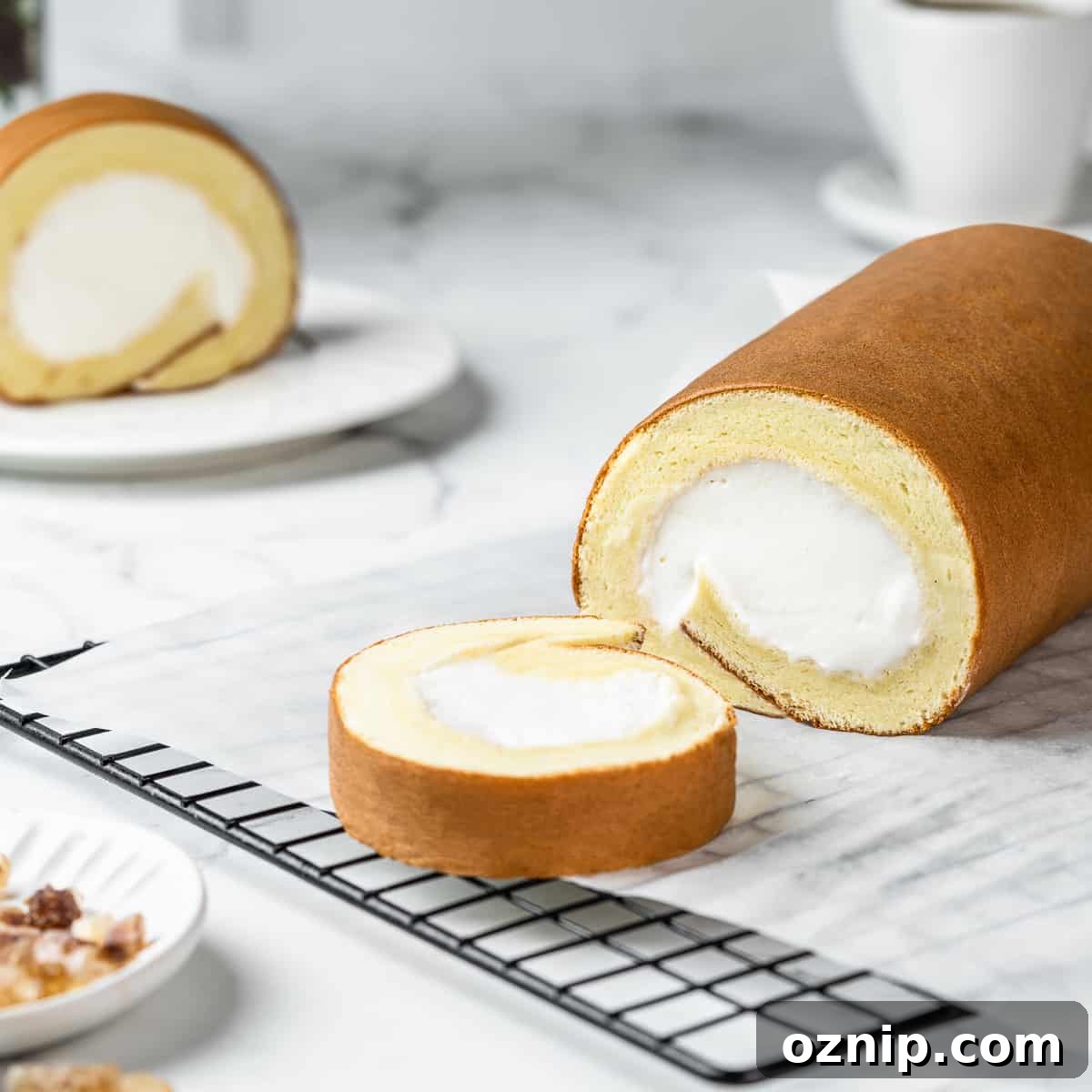
Here is the best Japanese cake roll, also called the Dojima roll: a soft, airy chiffon sheet cake rolled around a light, fresh whipped cream filling. The texture is delicate and moist, and the result is one of the finest Asian-style roll cakes—perfect for birthdays, afternoon tea, or any special occasion.
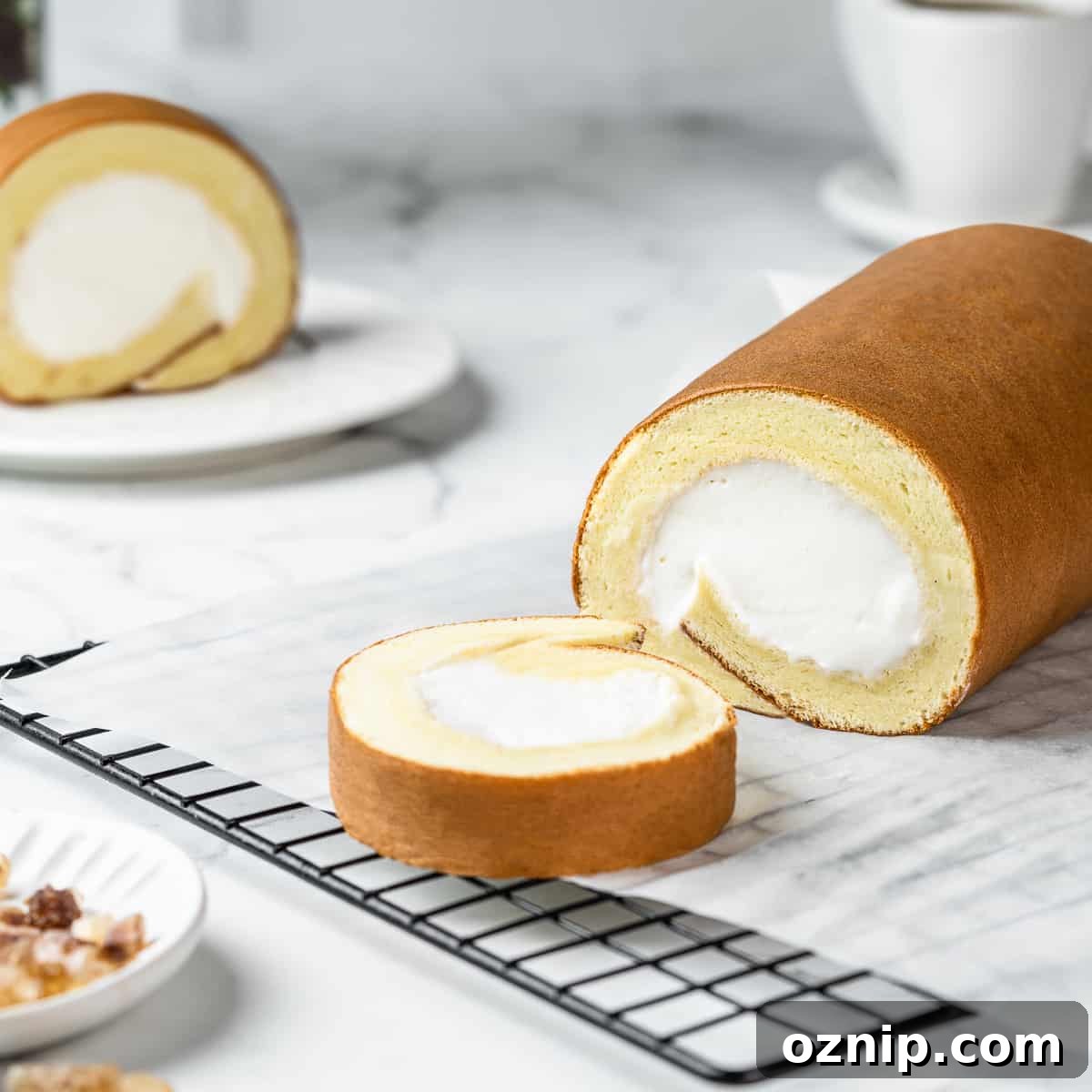
You can recreate a taste of Japan at home: the sponge is feather-light, and the cream filling is airy, subtly sweet, and melts on the tongue. This roll has a refined, elegant profile that contrasts with heavier European-style Swiss rolls.
What is Japanese roll cake?
The Japanese roll cake is essentially a chiffon-style sponge baked in a thin sheet, spread with fresh whipped cream, and gently rolled to form neat slices. It’s sometimes called a Japanese Swiss roll, chiffon cake roll, or simply a chiffon roll. Compared with some European sponge rolls, the Japanese version is moister, softer, and more delicate thanks to the chiffon technique and the use of whipped egg whites for lift rather than chemical leaveners alone.
This style of roll became famous in Japan with creations like the Dojima Roll, which is known for its refined appearance and subtle flavor. The cake is prized for its soft crumb and the clean finish that lets the cream shine. Because the cake is thin and flexible, you can create elegant slices that showcase the smooth cream spiral inside.
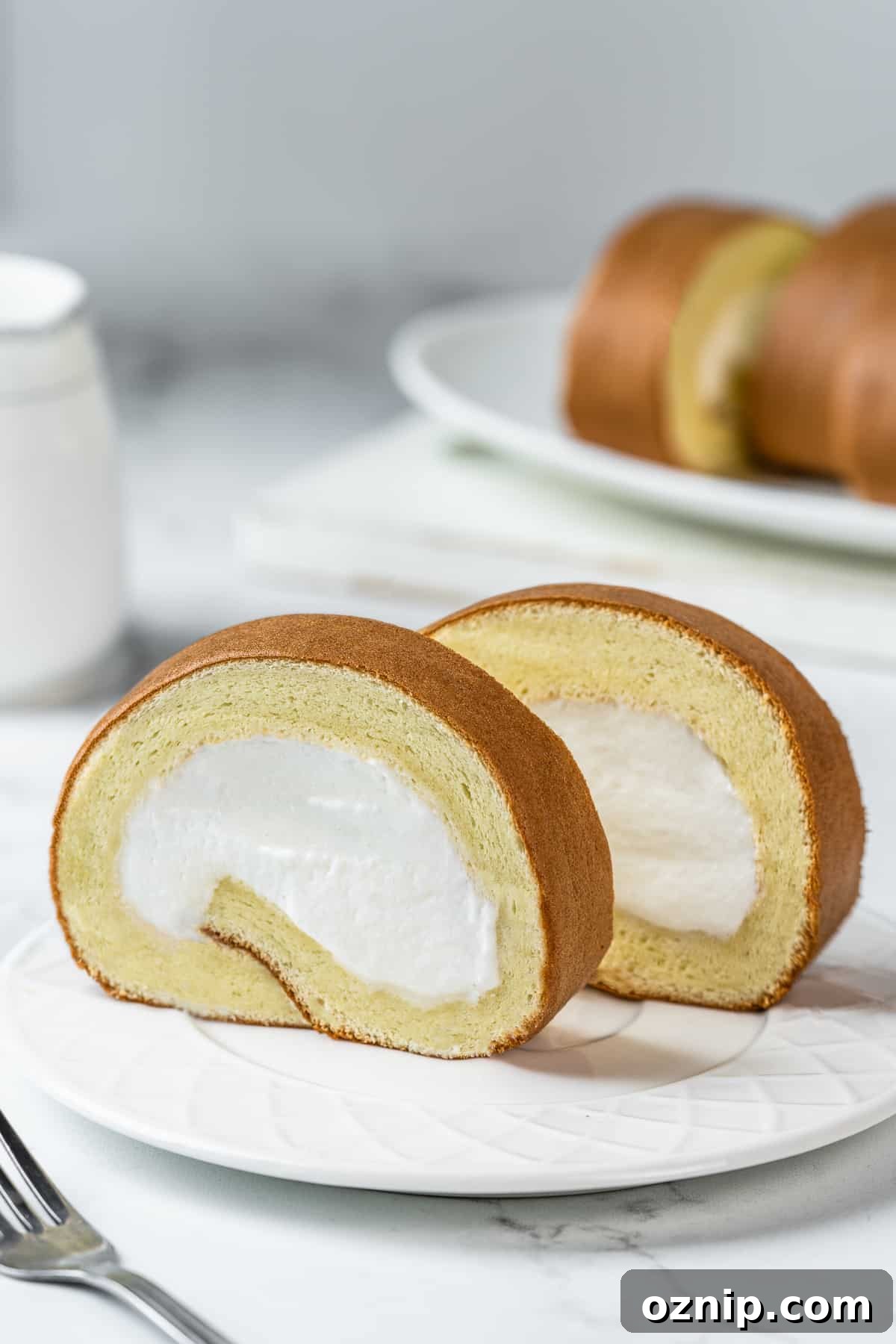
Japanese roll cake recipe
- This recipe is straightforward and can be completed in around 45 minutes of active work, plus chilling time.
- The cake is a chiffon-style sheet that achieves lift and softness from whipped egg whites (meringue), not from large amounts of baking powder.
- The finished cake uses less sugar than many European rolls, relying instead on the cream filling for balanced sweetness.
- Expect a tender, airy crumb and a filling that is light, silky, and not overly sweet—classic attributes of Asian roll cakes.
Ingredients
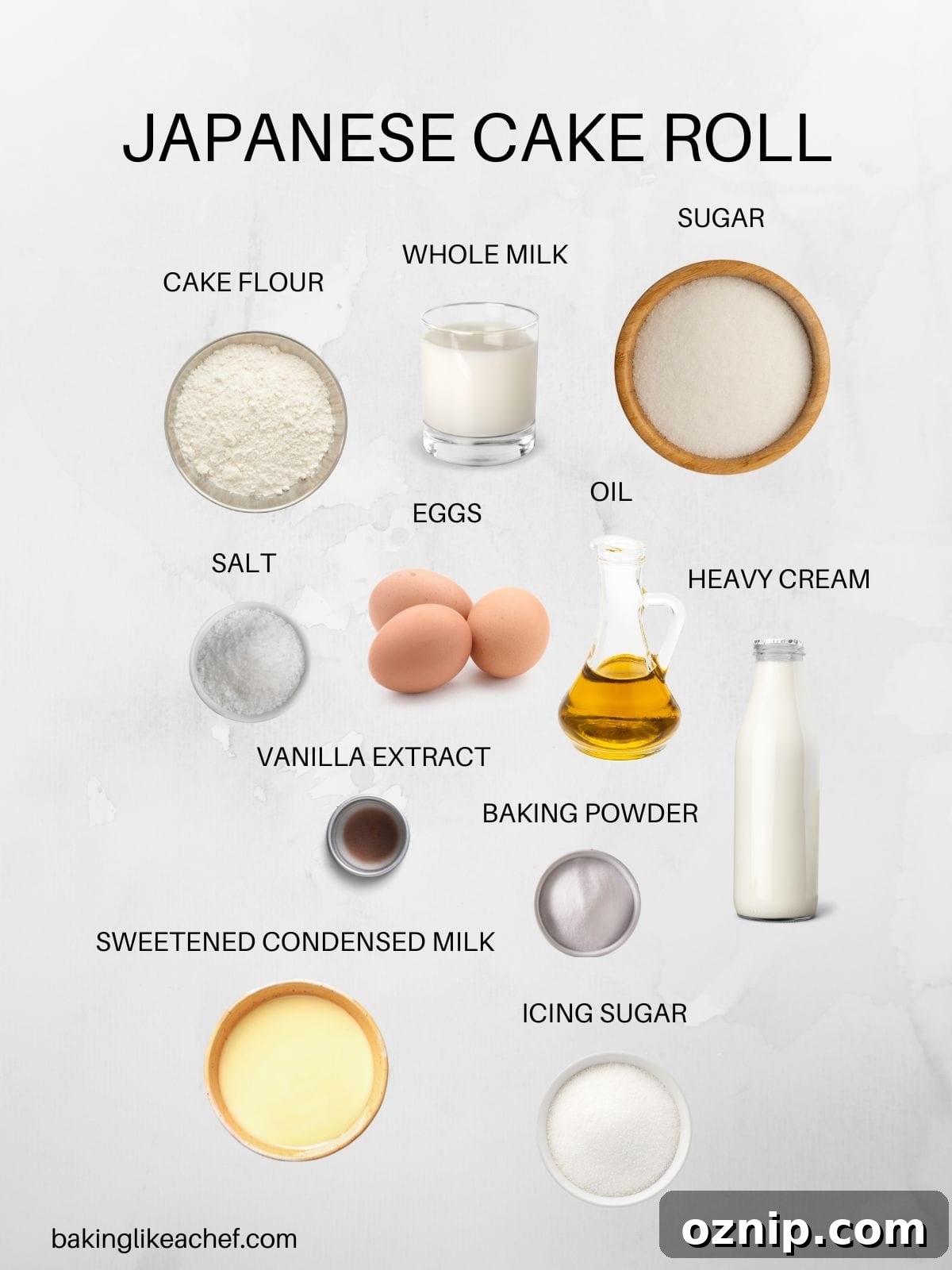
For full quantities and the complete recipe card, see the recipe card below.
- Eggs: Use large eggs. Separate whites and yolks carefully; the whites should be cold for better volume, while the yolks perform best at room temperature.
- Sugars: Granulated sugar for the batter and powdered (icing) sugar for the whipped cream give the right texture and sweetness.
- Salt & Vanilla: A pinch of salt brightens the flavors. Use good-quality vanilla extract or vanilla bean paste for a clean flavor.
- Oil & Milk: Neutral-flavored oil (grapeseed, vegetable, or avocado) keeps the crumb moist; whole milk helps enrich the batter.
- Flour: Use cake flour for the lightest crumb, or make a cake-flour substitute from all-purpose flour plus cornstarch.
- Baking powder: The recipe includes a small amount to aid structure.
- For the filling: Heavy cream (30%+ fat) whipped with icing sugar and a touch of sweetened condensed milk creates a smooth, stable filling that’s sweet but not cloying.
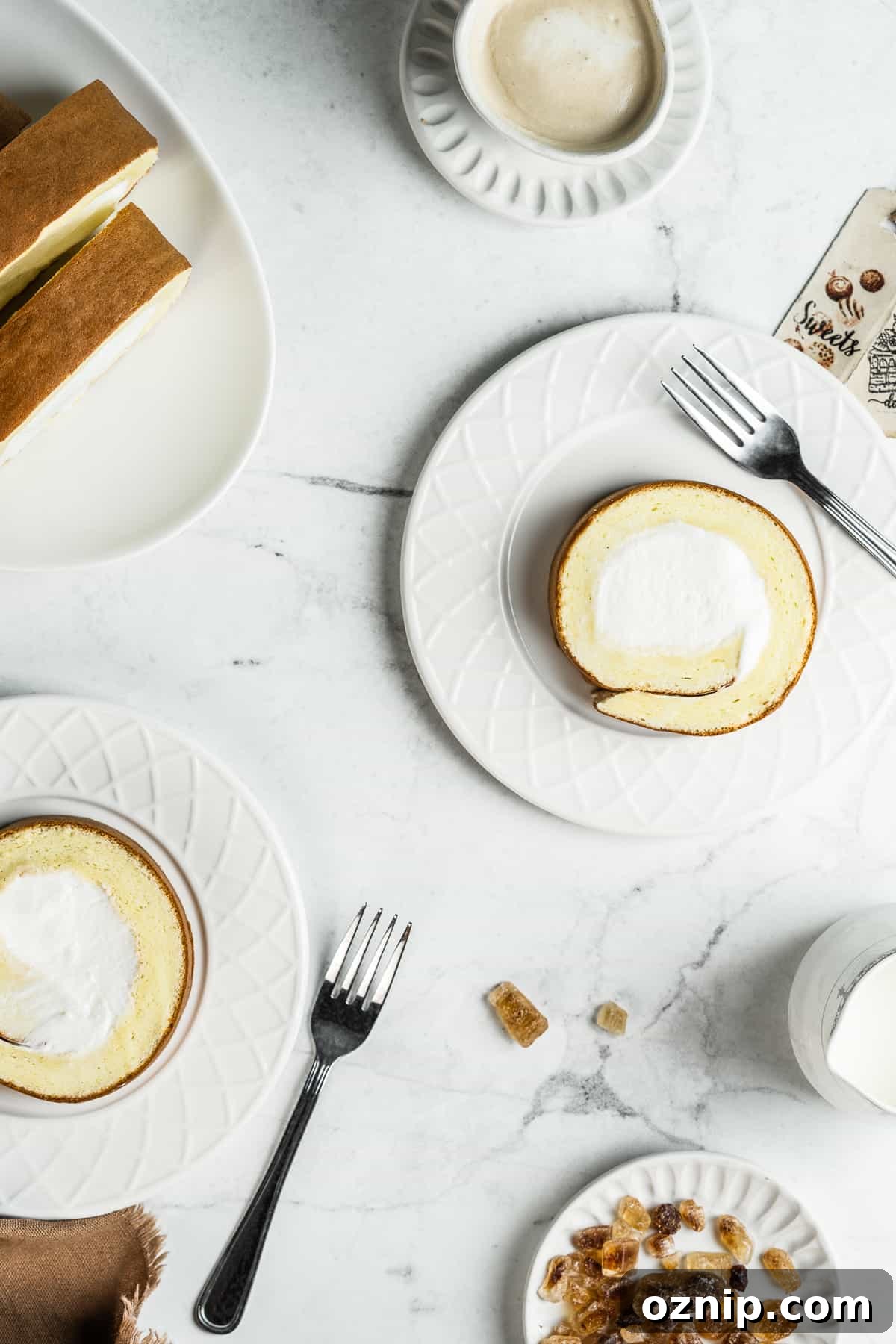
How to make Japanese cake roll
Overview of the method:
- Line a 15 x 10-inch (25 x 38 cm) jelly roll pan with parchment. Preheat the oven to 375°F (190°C).
- Sift the dry ingredients (flour and baking powder) and set aside. Warm the milk and oil together to about 104°F (40°C).
- Whisk together egg yolks, a portion of the sugar, salt, and vanilla until just combined. Add the warmed milk and oil, then fold in the dry ingredients.
- Beat the cold egg whites to foamy peaks, gradually adding the remaining sugar to form soft peaks—firm but not dry.
- Fold one-third of the meringue into the yolk mixture to lighten it, then fold in the remainder carefully to avoid deflating the batter.
- Pour the batter into the prepared pan, level gently, and tap lightly to release large air pockets. Place the pan in the oven and immediately reduce the temperature to 340°F (170°C). Bake 25–27 minutes, until lightly golden and a toothpick comes out clean.
- Prepare a long sheet of lightly greased parchment at least 1.5 times the cake length. When the cake is baked, tap the pan once on the counter, flip the cake onto the prepared parchment, and peel the pan paper away from the bottom.
- Trim the edges, cut one short end at a 45° angle, and allow the cake to cool slightly until still warm but manageable.
- Whip the cold heavy cream with icing sugar and a touch of sweetened condensed milk until firm. Spread an even layer of cream onto the cake, leaving the angled cut bare. Add a slightly thicker ridge of cream in the center so the roll will form evenly.
- Roll the cake gently with parchment, making sure both ends meet. Wrap the roll lightly and refrigerate for about 2 hours to set the shape and the cream.
- Before serving, remove the parchment, transfer to a serving tray, and slice with a warm knife, wiping the blade between cuts for clean slices (about 1 inch / 2.5 cm thick is ideal).
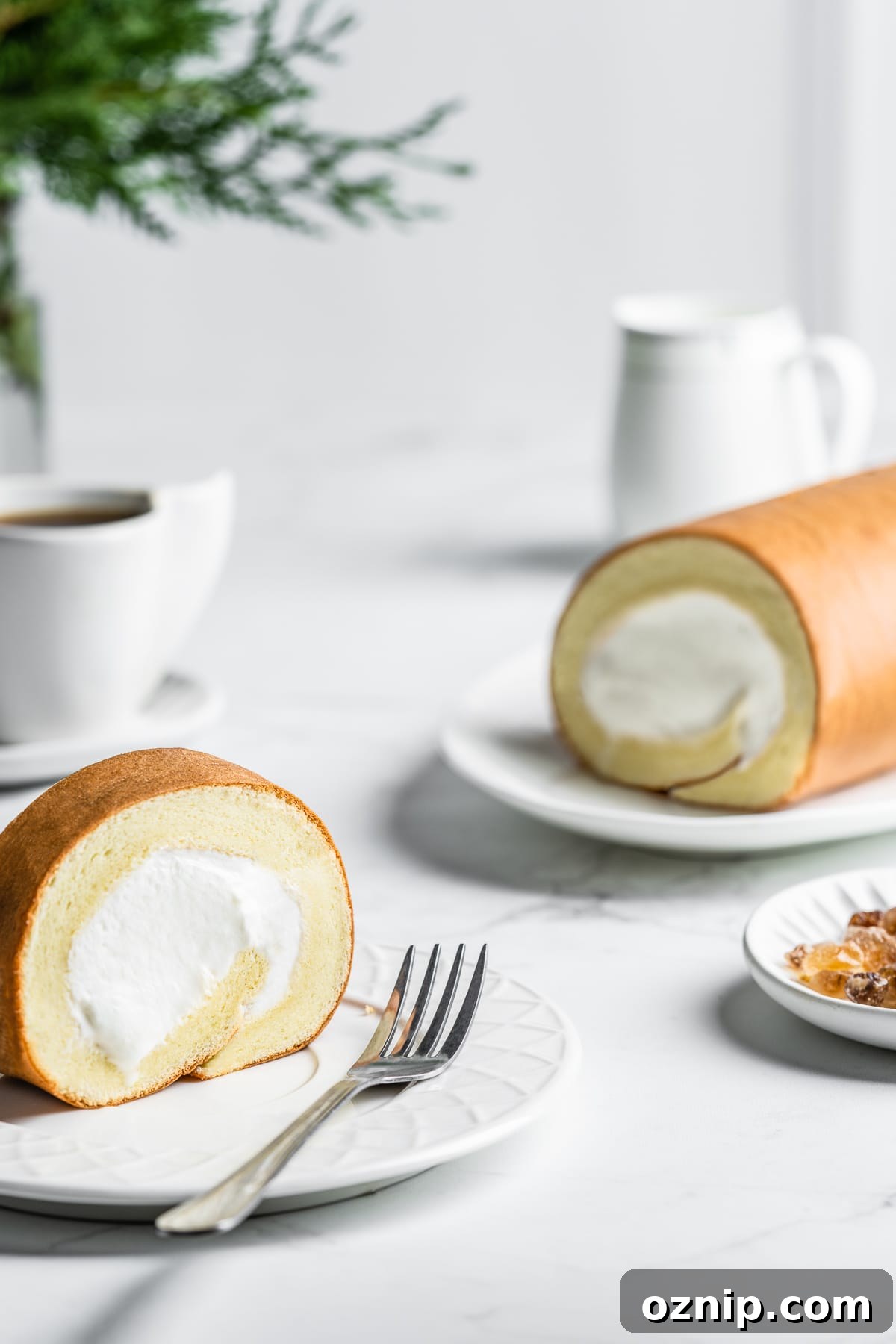
Expert Tips
- Use a light-colored jelly roll pan for even baking; dark pans brown too quickly.
- When folding meringue into the batter, use gentle motions to preserve air for a soft crumb.
- Cool the cake slightly before spreading the cream; if it’s too hot the filling will melt and weep.
- Chill the rolled cake for at least two hours to let the cream set and the roll hold its shape.
- For precise pan swaps, scale ingredients proportionally by area rather than guessing—this preserves texture.
Recipe variations
- Add matcha or cocoa to part of the flour for matcha or chocolate rolls.
- Flavor the filling by folding in a small amount of mascarpone or cream cheese for a richer profile.
- Decorate with powdered sugar, piped cream, or fresh fruit to suit the occasion.
- Try rolling with the crust (browned side) in or out depending on your preferred look; you can also remove the crust while the cake is warm for a softer surface.
Storing and freezing
Store the cake in an airtight container in the refrigerator for up to 2 days. To freeze, wrap tightly in plastic wrap and aluminum foil and keep at -18°C to -15°C (0°F to 5°F) for up to 2 months. Thaw overnight in the fridge before serving.
Recipe FAQ
No. For this chiffon-style sheet cake, pre-rolling in a towel is unnecessary; the cake is pliable enough after baking and cooling slightly.
Love roll cakes? Try these next!
- Nutella Swiss roll
- Coffee Swiss roll
- Pavlova roll cake
- Pistachio roulade
- Explore more cake recipes for additional ideas and inspiration.
Want more recipes and tips? Subscribe to my newsletter and follow for updates. If you try this recipe, please leave a rating and a comment—I’d love to hear how it turned out.
Recipe card
Japanese Cake Roll (Dojima Roll)

Japanese cake roll, or Dojima roll, is made with a chiffon-style soft sponge cake and light fresh whipped cream. It’s admired for its melt-in-the-mouth texture and delicate balance of sweetness.
- Author: Irina Totterman
- Total Time: 1 hour
- Yield: 8 servings
- Category: Cakes
- Method: Baking
- Cuisine: Japanese
Ingredients
For the cake:
- 5 large eggs, separated (whites cold, yolks room temperature)
- 1 cup + 2½ teaspoons (110 g) granulated sugar
- 1 pinch salt
- 1 teaspoon (5 ml) vanilla extract
- 3 tablespoons (40 g) neutral oil (grapeseed or vegetable)
- 4 tablespoons (60 g) whole milk
- 1 cup minus 2½ tablespoons (85 g) all-purpose flour (or cake flour)
- ½ teaspoon baking powder
For the filling:
- 1¼ cups (300 g) heavy cream, 30% fat
- 1½ tablespoons (30 g) sweetened condensed milk
- 4 tablespoons (30 g) icing sugar
Instructions
- Prepare a 15 x 10-inch (25 x 38 cm) jelly roll pan and line it with parchment.
- Preheat the oven to 375°F (190°C). Sift flour and baking powder into a bowl. Warm milk and oil together to about 104°F (40°C).
- Whisk egg yolks with a portion of the sugar, salt, and vanilla. Add warmed milk and oil, then fold in dry ingredients.
- Beat the cold egg whites until foamy, gradually add remaining sugar, and whip to soft peaks.
- Fold one-third of the meringue into the yolk mixture, then fold in the remainder gently.
- Spread batter in the prepared pan, level gently, and tap to remove big air bubbles. Bake at 340°F (170°C) for 25–27 minutes after placing on the middle rack.
- Prepare a long greased parchment sheet. Tap the pan once, flip the cake onto the parchment, and peel off the pan paper.
- Trim edges and cut one short end at a 45° angle. Let cool slightly.
- Whip heavy cream with icing sugar and condensed milk until firm. Spread on the cake, leaving the angled end bare, and add a slightly thicker ridge in the center.
- Roll the cake with parchment, wrap lightly, and chill for 2 hours. Remove parchment, transfer to a serving tray, and slice with a warm knife.
Notes
- Use a light-colored pan for even baking and avoid dark pans that over-brown.
- Handle the batter carefully to keep as much air as possible for tenderness.
- Chill the rolled cake to set the shape and make slicing neater.
Nutrition
- Serving Size: 1 slice
- Calories: 339
- Sugar: 20.2 g
- Sodium: 86 mg
- Fat: 22.8 g
- Saturated Fat: 10.6 g
- Carbohydrates: 28.7 g
- Fiber: 0.5 g
- Protein: 6.4 g
- Cholesterol: 170 mg
Nutrition facts are estimates calculated using common recipe nutrition tools and are intended as a guideline only.