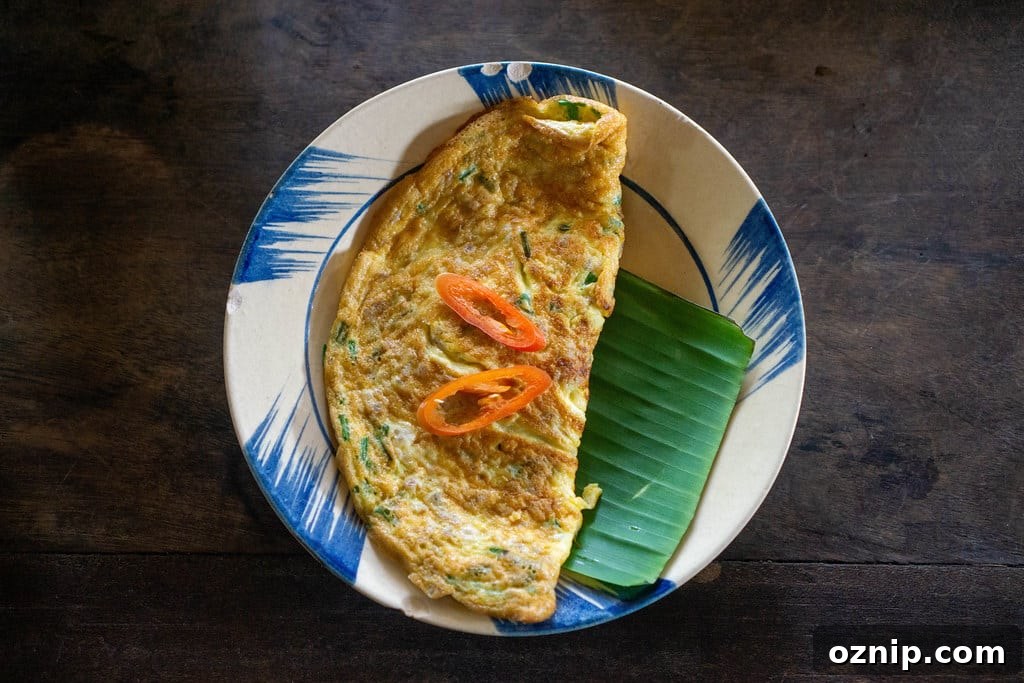
There is something instantly comforting about a hot omelette: the soft eggs, the savory aroma, and the way a few simple ingredients can become a satisfying meal in minutes.
A Vietnamese omelette is especially appealing because it is quick, flavorful, and easy to adapt. Instead of relying on cheese or heavy fillings, it uses eggs, fish sauce, green onion, shallot, and a little oil to create a light but deeply savory dish.
This Vietnamese omelette recipe is ideal for breakfast, a simple lunch, or a side dish with rice. It cooks quickly, tastes fresh, and can be made with ingredients you probably already have in your kitchen.
In this guide, you will learn what makes a Vietnamese omelette different, how to cook it evenly, how to flip it without breaking it, and what to serve with it.
What is a Vietnamese omelette?
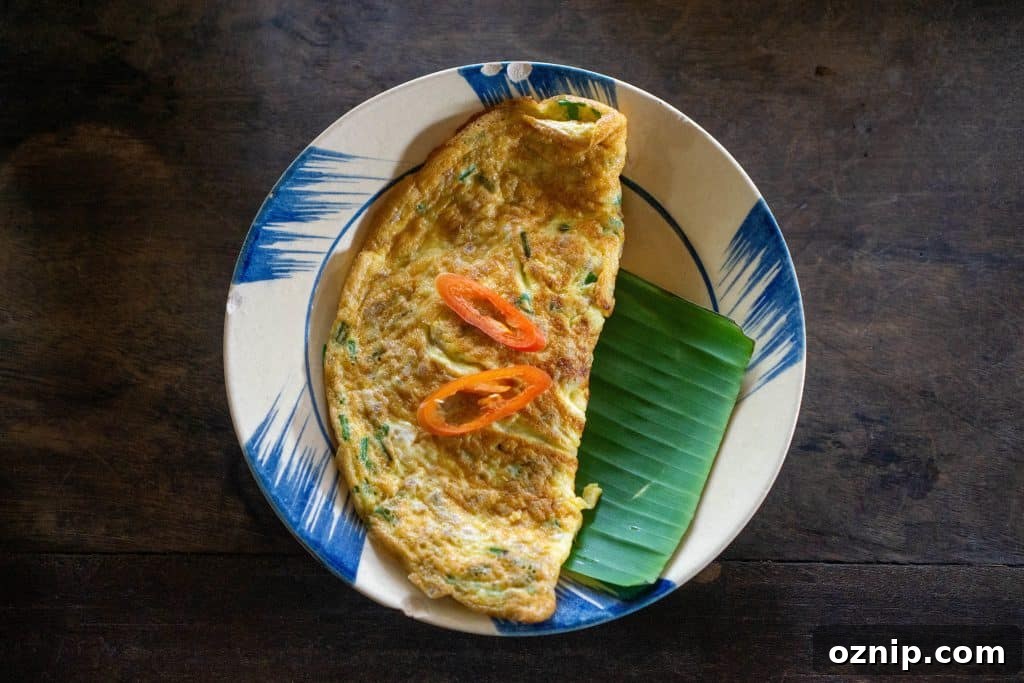
A Vietnamese omelette is a simple egg dish seasoned with fish sauce and cooked with aromatic ingredients such as green onion and shallot. It is usually cooked in a pan until the outside is lightly golden while the inside stays tender and fluffy.
Unlike many Western-style omelettes, this version does not need milk, butter, flour, or cheese. The flavor comes from the eggs, the salty-sweet depth of fish sauce, and the freshness of the vegetables.
The result is a quick Vietnamese egg omelette that is savory, fragrant, and versatile. It can be served on its own, with steamed rice, alongside a salad, or as part of a larger meal.
What makes Vietnamese omelettes different?
The main difference is the seasoning. Fish sauce gives the eggs a rich umami flavor that salt alone cannot provide. Green onion adds brightness, while shallot brings a mild sweetness once softened in hot oil.
Vietnamese omelettes are also usually cooked faster than thick Western omelettes. The eggs are spread across the pan, lightly set, and then cooked until golden. Some cooks flip the omelette whole, while others cut it into sections before turning it over.
This style is practical, flavorful, and easy to personalize. You can keep it simple with only eggs and aromatics, or add small amounts of mushrooms, noodles, cooked meat, or vegetables if you want a heartier dish.
Ingredients
- 4 eggs: Use fresh eggs for the best texture and color.
- 2 teaspoons fish sauce: Adds salty, savory depth and classic Vietnamese flavor.
- 1/2 cup green onion and shallot: Chop finely so the flavor spreads evenly through the omelette.
- 1 teaspoon cooking oil: Choose a neutral oil such as vegetable, canola, or avocado oil.
- Salt and pepper: Use lightly, since fish sauce is already salty.
Instructions
- Crack the eggs into a bowl. Add fish sauce, a small pinch of salt, and pepper. Whisk until the mixture is even in color and slightly frothy.
- Stir in the chopped green onion. If using extra add-ins such as mushrooms, noodles, cooked meat, or vegetables, add only a small amount so the omelette still holds together.
- Heat oil in a non-stick pan over medium heat. Add the shallot and cook until it begins to soften and turn translucent.
- Pour in the egg mixture. Let it sit for about one minute so the edges begin to set.
- Use a spatula to gently push the cooked egg from the edges toward the center. Tilt the pan so uncooked egg flows into the empty spaces. Do this once around the pan to help the omelette cook evenly without turning it into scrambled eggs.
- Cover the pan and cook for 4 to 5 minutes, or until the omelette is mostly set.
- Flip the omelette carefully. If it is too large to turn in one piece, cut it in half or quarters and flip each section separately.
- Cook uncovered for another 2 to 3 minutes, until the second side is golden. Serve hot with extra sliced green onion if desired.
What to serve with this omelette
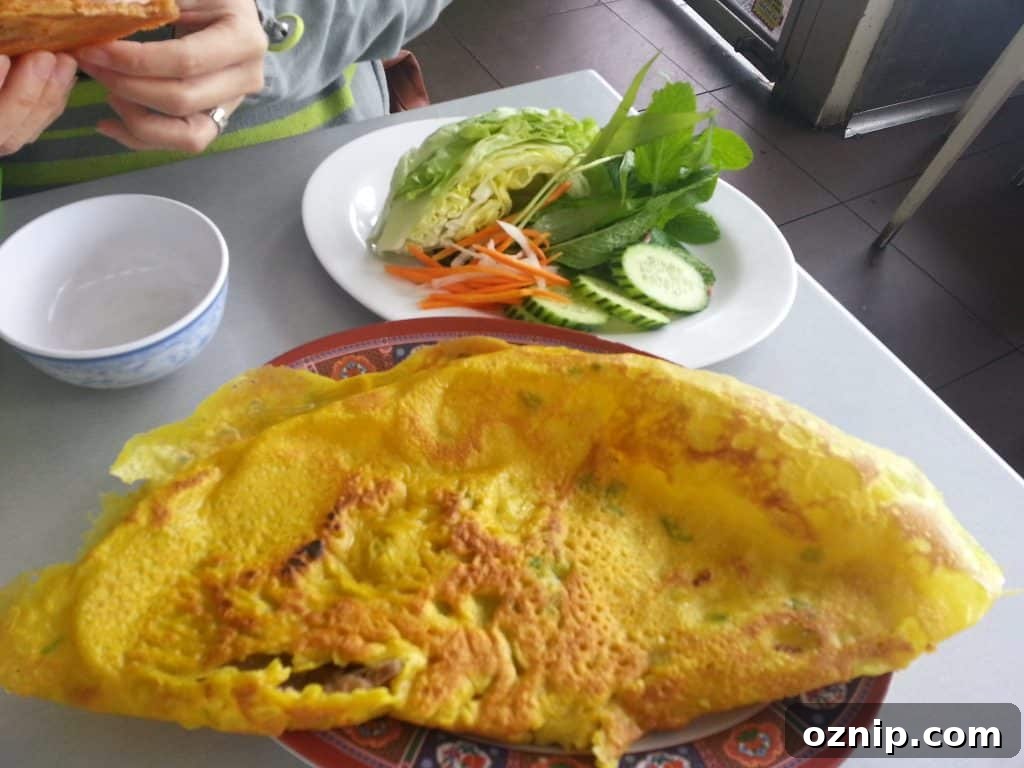
A traditional Vietnamese omelette is often enjoyed for breakfast, but it also works well as a snack, lunch, or side dish. Its savory flavor pairs especially well with plain steamed rice because the rice balances the fish sauce and soft eggs.
You can also serve it with a simple salad, sliced cucumber, fresh herbs, or pickled vegetables. These lighter sides add freshness and make the meal feel complete without requiring much extra work.
Vietnamese omelettes can also be made with different proteins or vegetables. Shrimp, pork, beef, chicken, duck, mushrooms, and bean sprouts are all common additions in many egg-based dishes, depending on preference and what is available.
Other Vietnamese breakfast favorites include bánh xèo, a crisp rice flour pancake that may be filled with meat or vegetables; bánh cuốn, thin rolls commonly served with a dipping sauce; and noodle dishes topped with herbs, scallions, or chili paste.
Four common omelette styles
Omelettes can be cooked in several ways, and each method gives a slightly different texture. The best choice depends on whether you prefer a tender, folded, fluffy, or lightly crisp result.
Classic: A classic omelette is cooked until the eggs begin to set, then turned or folded to finish cooking. It is simple and reliable.
Fluffy: A fluffy omelette depends on well-whisked eggs and controlled heat. Cooking slowly helps the eggs stay soft instead of becoming dense.
Folded: A folded omelette is shaped by bringing the edges toward the center. This method is often used when the omelette has a filling.
Crispy: A crispy omelette is cooked with enough oil and heat to brown the outside while keeping the inside tender. This works well for Vietnamese-style omelettes because the golden edges add flavor and texture.
How do restaurants make omelettes fluffy?
Fluffy omelettes start with fresh eggs and careful mixing. The eggs should be whisked enough to combine the whites and yolks evenly, but they do not need to be overbeaten.
Heat control is just as important. Medium heat helps the eggs cook evenly without drying out. If the pan is too hot, the outside may brown too quickly while the inside remains wet. If the heat is too low, the omelette can become heavy and pale.
Using a non-stick pan also makes a big difference. It allows the eggs to slide, set, and flip more easily, which helps preserve the shape and texture of the omelette.
How do you flip an omelette?
The easiest way to flip a Vietnamese omelette is to let the first side cook fully before turning it. The bottom should be golden and firm enough to lift with a spatula.
If the omelette is small, slide a spatula underneath and flip it in one motion. If it is large or delicate, cut it into halves or quarters and turn each piece separately. This prevents tearing and makes the process much easier for home cooks.
Using enough oil and a non-stick pan will also help. The omelette should release from the pan without sticking or breaking apart.
Which method is best?
For a Vietnamese omelette, the fluffy and lightly crispy methods are usually the most satisfying. The eggs stay tender, while the outside becomes golden and flavorful.
Home cooks may find the fluffy method easiest because it allows more control over the texture. If you prefer deeper browning and crisp edges, use a little more oil and cook the omelette until both sides are golden.
Either way, the key is not to overcook the eggs. A good Vietnamese omelette should be cooked through, fragrant, and soft enough to enjoy immediately.
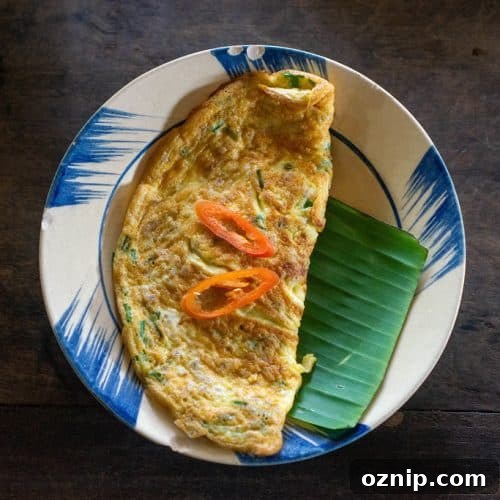
Vietnamese Omelette Recipe
Equipment
-
Pan
Ingredients
- 4 eggs
- 2 teaspoons fish sauce
- 1/2 cup green onion, chopped
- 1 shallot, finely sliced
- 1 teaspoon cooking oil
Instructions
-
Whisk the eggs with fish sauce, salt, and pepper until evenly combined and slightly frothy.
-
Stir in the chopped green onion and any optional add-ins you want to use.
-
Heat oil in a non-stick pan. Add the shallot and cook until softened.
-
Pour in the egg mixture. Let it set briefly, then gently push the edges toward the center and tilt the pan so the uncooked egg spreads evenly. Cover and cook for 4 to 5 minutes.
-
Flip the omelette, or cut it into sections and flip each piece. Cook for another 2 to 3 minutes until golden. Serve hot.
Nutrition
Carbohydrates: 4g
Protein: 6g
Fat: 5g
Sodium: 301mg
Related Posts
Easy and Quick Slow Cooker Spaghetti Pasta
Salted Caramel Ice Cream Recipe

What Is Prosciutto? A Guide To The Italian Delicacy
Pioneer Woman Mexican Cornbread Casserole