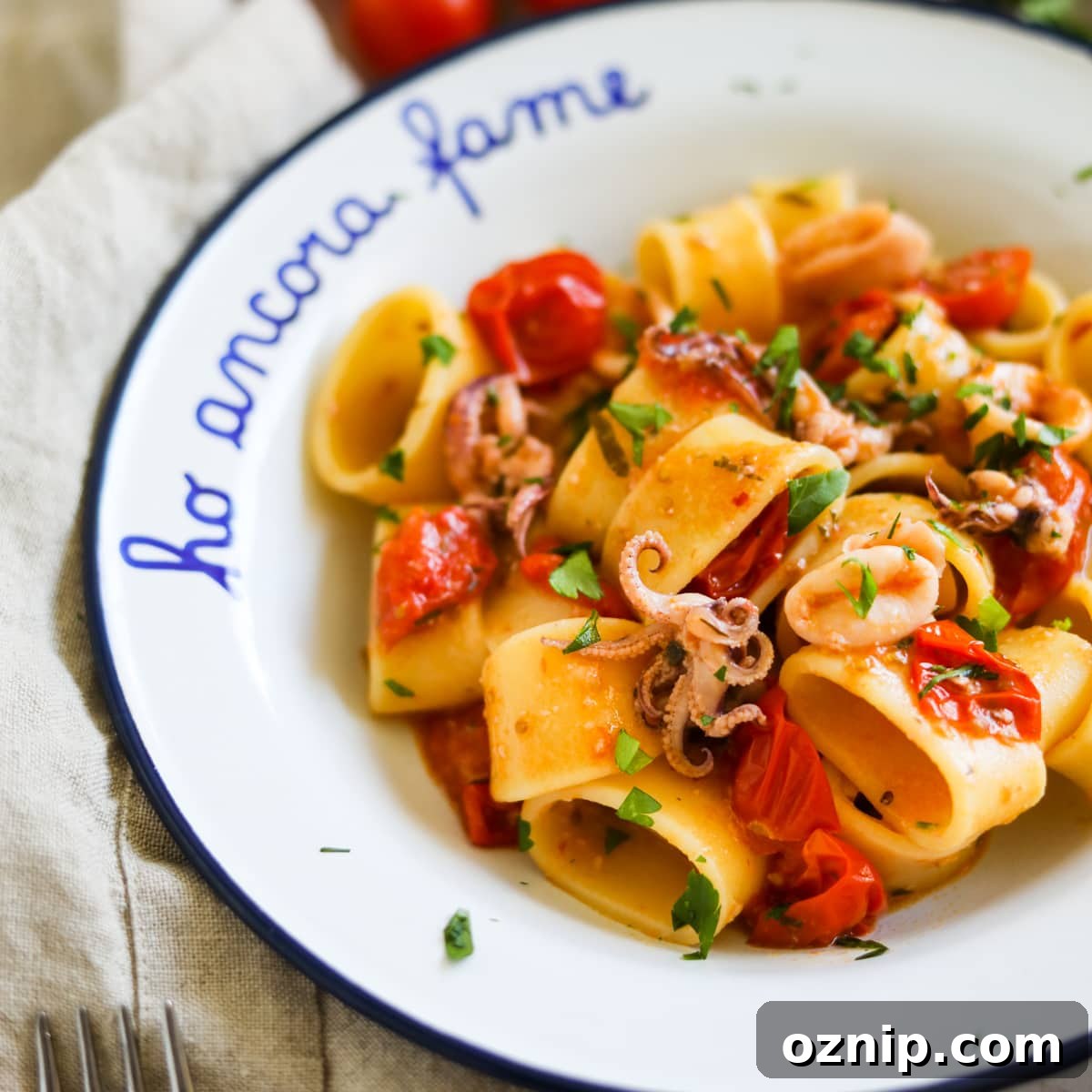
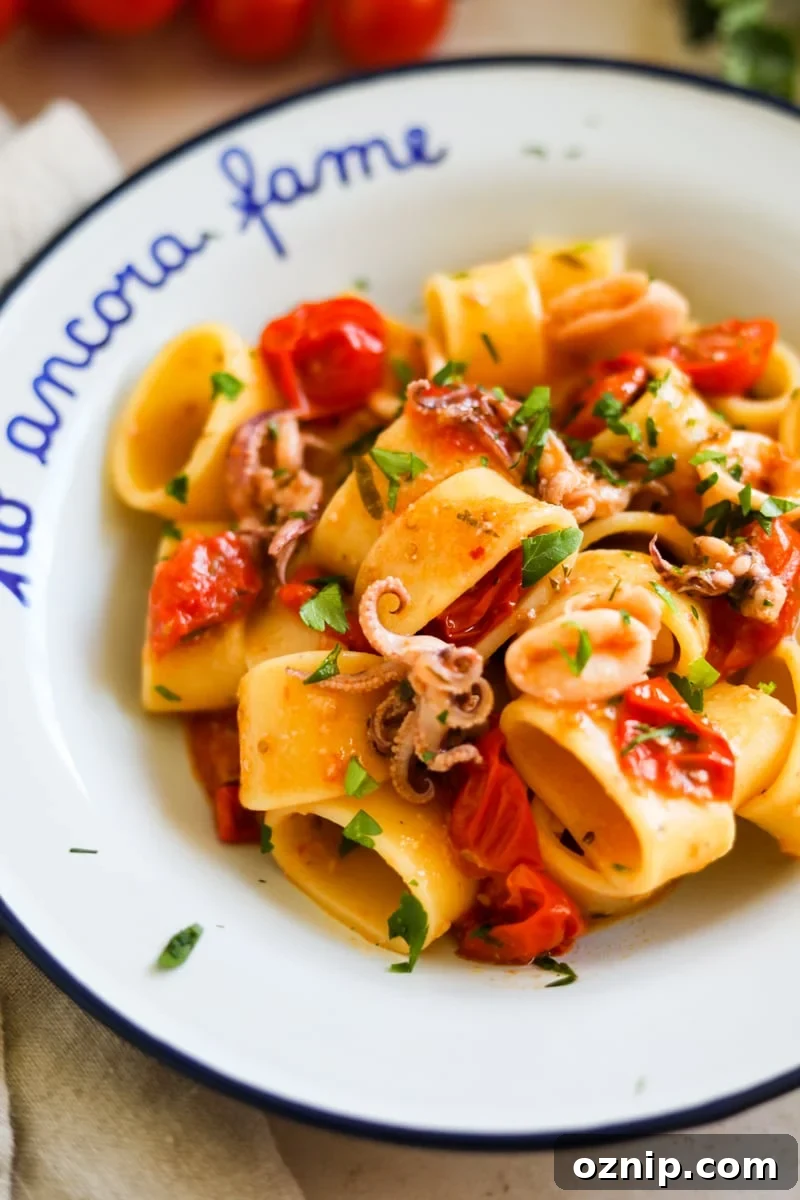
Calamarata is a classic Neapolitan pasta made with tender calamari simmered in a light, brothy tomato sauce. Thick, ring-shaped pasta captures the juices so every bite combines al dente pasta, delicate squid, and bright tomatoes. This authentic Italian dish comes together in about 20 minutes using a handful of simple ingredients.
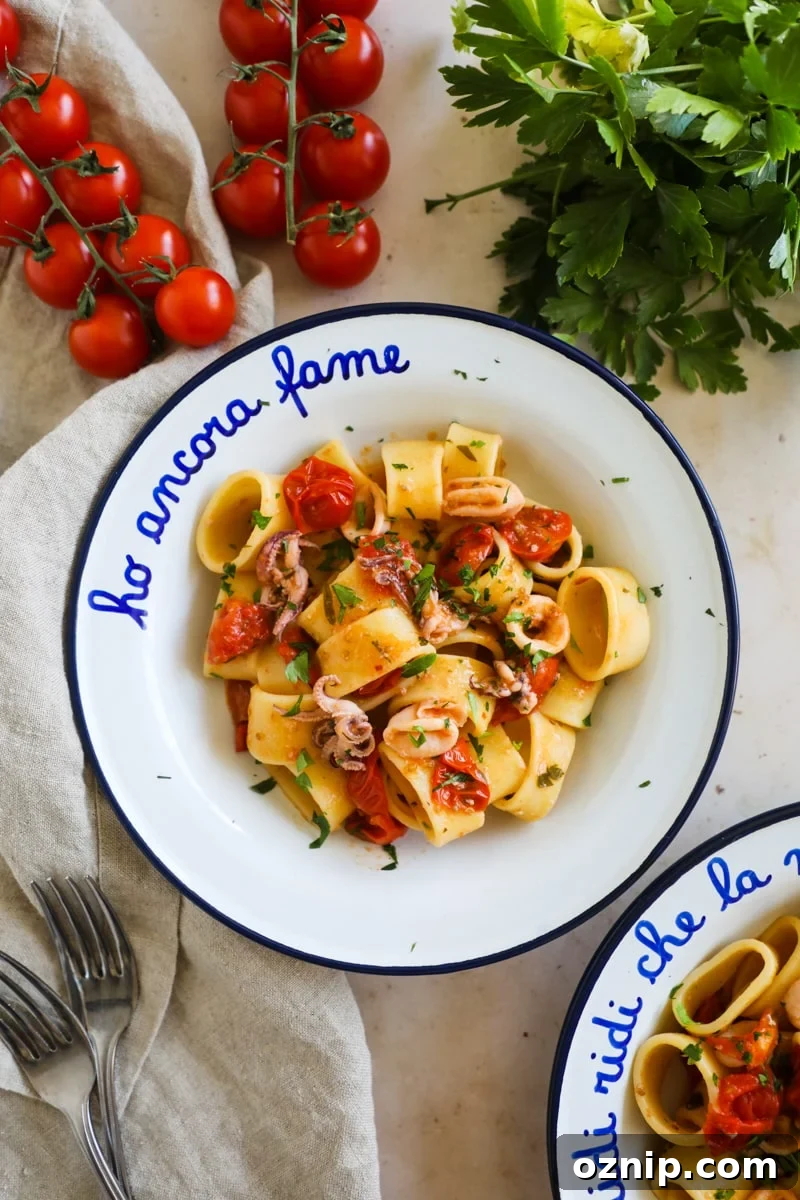
Calamarata is one of my favorite quick pasta dishes. The squid cooks quickly, releasing a subtle briny sweetness into a tomato-scented broth. The recipe is simple, elegant, and versatile—perfect for weeknights, a cozy date-night dinner, or when you want an impressive dish without a lot of fuss.
What is Calamarata Pasta?
Calamarata refers both to the thick, ring-shaped pasta and to the traditional Neapolitan preparation featuring squid. The pasta rings resemble calamari, which is how the name originated. Their shape and thickness trap the brothy tomato sauce, allowing the flavor to cling to the interior and exterior of each piece. You may see calamarata made in plain durum-wheat or colored with squid ink for an extra briny note.
Ingredients
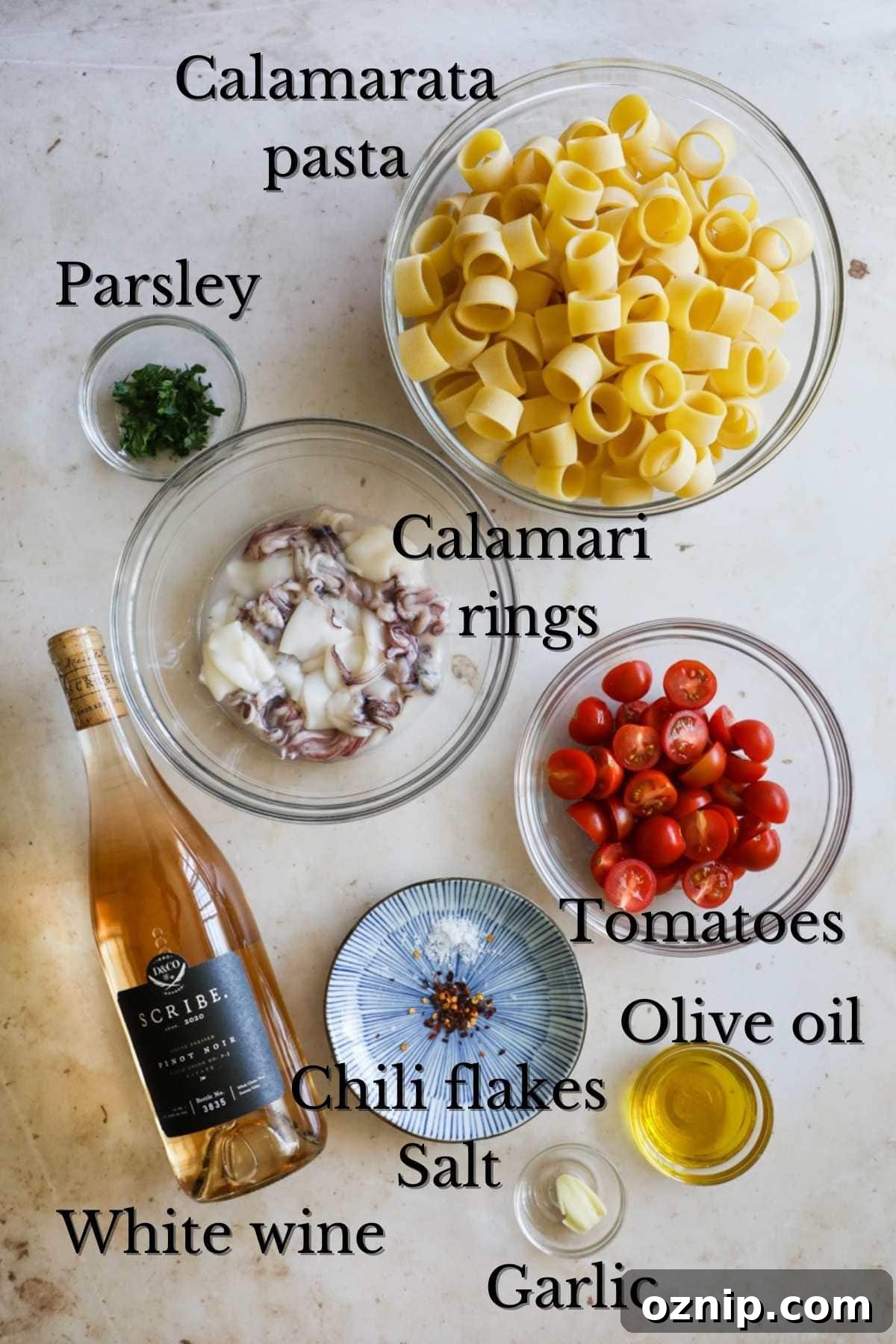
- Calamarata pasta — Thick, tube-shaped rings that hold brothy sauces well.
- Cherry tomatoes — Sweet, juicy, and ideal for a quick sauce. Halved cherry or grape tomatoes work best.
- Calamari (squid) — Cleaned, sliced into rings with tentacles left whole for texture.
- Extra-virgin olive oil — For sautéing and finishing the sauce.
- Garlic — Whole cloves lightly crushed to infuse the oil without overpowering the sauce.
- Dry white wine — Adds brightness and deglazes the pan.
- Fresh parsley — Chopped for a fresh herb finish.
- Kosher salt — For seasoning pasta water and the sauce.
- Crushed red pepper — A pinch for gentle heat, optional.
- Pasta water — The starchy cooking water helps bind the sauce to the pasta.
See the recipe card below for exact quantities.
Instructions
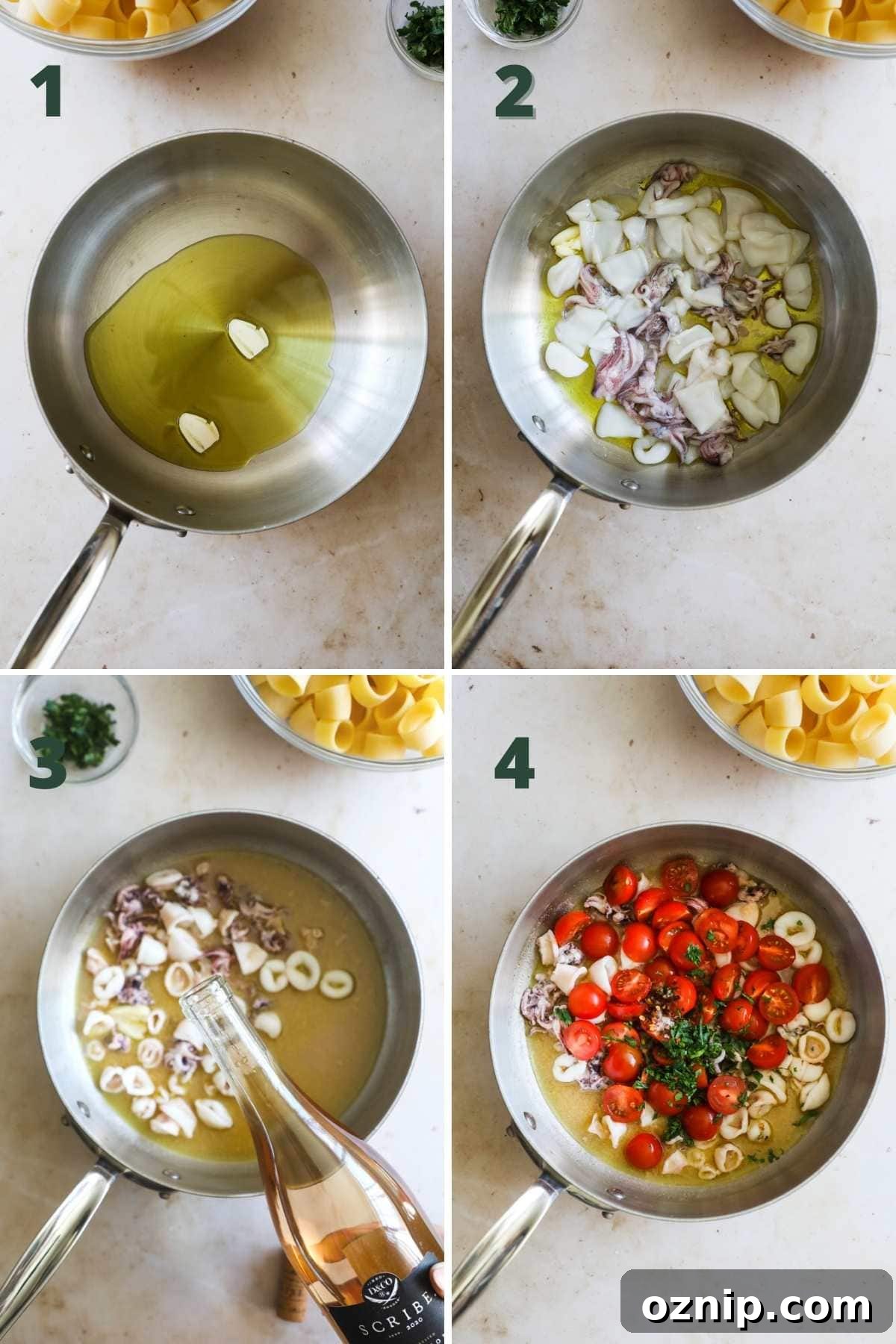
- Prepare the squid — Slice tubes into 1-inch rings and leave the tentacles whole. Pat dry so they sear lightly.
- Infuse the oil — Gently crush whole garlic cloves and warm them in olive oil over medium heat. This releases aroma while keeping garlic from burning.
- Sear the squid and deglaze — Add the squid rings and tentacles, sauté briefly, then pour in white wine. Let the wine reduce until mostly evaporated. Remove and discard garlic cloves.
- Add tomatoes and simmer — Stir in halved cherry tomatoes, a pinch of crushed red pepper, salt, and chopped parsley. Simmer gently for about 10–12 minutes until tomatoes soften and the sauce becomes slightly brothy. The squid should be tender, not rubbery.
- Cook the pasta — Meanwhile, bring a large pot of water to a rolling boil, season generously with kosher salt, and cook the calamarata until al dente. Reserve about 1 cup of pasta water before draining.
- Toss and finish — Add a few tablespoons of reserved pasta water to the sauce, then add the drained pasta and toss gently to coat. Add more pasta water a tablespoon at a time if needed to reach a glossy, saucy consistency.
- Serve — Taste and adjust seasoning. Finish with flaky sea salt and a sprinkle of chopped parsley. Serve immediately so the pasta retains its texture.
Hint: Keep garlic cloves whole while infusing the oil to avoid burnt garlic flavor during the simmer.
What to Eat with Calamarata
Calamarata pairs well with simple starters and a green side. Light options that won’t overpower the seafood flavors work best:
- Sautéed broccolini or broccoletti
- Burrata or fresh mozzarella with ripe tomatoes
- A fresh arugula and peach salad with prosciutto for contrast
- Crusty bread to soak up the brothy sauce
Substitutions
- Fresh squid — If available, fresh squid is ideal, but frozen works fine once thawed.
- Octopus or cuttlefish — Use these if you prefer their different textures and flavors.
- Different pasta — Paccheri, mezze maniche, or rigatoni are good alternatives that hold sauce well.
- Gluten-free — Use gluten-free tube-shaped pasta as needed.
- Vegetarian — Roast eggplant in place of squid for a satisfying meat-free version.
- Squid-ink pasta — For a more pronounced briny note, try squid-ink calamarata.
Variations
- Spicy — Increase crushed red pepper for more heat.
- Seafood mix — Add seared scallops or prawns for a richer seafood plate.
- Garlicky — Add extra garlic if you prefer a stronger aromatic base.
- Lemon finish — A squeeze of lemon brightens the sauce before serving.
- Fresh basil — Torn basil leaves add a fragrant, herbal lift.
FAQ
In culinary terms, calamari typically refers to squid prepared as food. Some people use “calamari” to describe more tender varieties, but broadly the words are used interchangeably.
Calamarata pasta, cherry tomatoes, and basic pantry ingredients are available at most grocery stores. Fresh or frozen squid can usually be found at the seafood counter or in the freezer section; a local fishmonger is also a good source.
Squid is a lean source of protein with vitamins and minerals. How healthy the dish is depends on preparation and portion size; using a modest amount of olive oil and plenty of tomatoes and herbs keeps it light and nutritious.
No. Squid and octopus are different cephalopods with distinct textures and flavors. Both absorb sauces well, but octopus often requires different cooking techniques to become tender.
Calamari are mollusks, which fall under the broader category of shellfish. Avoid this recipe if you have a shellfish allergy; you can substitute roasted eggplant for a vegetarian alternative.
Storage
Calamarata is best served fresh. If you have leftovers, refrigerate in an airtight container for up to 1 day. Reheat gently in a skillet with a teaspoon of olive oil over low–medium heat, covering the pan for a few minutes until warmed through. The texture does not freeze well, so freezing is not recommended.
Top tips
- Defrost properly — Thaw frozen squid overnight in the refrigerator for the best texture.
- Serve with bread — A crusty roll or baguette is ideal for dipping into the brothy sauce (an Italian tradition called “fare la scarpetta”).
Related Recipes
-
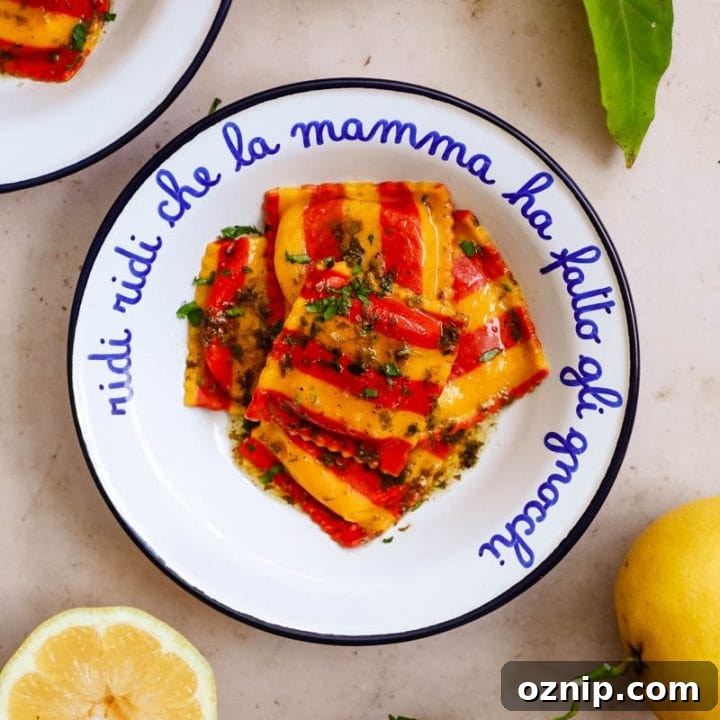
 Lobster Ravioli with Lemon Garlic Browned Butter Sauce
 -
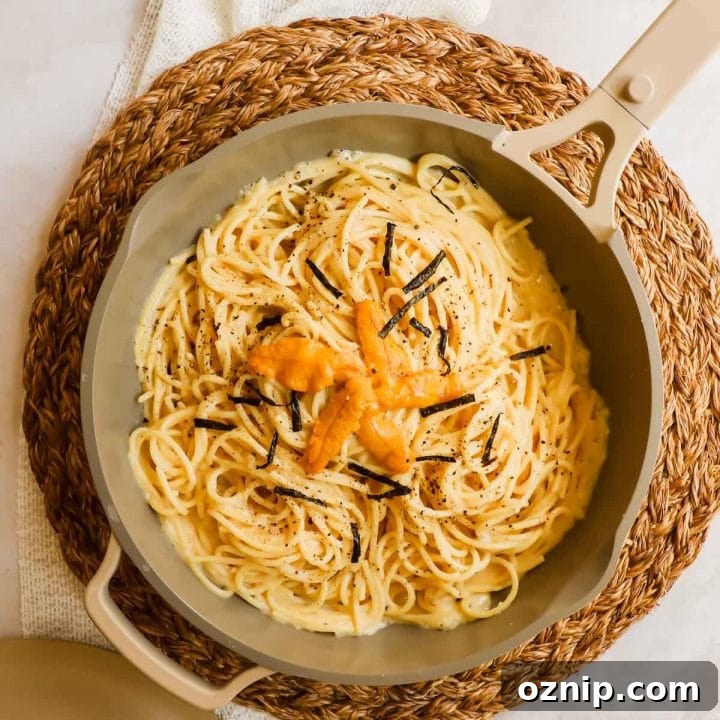
Uni Pasta (Sea Urchin Cacio e Pepe)
-
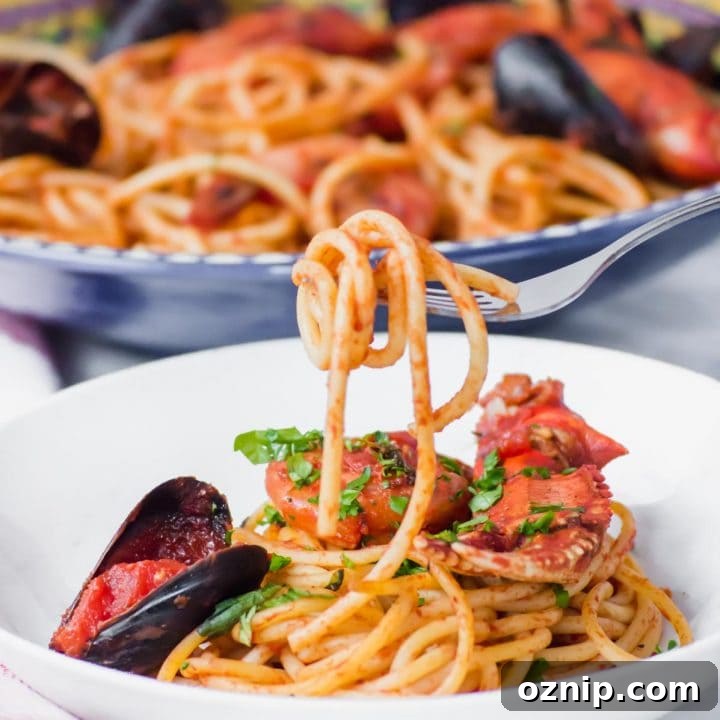
Bucatini Seafood Pasta (Shrimp, Scallops, & More)
-
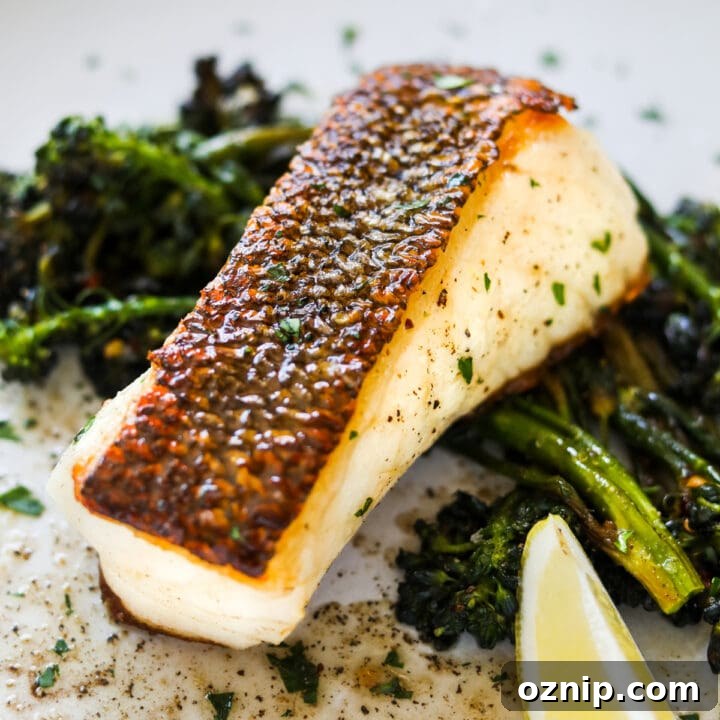
How to Cook Buttery Fish with Crispy Skin
Recipe
Calamarata (Calamari and Tomato Sauce Pasta)
Calamarata is a Neapolitan pasta of squid and a light, brothy tomato sauce. Thick calamarata rings trap the sauce while delicate calamari adds a subtle briny flavor. Ready in about 20 minutes.
Prep time: 5 mins
Cook time: 15 mins
Total time: 20 mins
Servings: 4
Calories: 579 kcal (approx.)
Ingredients
- 1 lb calamarata pasta
- 2 tbsp extra-virgin olive oil
- 2 whole garlic cloves, gently crushed
- 1 lb squid, cleaned, sliced into 1-inch rings with tentacles left whole
- ½ cup dry white wine
- 1 lb cherry tomatoes, halved
- ¼ tsp crushed red pepper (optional)
- 1 tsp sea salt, or to taste
- 1 tbsp fresh flat-leaf parsley, minced, plus more for garnish
- Reserved pasta water as needed
Instructions
- Slice squid into rings and keep tentacles whole. Pat dry.
- Warm olive oil over medium heat and add the crushed whole garlic cloves to infuse the oil.
- Add squid to the pan and sauté for 1–2 minutes. Pour in white wine and cook until mostly evaporated. Remove and discard the garlic cloves.
- Add halved cherry tomatoes, crushed red pepper, salt, and parsley. Simmer gently for 10–12 minutes until tomatoes soften and the sauce is slightly brothy.
- Cook calamarata in well-salted boiling water until al dente. Reserve 1 cup of pasta water, then drain.
- Stir a couple of tablespoons of pasta water into the sauce, add the drained pasta, and toss to combine. Add more pasta water by the tablespoon if needed to create a glossy sauce.
- Adjust seasoning, finish with flaky sea salt and chopped parsley, and serve immediately.
Notes
Store leftovers in an airtight container in the refrigerator for up to 1 day. Reheat gently in a skillet with a little olive oil, covered, for a few minutes. This dish is best eaten fresh and does not freeze well.
Nutrition (per serving, approximate)
Calories: 579 kcal | Carbohydrates: 94 g | Protein: 34 g | Fat: 4 g