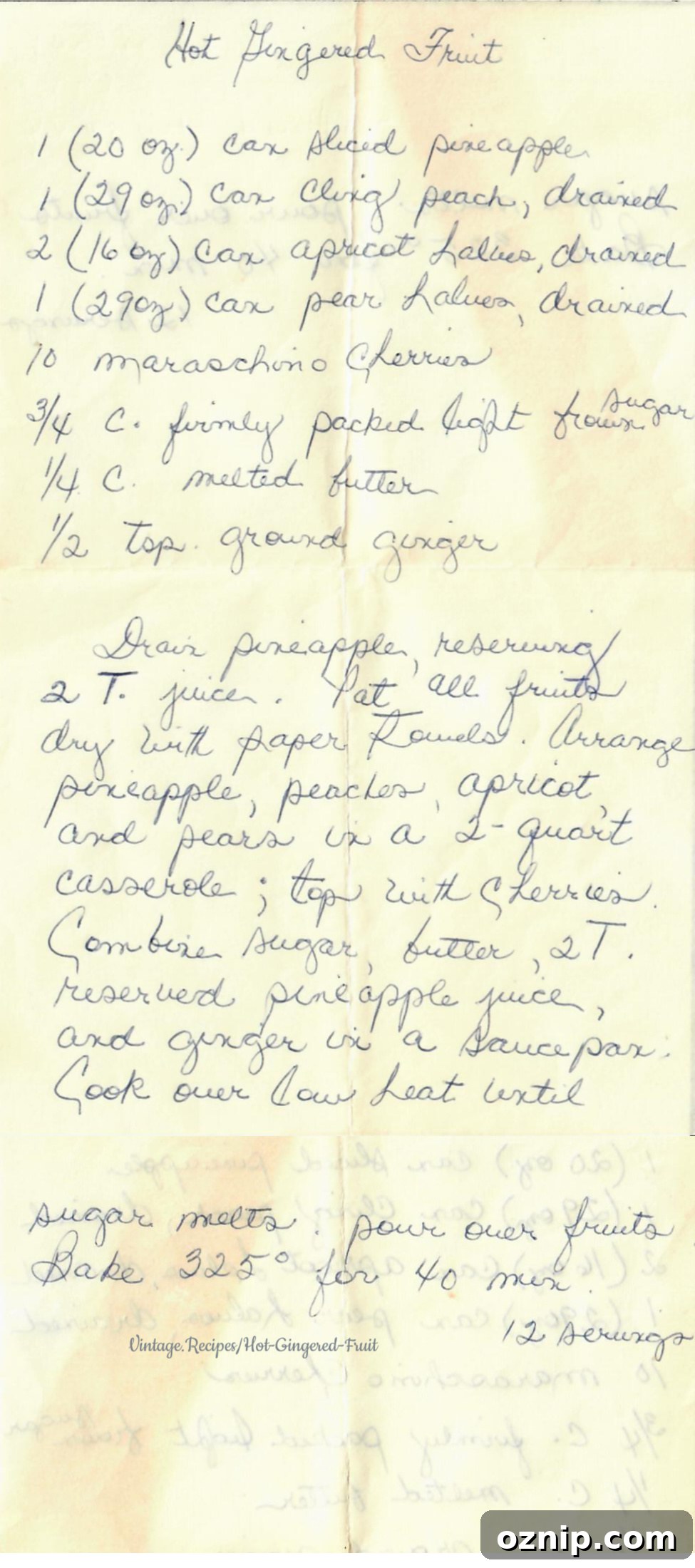
Ingredients
- 1 (20-ounce) can sliced pineapple
- 1 (29-ounce) can cling peaches, drained
- 2 (16-ounce) cans apricot halves, sliced
- 1 (29-ounce) can pear halves, drained
- 10 maraschino cherries
- 3/4 cup firmly packed light brown sugar
- 1/4 cup melted butter
- 1/2 teaspoon ground ginger
Method
Start by preheating your oven to 325°F (163°C). Drain the canned pineapple and reserve two tablespoons of the pineapple juice for the glaze. Pat all of the fruit dry with paper towels to remove excess syrup; this helps the glaze adhere and prevents the casserole from becoming too watery.
Arrange the sliced pineapple, drained peaches, sliced apricots, and drained pear halves in an even layer in a 2-quart casserole dish. Nestle the fruit so it covers the base of the dish, then place the maraschino cherries evenly on top for color and a touch of sweetness.
In a small saucepan, combine the light brown sugar, melted butter, the two tablespoons of reserved pineapple juice, and the ground ginger. Warm the mixture over low heat just until the sugar dissolves and the ingredients are well combined. Stir gently and remove from heat—there’s no need to boil. Pour the warm sugar-butter-ginger glaze evenly over the arranged fruit so every piece gets a light coating.
Bake the casserole in the preheated oven for 40 minutes. The fruit should be heated through, the glaze slightly caramelized, and the juices bubbling gently around the edges. Remove from the oven and allow the dish to rest for a few minutes before serving so the juices settle.
This recipe yields approximately 12 servings. Serve warm or at room temperature as a simple dessert, a colorful side for holiday meals, or a sweet component alongside yogurt, pancakes, or ice cream.
Tips for Best Results
– Patting the fruit dry is important. Excess syrup from canned fruit can dilute the glaze and make the casserole watery. Use paper towels to blot each piece gently.
– If you prefer a deeper caramel flavor, you can brown the brown sugar and butter briefly over medium heat, but watch closely so the sugar does not burn.
– For a more textured presentation, slice some apricot halves thinly and layer them with the larger pear and peach halves so each spoonful contains a mix of fruit.
– If your canned fruit is packed in heavy syrup, rinsing briefly under cold water and then patting dry will reduce overall sweetness and help the glaze adhere better.
Serving Suggestions
This baked fruit casserole works well as a light dessert or a colorful accompaniment to a brunch spread. Serve it warm over vanilla ice cream, Greek yogurt, or alongside warm pancakes or waffles. For a festive touch, sprinkle a few toasted almonds or chopped pistachios on top just before serving to add crunch and contrast.
Variations and Substitutions
– Fresh fruit alternative: If you have ripe, fresh peaches, pears, or apricots, you can substitute them in equal amounts. Reduce overall baking time slightly and monitor until the fruit is tender.
– Spice variations: Swap the ground ginger for a pinch of cinnamon or nutmeg to change the aromatic profile. A small splash of vanilla extract added to the glaze after removing from heat can also enhance flavor.
– Sweetness adjustments: To reduce sweetness, use light syrup or fruit packed in water, and adjust the brown sugar to taste. For a richer sweet note, add a tablespoon of honey to the glaze.
Storage
Allow leftovers to cool to room temperature, then cover and refrigerate for up to 3–4 days. Reheat gently in a low oven or microwave until warm. If the casserole releases extra liquid after refrigerating, spoon off excess juices before reheating or serve the juices alongside as a sauce.