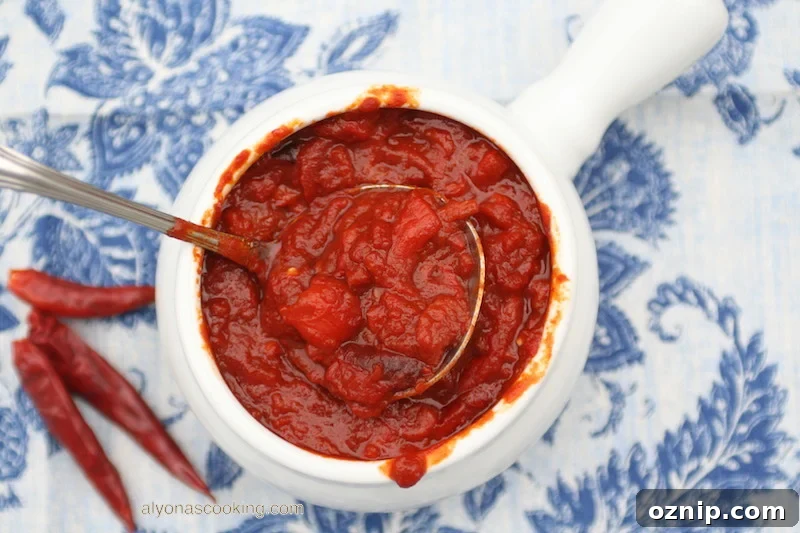
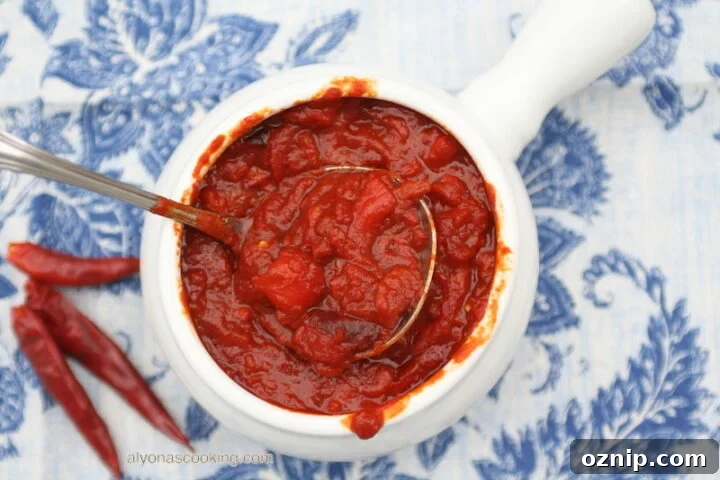
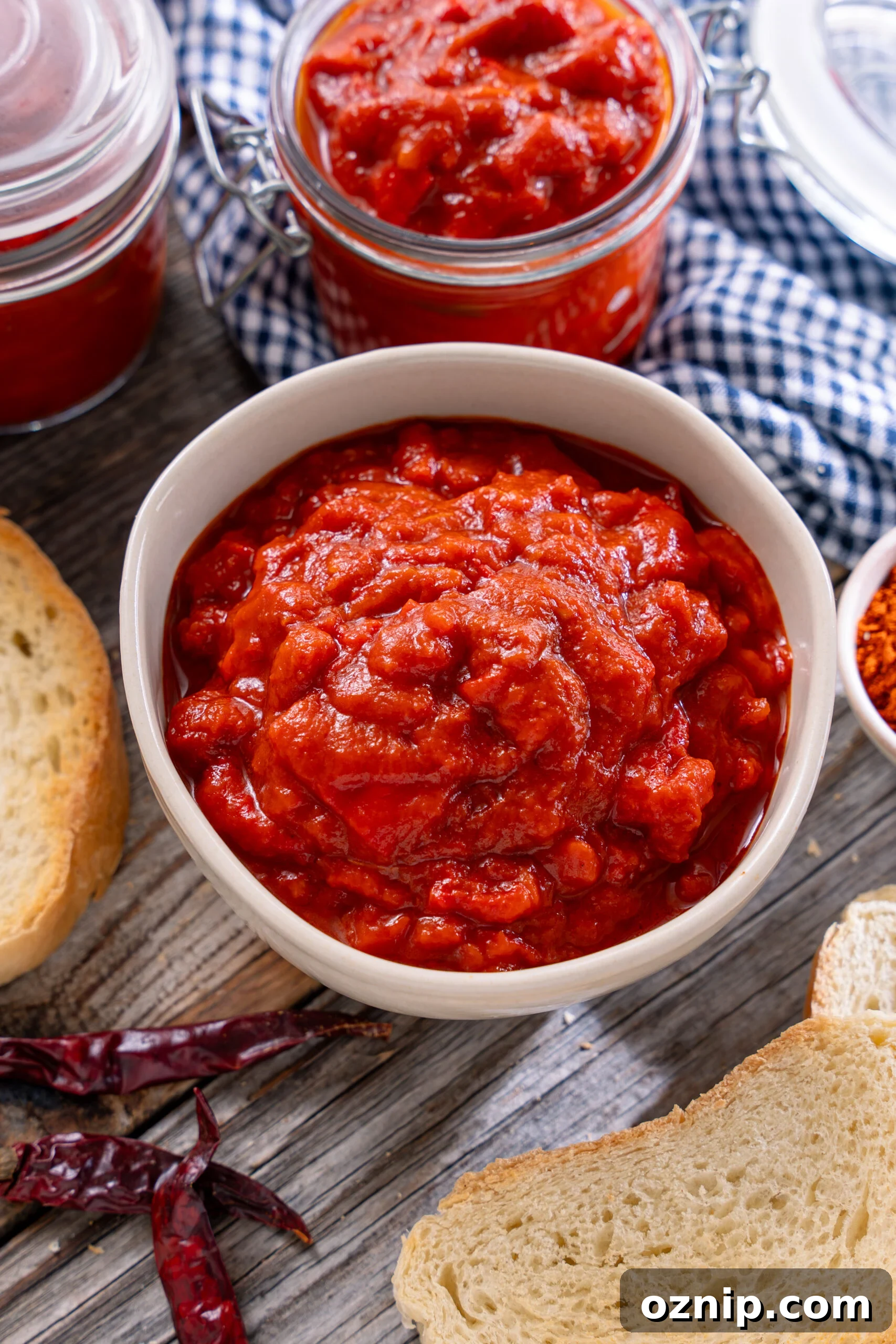
Matbucha is a traditional Jewish-Moroccan cooked salad made from roasted bell peppers and tomatoes. Slow-simmered to develop deep, layered flavors, this spread combines smoky roasted peppers, ripe tomatoes, and a gentle chili kick. Thick and jammy, matbucha works beautifully as a dip with fresh bread, as a colorful appetizer on a mezze board, or as the tomato base for shakshouka.
What Is Matbucha?
Matbucha (from the Arabic matbukhu, meaning “cooked”) is a staple of North African home cooking and a favorite on Shabbat tables. The dish centers on slow-cooked tomatoes and roasted peppers that are reduced until they form a thick, spreadable mixture. It is smoky, slightly sweet, tangy, and often finished with olive oil and paprika, resulting in a paste-like consistency ideal for dipping or spreading.
This salad-like spread can be served warm or chilled. While some enjoy it tossed with rice or as a salad component, the most popular use is as a hearty spread on bread, flatbread, or crostini. Variations include adding eggplant or extra garlic for a bolder taste, and many markets sell canned versions of roasted pepper and tomato salads for convenience.
Why Slow Cooking Matters
Slow simmering is essential to matbucha’s complex flavor. Cooking the tomatoes and peppers gently over time concentrates sugars and melds the ingredients, producing a rich, layered profile you won’t get from quick sautés. Roasting the bell peppers beforehand adds a smoky depth that elevates the whole dish.
Mise en Place
Equipment
- Large baking sheet lined with foil
- Medium to large saucepan with a lid
- Wooden spoon for stirring
- Chef’s knife
- Cutting board
Ingredients
A classic matbucha relies on a short list of accessible ingredients. Quantities below make a generous batch suitable for serving 6–8.
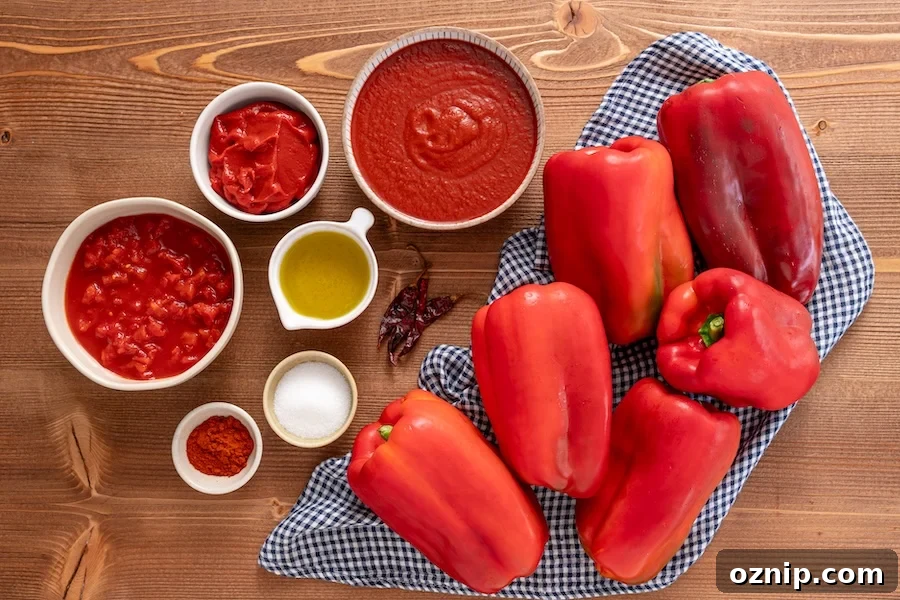
- 6 large red bell peppers, halved, seeded and membranes removed
- 3 dried chili peppers (or 1–2 fresh jalapeños), or crushed red pepper to taste
- 14.5 oz (1 can) diced tomatoes
- 15 oz (1 can) tomato sauce
- 6 oz tomato paste
- 2 tablespoons sugar (balances acidity)
- 1/3 cup olive oil
- 1 tablespoon paprika
- 1 teaspoon salt, or to taste
Optional: 2–8 cloves garlic for a more pungent, garlicky matbucha; authentic recipes often include lots of fresh garlic.
Pro tip: Keep a lid on the pot while simmering — the tomato mixture can splatter during the long cooking process.

How To Make Matbucha
This version is slightly heavier on roasted bell peppers for a sweeter, pepper-forward spread. Adjust salt and chili to suit your taste.
- Roast the peppers: Preheat the oven to 450°F (232°C). Place halved bell peppers skin-side up or down on a foil-lined baking sheet. Roast 30–45 minutes, until the skins are charred.
- Prepare tomatoes: While peppers roast, combine diced tomatoes, tomato sauce, tomato paste, dried chilies or jalapeño, sugar, and salt in a medium saucepan. Bring to a boil, then reduce to low and simmer, stirring occasionally.
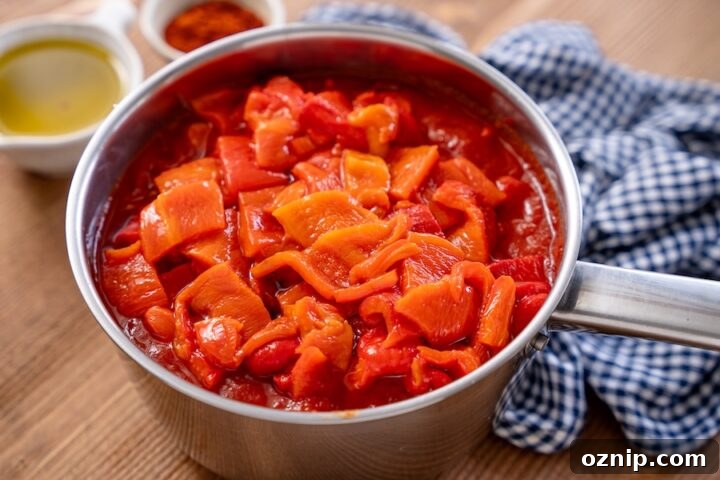
- Steam and peel: When peppers are done, wrap them in the foil and let them steam for 5–10 minutes. This loosens the skins, making them easy to peel. Remove skins and coarsely chop the roasted flesh.
- Combine and simmer: Add chopped roasted peppers to the simmering tomato mixture. Simmer over medium-low heat for 30 minutes with the lid on to minimize splatter.
- Finish: After 30 minutes, stir in the olive oil and paprika. Continue to simmer, uncovered or partially covered, for another 30 minutes, stirring occasionally to prevent sticking. Adjust seasoning with salt and more sugar if needed.
- Serve: Cool slightly and serve warm, or chill and serve cold. Matbucha is excellent with fresh bread, pita, challah, or as a base for eggs or grilled fish.
Storage
Allow matbucha to cool to room temperature, then transfer to an airtight container. Store in the refrigerator for 3–5 days. For longer storage, freeze portions in airtight containers or bags for up to three months.
How To Eat Matbucha
- Serve as a warm or cold dip with crusty bread, pita, or crostini.
- Use as the tomato base for shakshouka (poached eggs in a chunky tomato sauce).
- Plate with olives and cheeses as part of a mezze or charcuterie spread.
- Stir a spoonful into rice, couscous, or grains for extra flavor.
- Mix a tablespoon into salads or grain bowls to add a roasted tomato-pepper boost.
Notes & Variations
- If you have fresh tomatoes, substitute about 36 oz fresh diced tomatoes and cook down longer until thickened.
- Any color of sweet bell peppers can be used; red peppers add the most natural sweetness and color.
- Swap dried chilies for 1–2 fresh jalapeños or 1 teaspoon crushed red pepper flakes for heat control.
- Authentic recipes sometimes add large quantities of garlic; add 2–8 cloves depending on your preference.
Q&A
How long will matbucha keep?
Refrigerated, homemade matbucha lasts 3–5 days. For longer storage, freeze in airtight containers for up to 3 months, or up to 6 months in a deep freezer.
Can you freeze matbucha?
Yes. Cool completely, then pack into freezer-safe bags or containers. Thaw in the refrigerator and gently reheat before serving.
Final Thoughts
Matbucha is simple to make yet richly flavored, relying on good ingredients and time to transform fresh vegetables into a versatile spread. Whether you serve it as part of a shared appetizer platter, spoon it over eggs, or enjoy it as a snack with warm bread, matbucha adds vibrant color and satisfying depth to any meal.