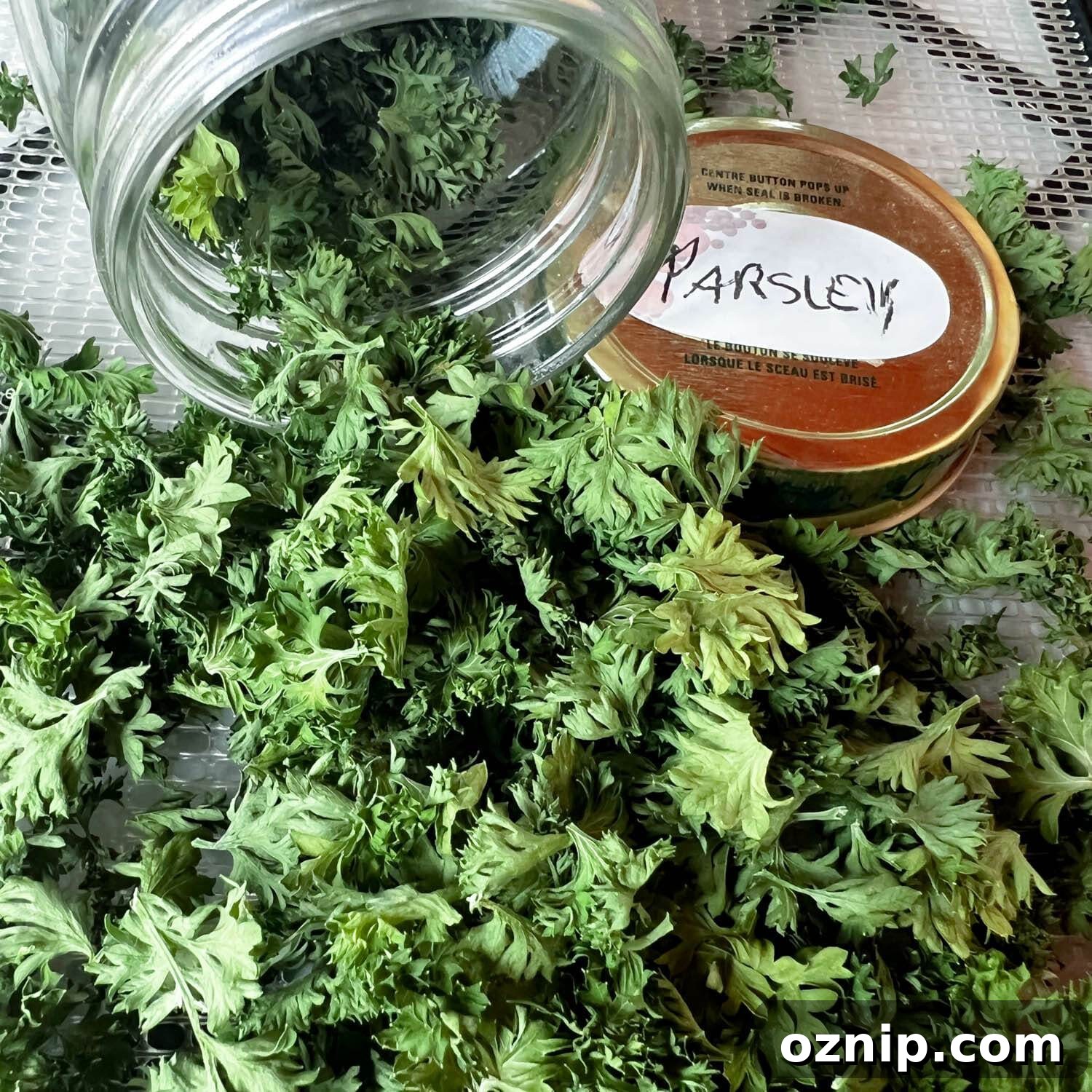
Learn how to dry parsley. Whether you grow it yourself or bought a large bunch at the store, drying parsley is simple and a useful way to preserve flavor for your pantry. The methods work the same for curly or flat-leaf parsley.
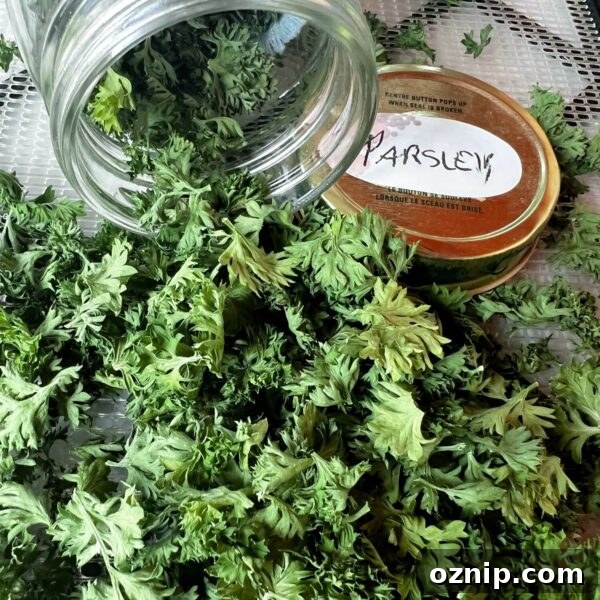
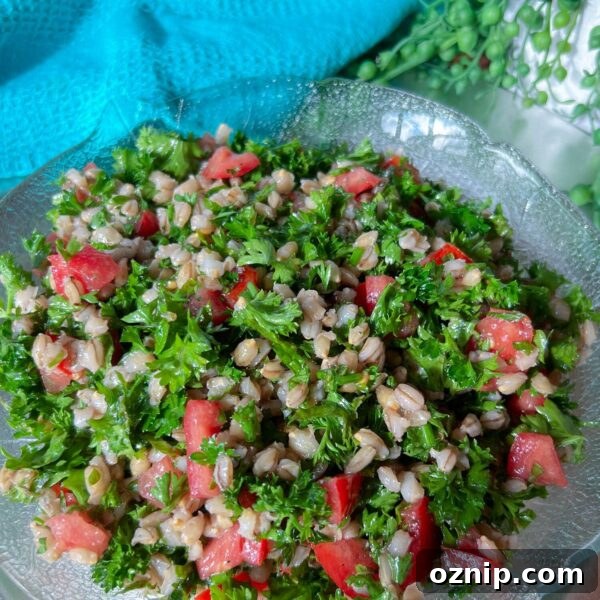
Note: I personally prefer freezing parsley for longer flavor retention, but I always dry some for seasoning blends, soup mixes and lightweight backcountry meals.
I recommend a dehydrator as the most reliable method, though you can also use an oven (set no higher than 150°F / 65°C), the microwave for small batches, or air-dry in warm, dry climates.
How to Dehydrate Parsley Using a Dehydrator
Dry Parsley Using a Dehydrator
Dried parsley rehydrates quickly and can be added directly to dishes. To get the best aroma and flavor, crush or crumble the dried leaves just before using.
Equipment
- Dehydrator
Ingredients
- 1 or more bunches of parsley (flat or curly)
Instructions
-
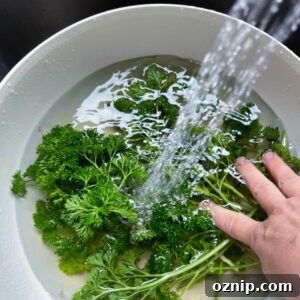
Wash the parsley: Swirl the leaves in a bowl of water and remove any blemished or yellow pieces. Repeat until the water is clear and no dirt or insects remain.

-
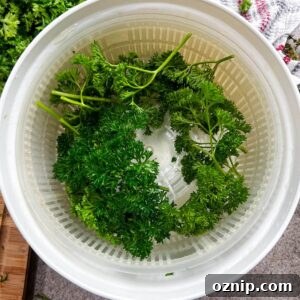
Dry the leaves: Use a salad spinner to remove as much surface moisture as possible, or gently pat with kitchen towel. Removing surface moisture prevents dark spots and mold.
-
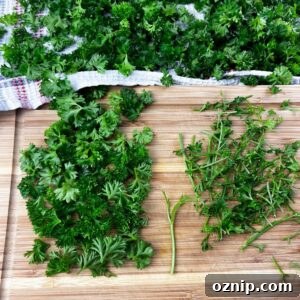
Trim and remove large stems: Use scissors or a knife to trim tender leaves from tougher stems. Thick stems will take longer to dry, so remove as many as you prefer.
-
Keep leaves whole: Do not chop the leaves before drying. Smaller pieces release essential oils as they dry, which reduces the final flavor of the preserved herb.
-
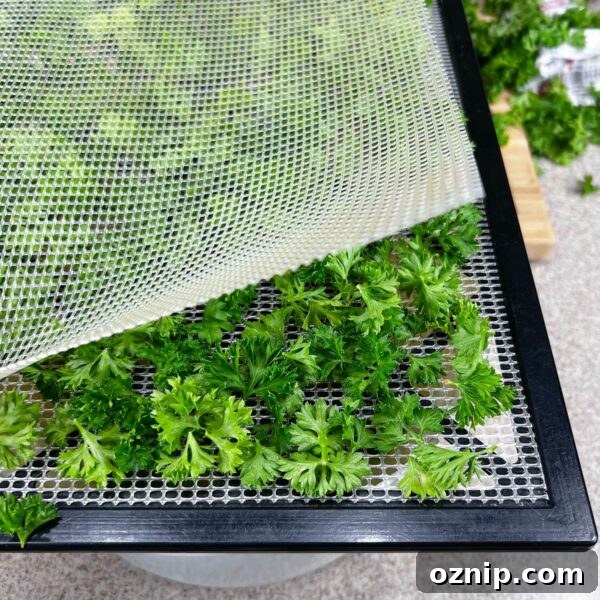
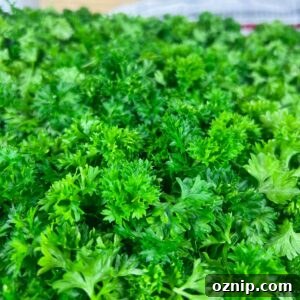
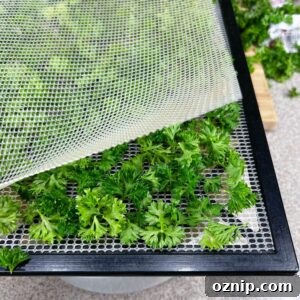
Arrange on mesh trays: Spread leaves in a single layer on mesh trays. Use extra trays if needed. Cover with another mesh liner to keep small bits from blowing around.
- Set the dehydrator: Dry at about 95°F (35°C). Depending on humidity, drying usually takes 3–5 hours.
-
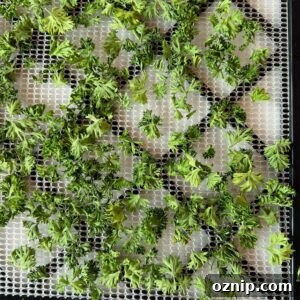
Check for dryness: Parsley is finished when the leaves crumble easily. If they bend, dry them longer.
-
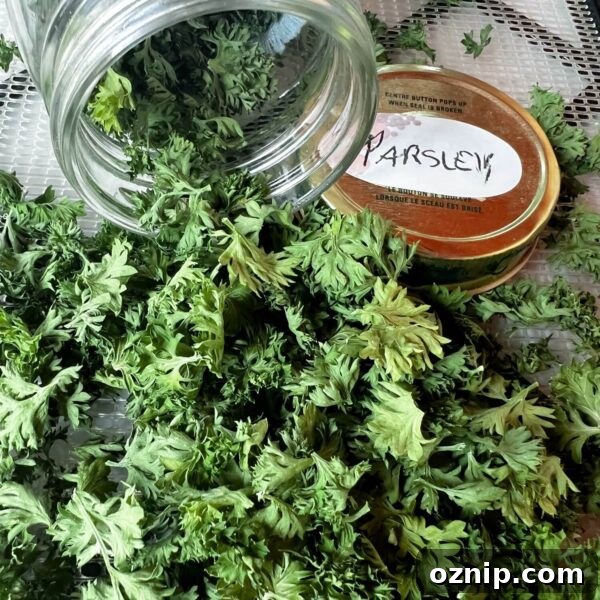
Store dried parsley: Let the herb cool completely before placing it in an airtight container that closely fits the amount. Too much empty space traps air and speeds flavor loss. Do not crumble the leaves until just before using to preserve oils and aroma. Store in a cool, dry, dark place.
- Enjoy: Dried parsley remains safe to eat for a long time, but flavor declines. For best taste use within 3–6 months.

Notes
Parsley loses flavor fairly quickly. At around three months it will have lost a significant portion of its bite, and by six months it will mostly be decorative green flakes with minimal flavor. Add dried parsley to soups, stews, casseroles, curries, egg dishes or potatoes. Start with about 1 tablespoon and adjust to taste. Crumble just enough to sprinkle as a garnish for pasta, rice or potatoes. Dried parsley also works well in seasoning blends and finishing salts.
How to Dry Parsley in the Microwave
The microwave works well for small amounts.
- Wash, dry and remove large stems as described above.
- Place parsley in a single layer between two sheets of paper towel.
- Microwave for 30 seconds at medium-to-high power, then check. Microwaves vary, so lower power and shorter intervals reduce the chance of burning. Test a small batch first if unsure.
- Allow to cool briefly, remove any brittle leaves, rotate the rest and microwave in 15–30 second increments until all leaves are dry and crumbly.
- Cool completely and store as described earlier.
Can I Dry Parsley in the Oven?
Yes, but it’s less forgiving. Use the oven only if it can be set very low. Ideally herbs should be dried around 95°F (35°C). If your oven’s lowest temperature is much higher (for example, over 170°F), the heat can degrade the essential oils and reduce flavor.
- Set oven to its lowest temperature.
- Arrange parsley in a single layer on a parchment-lined baking sheet.
- Heat until leaves are brittle and crumble easily, checking often — usually 2–4 hours depending on your oven and humidity.
- Cool and store as instructed above.
How to Hang Parsley to Air Dry
Air drying works well only in warm, dry climates. In humid areas the herbs can mold before drying.
- Wash and dry the parsley but leave stems intact.
- Tie 5–6 stems into small bundles, allowing good air circulation around each bunch.
- Hang in a warm, well-ventilated spot out of direct sunlight.
- Drying can take up to two weeks. Leaves should feel crumbly when dry.
- Remove stems and store as directed above.
How to Store Dried Parsley
Storage affects how long dried herbs stay flavorful. Use an airtight container that fits the amount closely and keep it in a cool, dark place with stable temperature. Protect dried herbs from air, moisture, light, heat and time to preserve color and aroma.

How to Use Dried Parsley
Dried parsley rehydrates quickly when added to hot dishes. Toss it directly into soups, stews, casseroles, curries, egg dishes or potatoes. Use about 1 tablespoon to start and adjust to taste. For a fresh look, crumble small pieces over pasta, rice or roasted vegetables as a garnish. Dried parsley is also handy in homemade seasoning blends, finishing salts and dried meal mixes.
How Long Will Dried Parsley Last?
Parsley loses flavor fairly quickly. By three months it will have lost a significant portion of its taste; by six months it will mostly be decorative green flakes with limited flavor. Follow good storage practices to maximize what remains of its aroma, and consider freezing parsley if you want to preserve more fresh flavor for longer.
Harvesting and Preserving Other Herbs
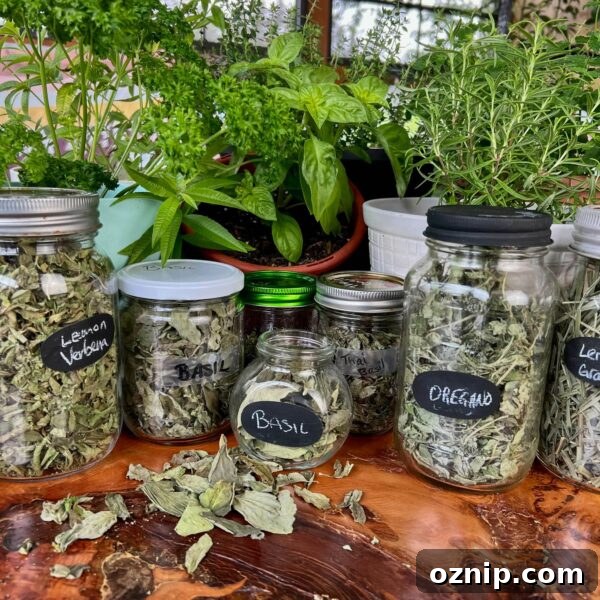
Expand your herb-preserving skills with other favorites: basil, green onions, lavender, rosemary, dill, chamomile, lemon balm and more. Each herb has its best methods and timing for harvesting and drying.
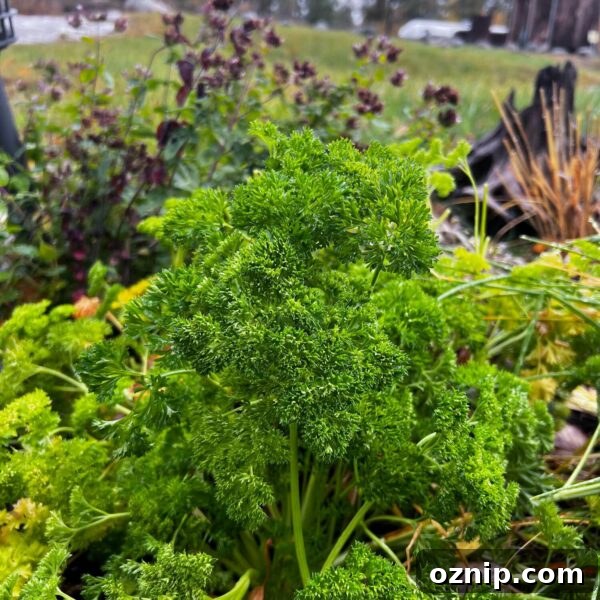
Will you dry parsley this season? What’s your favorite way to use it? Share your experience with friends and fellow cooks.

Be confident growing and using herbs.
Access practical tips and recipes in one place. Learn how to grow herbs, harvest, preserve and cook with them through clear, step-by-step guidance.
What you’ll find
- How to grow herbs
- Step-by-step harvesting and preserving instructions
- Tea and beverage recipes
- Appetizers, salads, mains and desserts
- Answers to common herb FAQs
Available in ebook and paperback formats.
Cook with the seasons, effortlessly. Getty, a food educator and Professional Home Economist, helps you select, store and serve seasonal ingredients in simple everyday meals. Sign up for seasonal tips and recipes and explore books and video content to dive deeper into preserving and cooking with herbs.