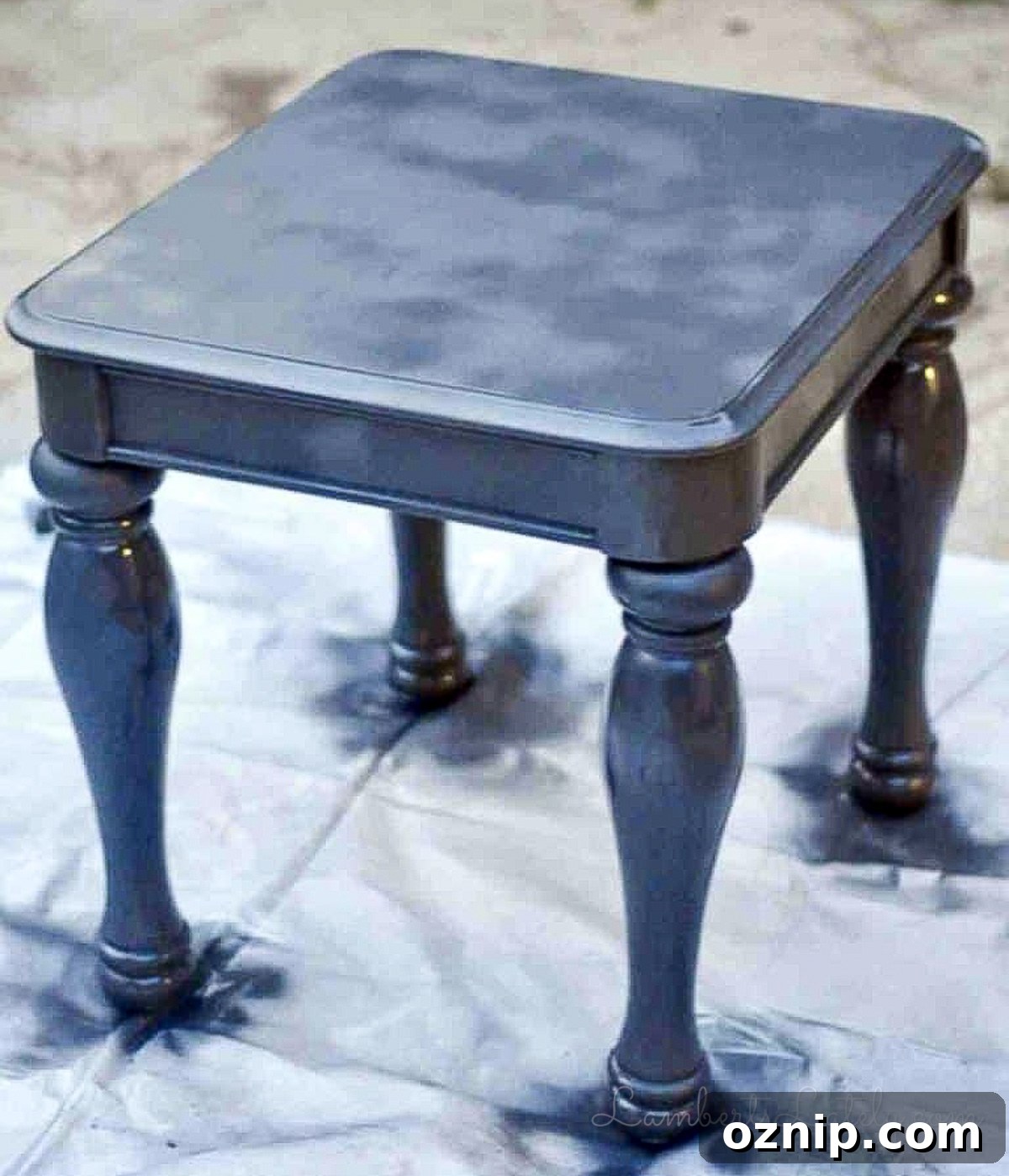
Give your laminate furniture new life! See how to spray paint laminate furniture the easy way, using spray chalk paint. This approach works well even for inexpensive pieces.
Paid links were used in the original post; affiliate disclosures were included there.
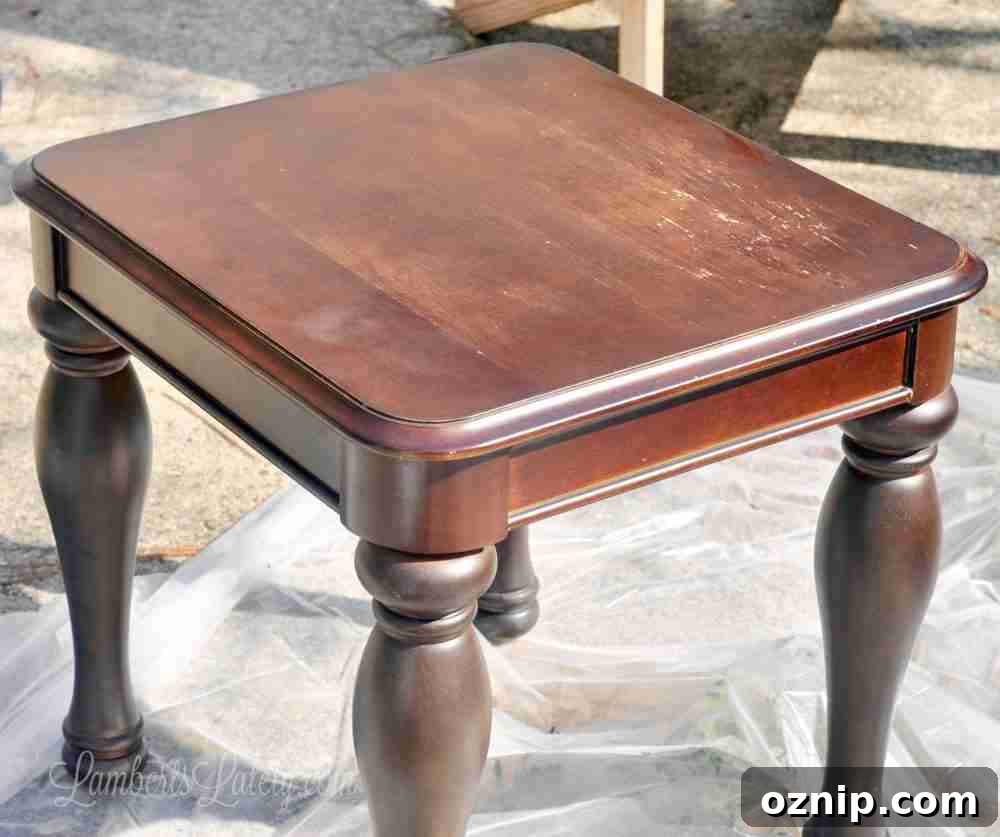
This old table has been through a lot.
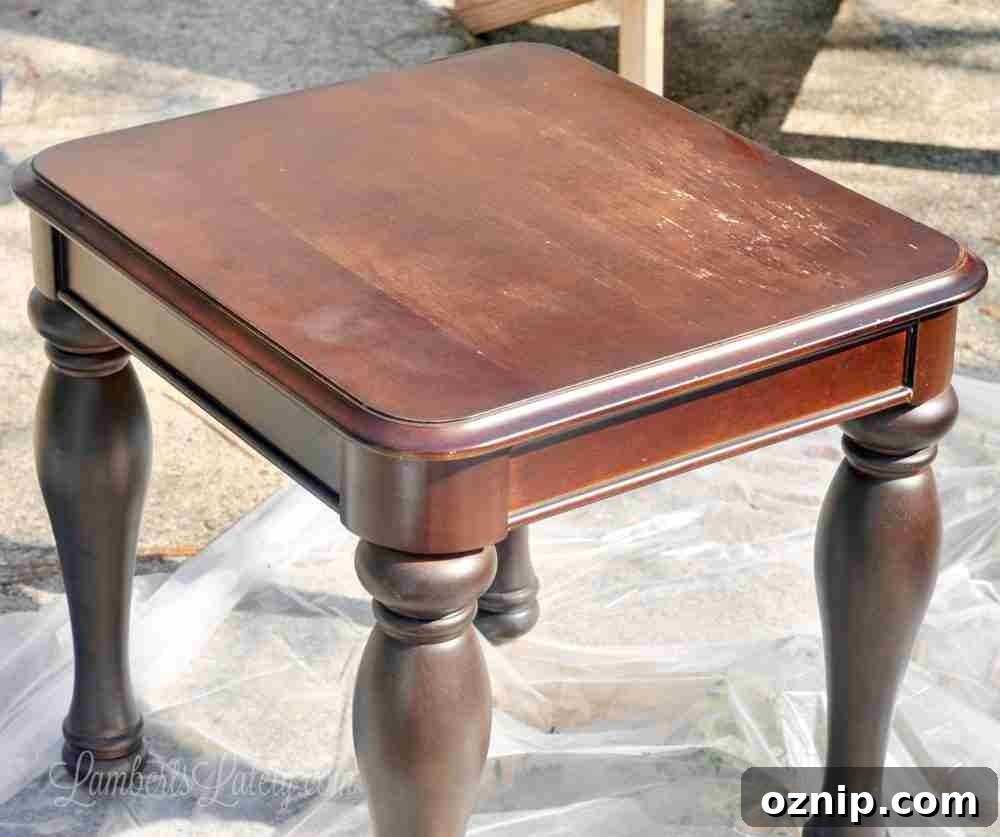
My pair of end tables have been in our home for years. They served in the living room and later moved to the playroom, where their chipped, brown wood veneer no longer matched the decor. The tables were structurally fine but worn and dated, so they just needed some TLC to feel fresh again.
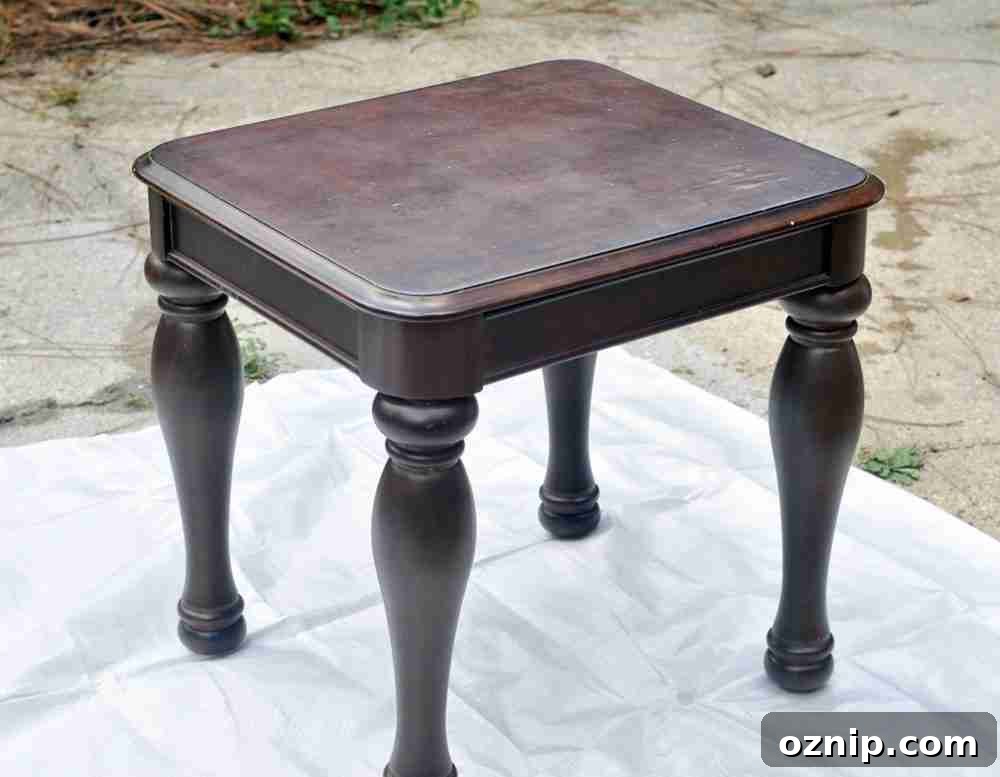
I love the look of chalk paint—it’s beautiful and durable when applied correctly. The challenge is that traditional brush-applied chalk paint can show brush strokes and take time to smooth. For multiple pieces (two end tables, a coffee table, a bookshelf, and an entertainment center) I wanted a faster, cleaner method.
Spray chalk paint offered the streamlined approach I needed. Below I detail a reliable, step-by-step method to spray paint laminate furniture so your pieces look professional and hold up to everyday use.
Supplies Needed
- Old laminate piece to refresh
- Damp rag
- 220-grit sandpaper
- Sanding block
- Zinsser Bulls-Eye 1-2-3 primer spray (or a similar bonding primer; plan one can per medium piece)
- Rust-Oleum Chalked spray paint or other oil-based matte spray chalk paint (one can per piece, more for larger items)
- Small sponge brushes or foam rollers for smoothing
- 120-grit sandpaper for distressing
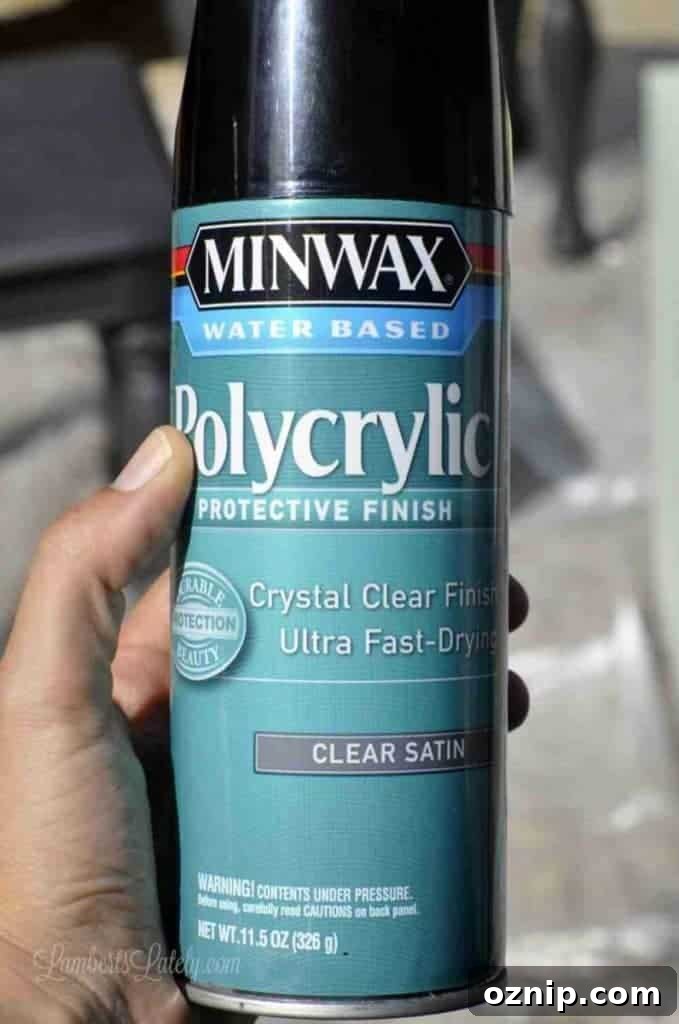
- Minwax Polycrylic spray or another clear protective spray finish
Step 1: Clean the surface of the laminate
Start with a clean, dry surface. Wipe the piece thoroughly with a damp cloth to remove grease, grime, and dust. Let it dry completely before proceeding. This simple prep prevents trapped dirt from affecting adhesion and finish.
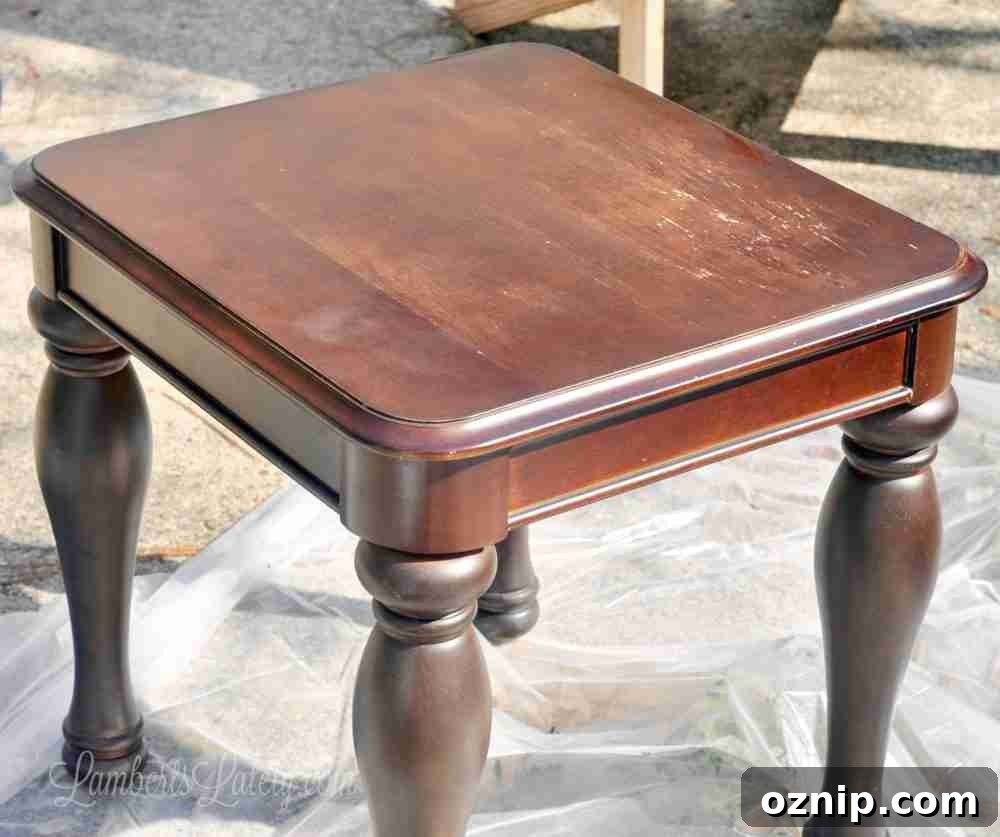
Step 2: Sand all furniture surfaces
After cleaning, inspect the piece for chips, peeling laminate, or bubbles from moisture. These imperfections should be addressed now. Light sanding is essential because laminate is very smooth and paint needs a slightly roughened surface to adhere well.
Use medium-grit sandpaper—around 220 grit—wrapped around a sanding block and sand the entire piece, focusing on uneven areas. Remove dust with a clean cloth and perform a “hand test”: run your hand over the surface to feel for any remaining bumps or rough spots. Repeat sanding until the surface feels smooth and even.
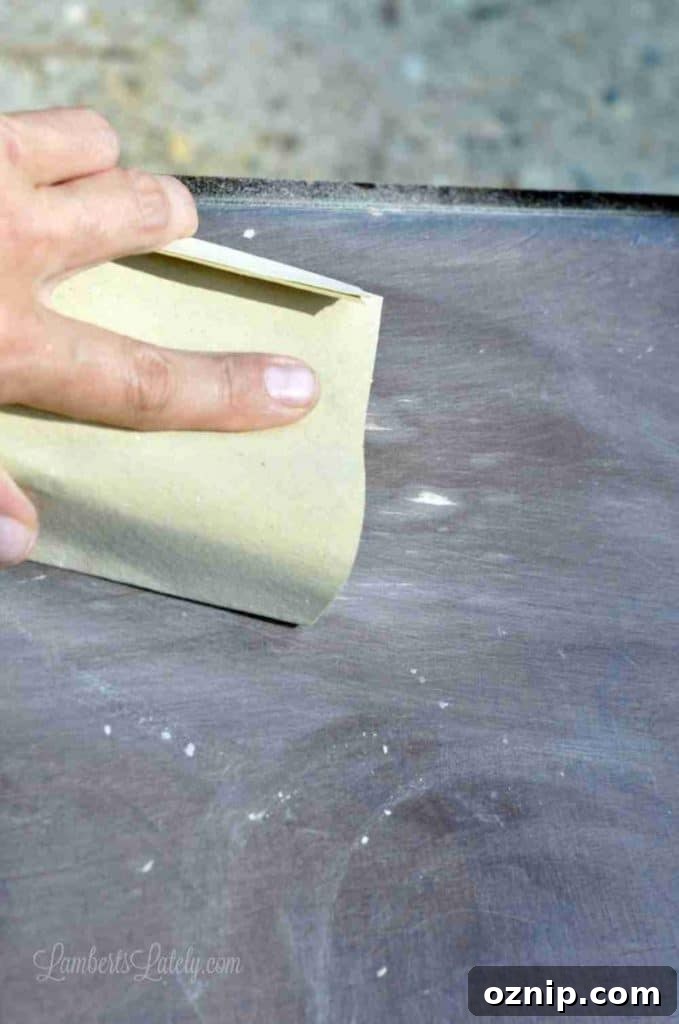
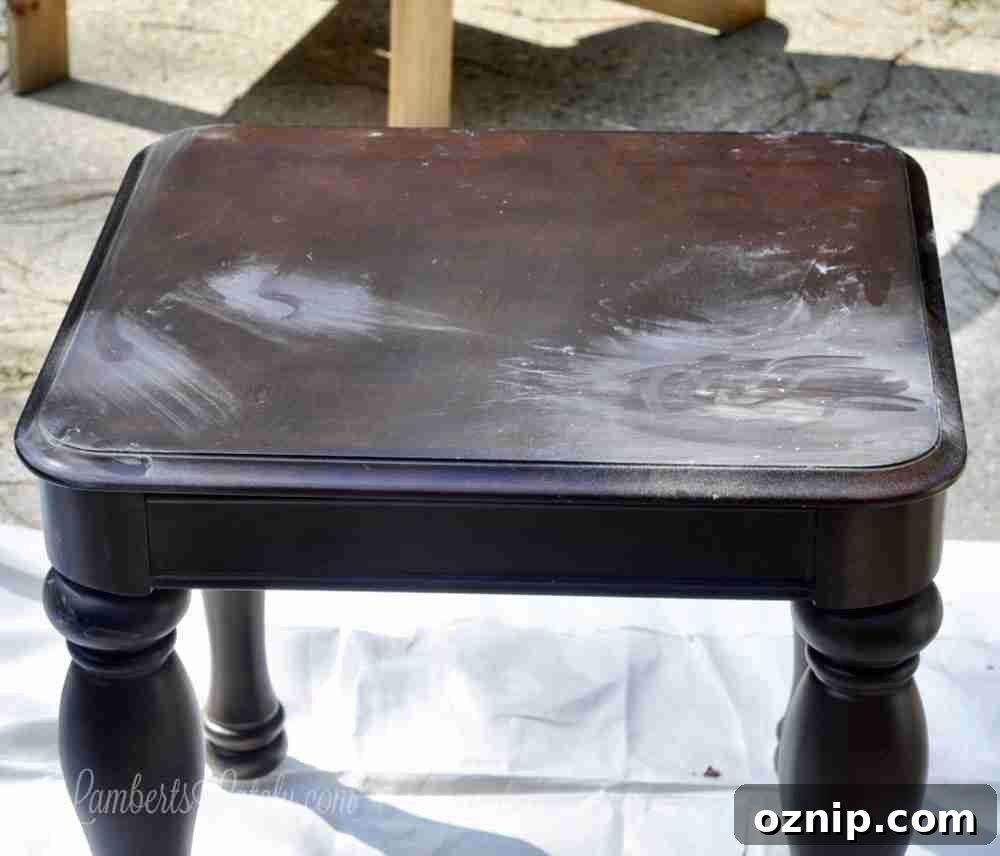
Step 3: Use a spray primer
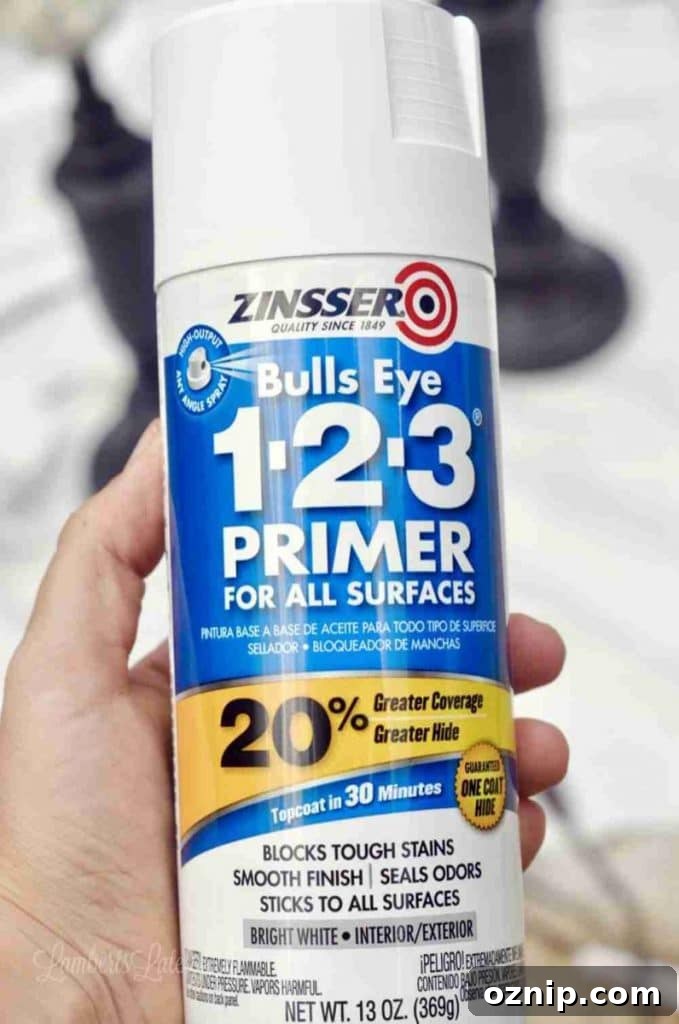
Once the piece is smooth and dust-free, apply a bonding primer. An oil-based spray primer formulated to adhere to slick surfaces is ideal. Primer is non-negotiable for laminate. It gives the paint something to grip and improves durability. Apply the primer from about a foot away, using quick, even passes. The coat can be thin and doesn’t need to be perfectly opaque.
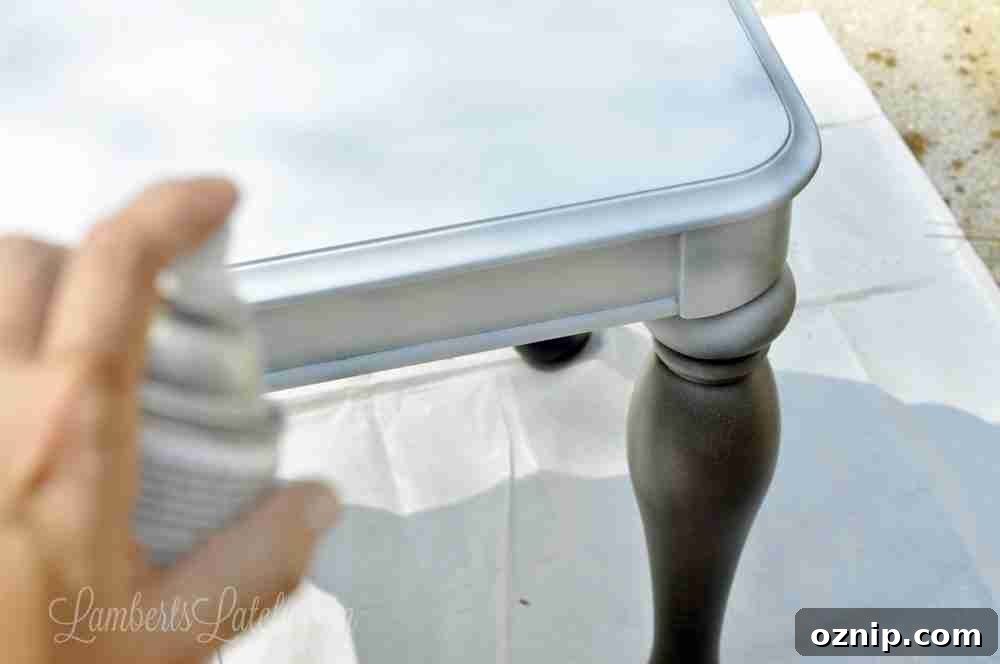
Allow the primer to dry fully—usually an hour or two depending on conditions. For most medium-sized pieces, one can of primer is sufficient.
Step 4: Spray with chalk paint
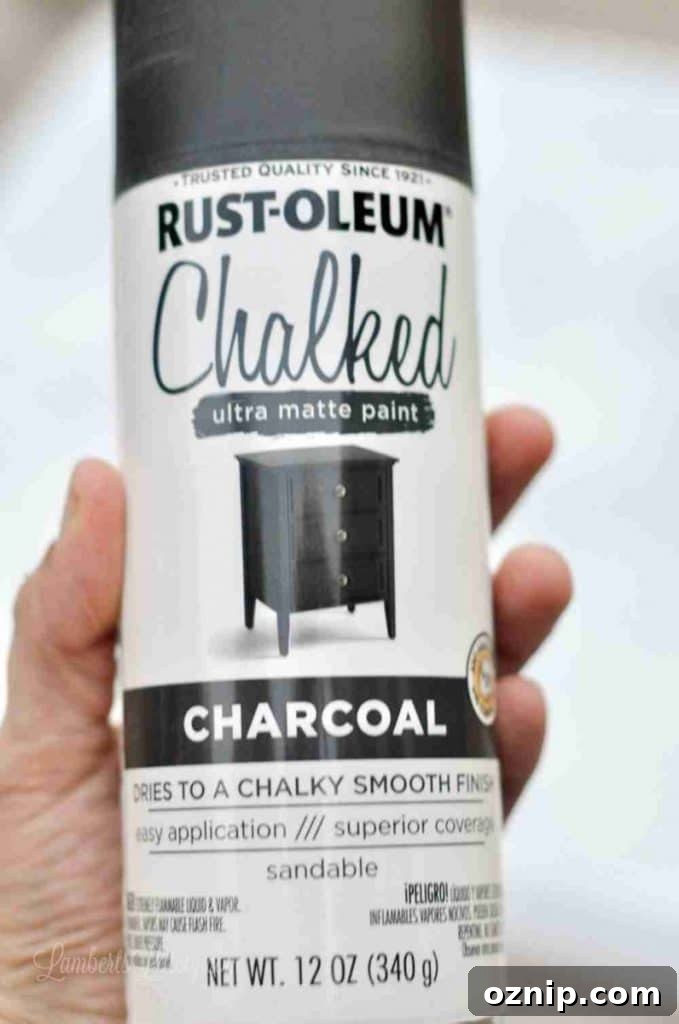
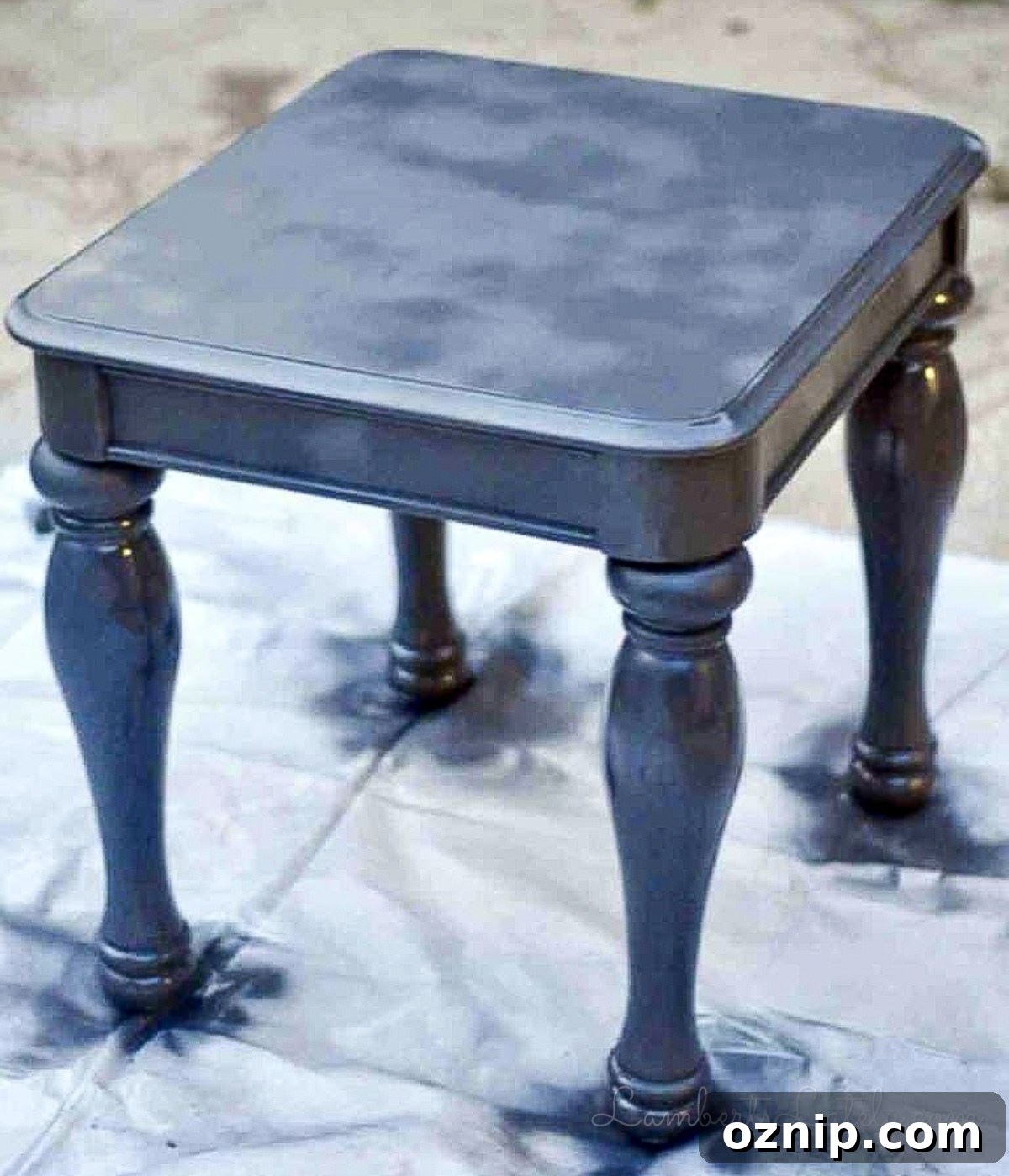
After the primer is dry, apply the chalk paint in thin, even coats. Spray paint removes brush marks and reaches crevices cleanly. Hold the can about a foot away and sweep in steady strokes to avoid drips or clumps.
Two light coats are usually enough for full coverage—apply the first coat to build a base and the second to even out color and cover any remaining exposed laminate. Keep a small sponge brush or foam tool handy to smooth any wet clumps before they dry.
(Optional) Step 5: Distress the furniture
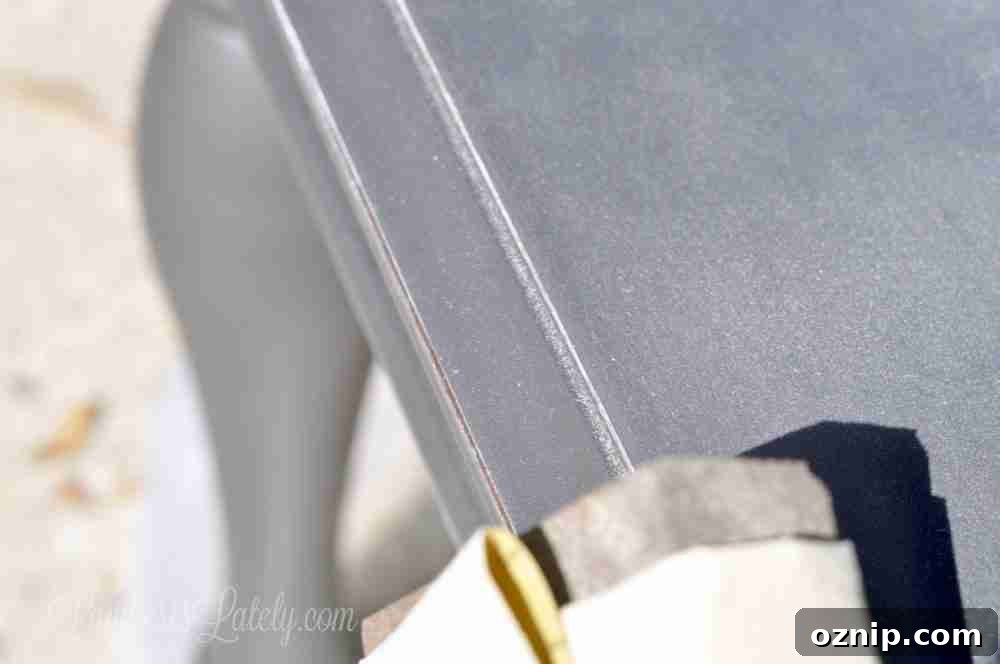
If you prefer a worn, vintage look, lightly sand edges and high spots with 120-grit sandpaper to reveal some of the primer or original finish. Distressing takes very little effort but can dramatically change the character of the piece.
Step 6: Seal the paint with a protective finish
Finish the job with a clear topcoat to protect the paint from daily wear. A water-based clear acrylic spray like polycrylic works well over chalk paint and is less fussy than wax. Apply thin, even coats and avoid blocking the nozzle with your finger to prevent bubbles. Two coats are a good starting point; add more for pieces that will see heavy use.
Before & After
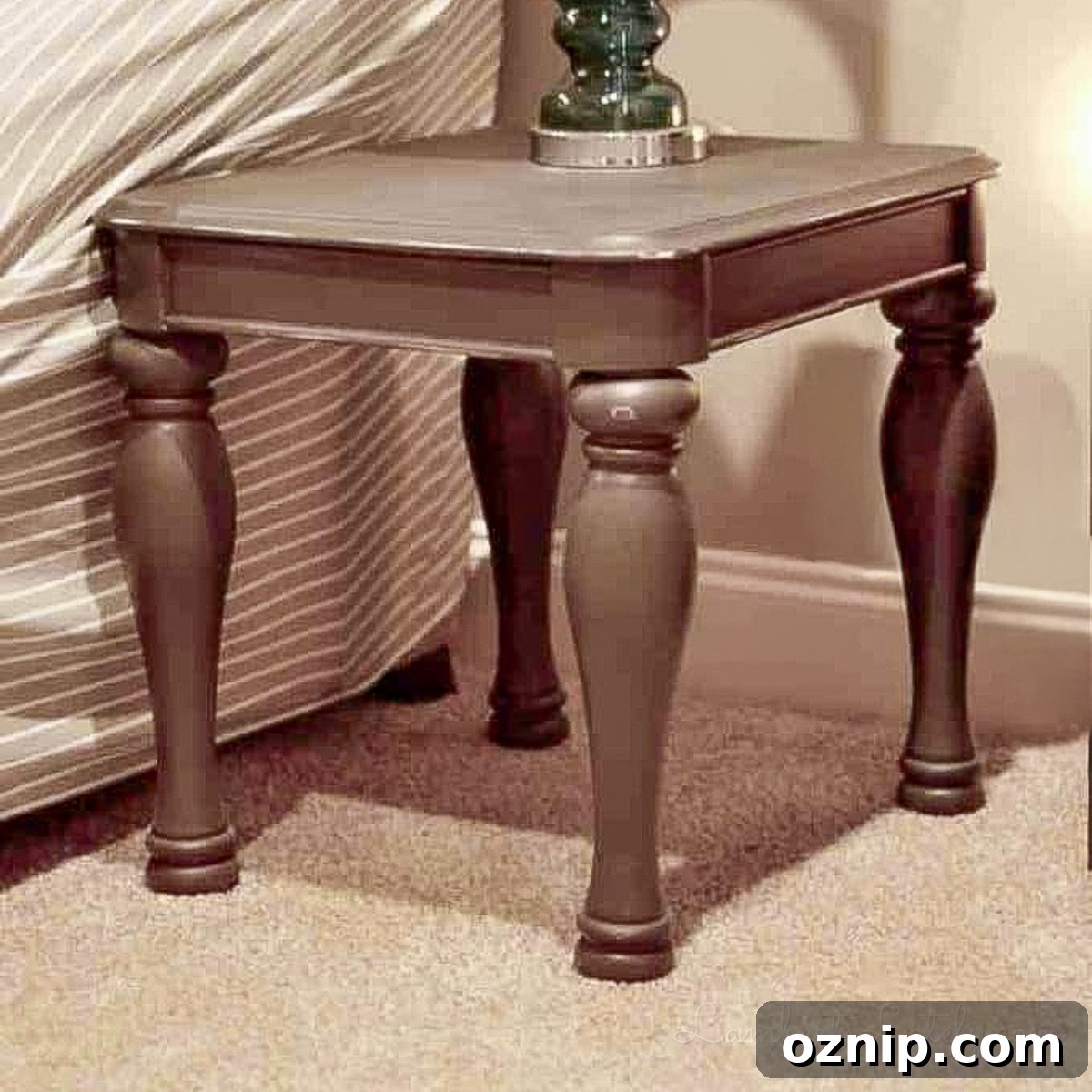
Here’s a reminder of the transformation from the worn original to the refreshed finish.
And the after:
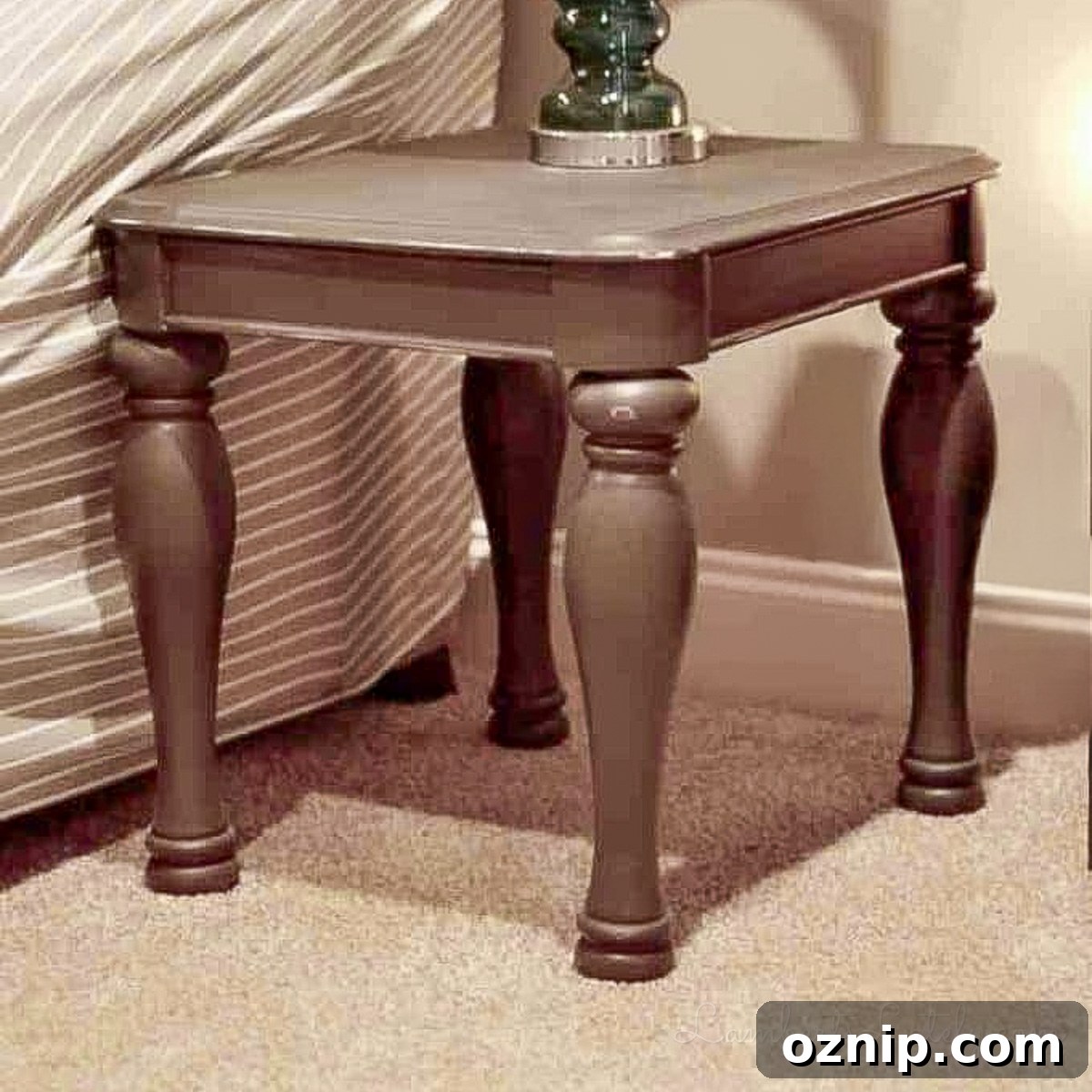
The table feels like a new piece. After seven years of use in a busy playroom, the finish has held up exceptionally well with minimal wear—proof that proper prep, primer, paint, and sealing really matter.
Helpful Laminate Furniture Spray Painting Tips
- Remove drawers and shelves first – Paint removable parts separately for even coverage and a professional look.
- Works on real wood too – This prep and spray method refreshes solid wood pieces as well as laminate.
- Great for flat-pack furniture – Ikea-style laminate or MDF pieces handle this technique well; prep and primer still apply.
- Watch for stains – Extra sanding on dark marks improves coverage; keep in mind light colors may not fully hide deep stains.
- Avoid latex for laminate – Water-based latex can be prone to peeling on laminate; oil-based chalk spray with primer and a clear topcoat is more durable.
FAQs
For durability, use oil-based spray paint or a spray chalk paint designed for furniture. Spray application reduces visible brush strokes and reaches all the details on a piece.
Prime the surface first with a bonding primer to create adhesion. Proper sanding, priming, and sealing are the keys to long-lasting paint on laminate.
Because laminate is very smooth, always use a primer first. Skipping primer increases the risk of peeling and reduces durability.
Most laminate uses a printed wood grain that will not accept stain the way real wood does. Staining laminate is not recommended—painting is the better option.
More DIY Projects
- $20 Blanket Ladder
- Outdoor Sectional Sofa project
- DIY Built-In Refrigerator trim kit