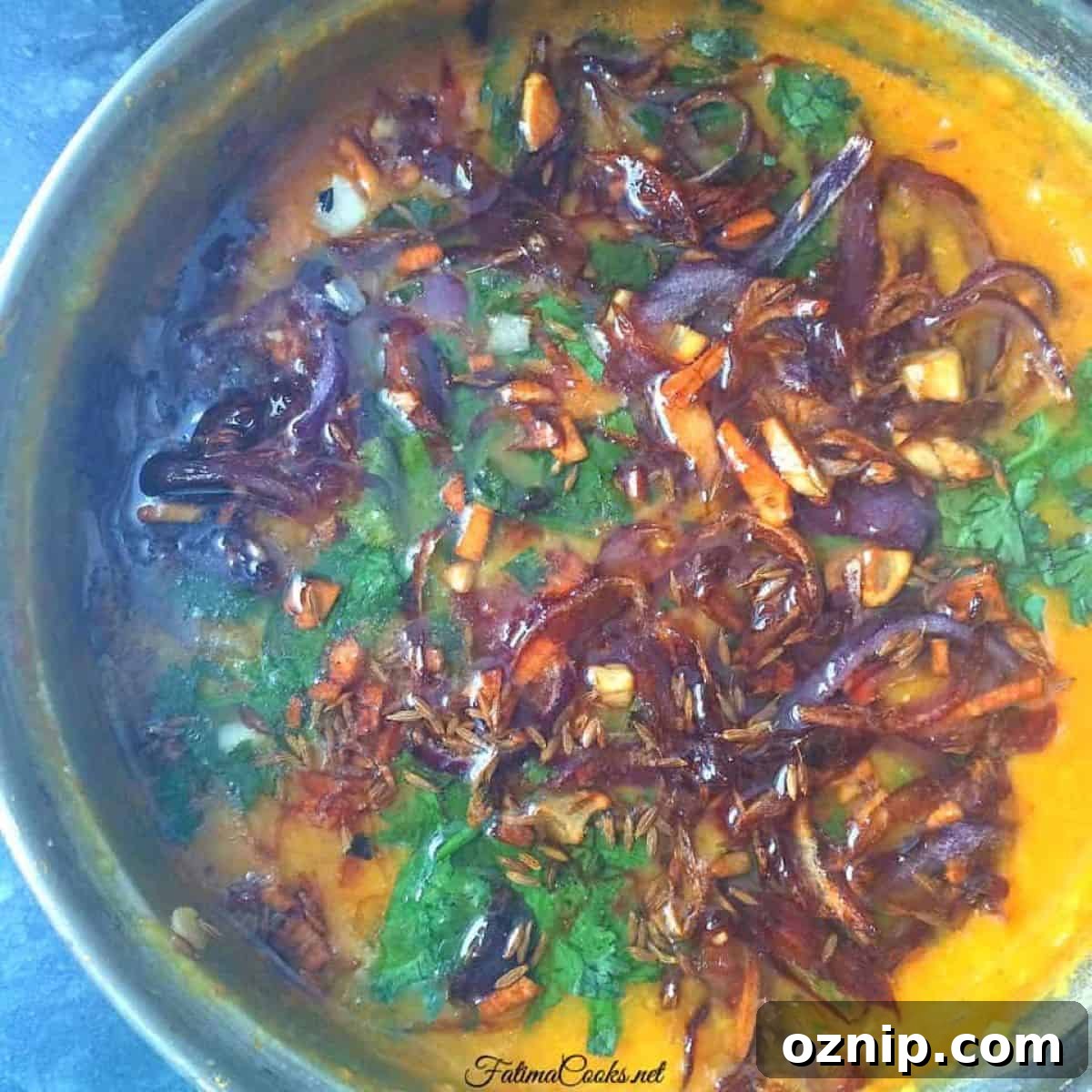
A steaming bowl of soft, pillowy basmati rice with aromatic, mildly spiced Tadka Dal was the comfort food of my childhood in the 1990s. This simple, economical meal was my brother’s and my favourite; we would often turn down fancier curries and rice dishes just to enjoy this plain, soulful combination.
There is something soothing about the silky texture of dal that no rich, heavy meat or cream-based curry can quite replace. When my stomach needs a break from overly rich food, I always reach for Tadka Dal with white basmati rice. I suspect readers from South Asia will relate to that feeling.
Today I’m sharing the Tadka Dal recipe just as my mother used to make it. Her version was thin, yellow and lightly spiced so that the garlic and onion flavors shone through. As children we would perch on the kitchen shelf, watching her go about her kitchen tasks while we spooned up warm dal and rice.
My mother has always been a simple cook, and her dal is proof that a light hand with spices often yields the best results. I don’t usually call myself a simple cook, but classics like this make me put the spice cabinet aside and appreciate how simplicity can achieve perfection.
What can you serve with Tadka Dal?
Dal pairs well with almost anything, so the better question might be: what can’t you serve with Tadka Dal? Plain white basmati rice or fresh chapatti are the most common and satisfying accompaniments. In my home, rice is usually the preferred option.
Tadka Dal works as a side for lamb, fish and chicken curries, though personally I often match dal with fish. Vegetables such as bottle gourd, pumpkin and spinach are commonly cooked alongside or into dal. Dal is also perfectly comforting on its own as a soup.
Leftovers are great too: dal with a paratha and achaar (pickle) makes a quick, delicious breakfast the next day. Don’t forget a fresh salad or, if you’re short on time, raw sliced onions to brighten the meal.
If you want a side curry to serve with Tadka Dal, choose something fairly robust to balance the mild dal—rich, meaty or tangy curries work especially well. For a vegetarian option, a potato or tomato-based bhujia complements dal nicely.
What is a Tadka and why is it important?
Tadka, often translated as “tempering,” is the technique of frying spices (and usually aromatics) in hot oil or ghee and then pouring that infused oil over a curry or dal. In Tadka Dal, most of the flavor comes from the tempering rather than the lentils themselves.
The lentils are cooked simply and gently spiced; the onions, cumin seeds and garlic in the tadka provide depth, aroma and a delicious finishing note. Here are some optional additions to customise your tadka:
- Fresh green or red chillis for heat—slice them if you want extra kick.
- Curry leaves for a citrusy, aromatic lift. For tang, add a little tamarind juice to the dal while cooking.
- For visual appeal, briefly fry a pinch of paprika or Kashmiri red chilli powder in the oil before pouring it over the dal to tint the oil a deep, appetising red.
- Use ghee instead of oil for a rich, buttery flavour that makes the dal more indulgent.
Additional Tadka Dal tips
- If you’re not serving the dal right away, wait to add the tadka until just before serving so the flavours remain fresh and aromatic.
- Dal freezes well. Cook a large batch and freeze it before the tadka stage. When ready to eat, defrost, reheat, and finish with fresh tadka.
- Red onions caramelise more attractively in the tadka and add a sweet balance to the aromatics—try them sliced thin.
- Dal often thickens overnight; simply add a little water and reheat to reach the desired consistency.
Enjoy, with love.
📋 Recipe: Tadka Dal
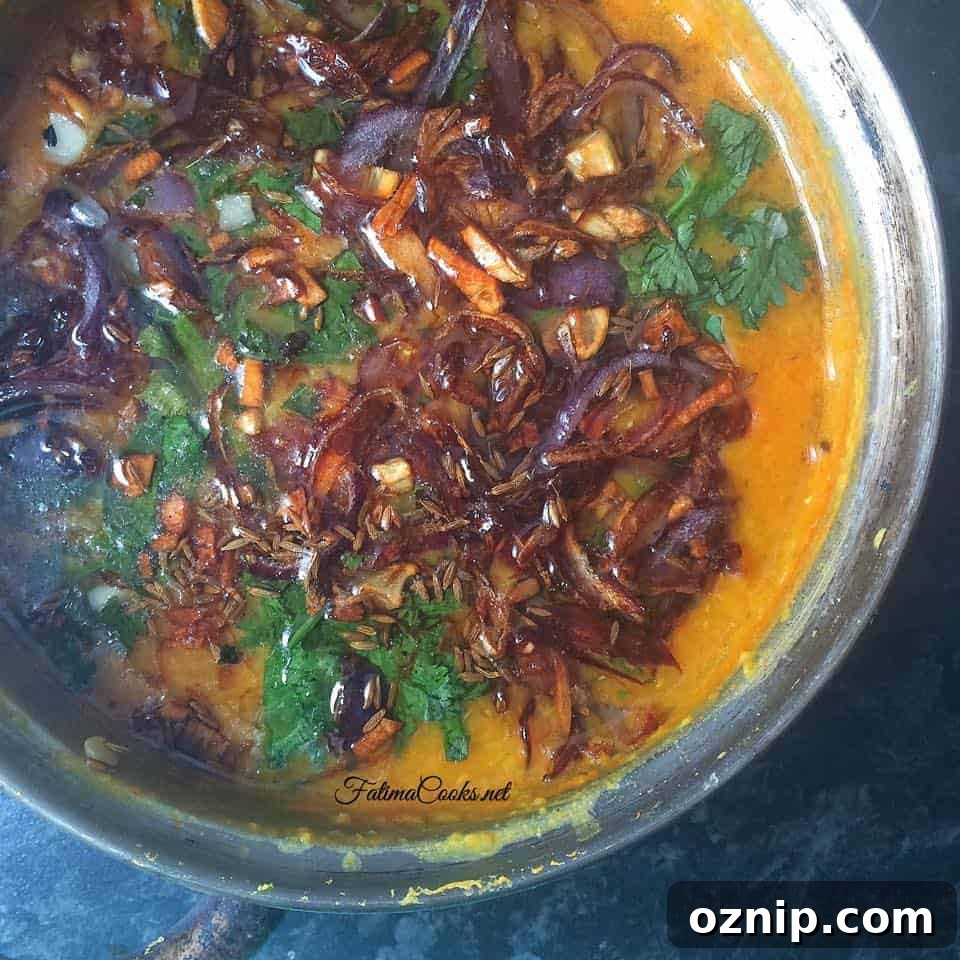
Tadka Dal
Ingredients
- ⅓ cup (70 g) moong dal (split mung)
- ⅔ cup (140 g) red lentils (masoor)
- Salt to taste
- ½ teaspoon turmeric powder
- ½ teaspoon red chilli powder (or to taste)
- ½ teaspoon coriander powder (optional)
- ¼ cup (65 ml) oil (or ghee)
- 1 medium onion, sliced
- 4–5 garlic cloves, sliced
- 1 teaspoon cumin seeds
- A handful of chopped fresh coriander for garnish
Instructions
- Rinse the lentils thoroughly. In a pot, add the washed lentils, 4–5 cups of water, salt and the powdered spices (turmeric, chilli, coriander if using). Bring to a boil, then reduce heat, cover slightly ajar and simmer for 45–60 minutes until the lentils are tender and the mixture has blended into a smooth consistency. Stir occasionally and add water if the dal starts to stick.
- Once the lentils are cooked, sprinkle a handful of chopped coriander over the top.
- To make the tadka, heat oil or ghee in a separate pan. Add the sliced onion and garlic and fry until golden brown (avoid burning them). In the last 30 seconds, add the cumin seeds so they crackle and release aroma.
- Pour the hot tadka directly over the coriander and cooked dal. The sizzle will release fragrant oils and lift the dish.
- Serve the Tadka Dal hot with white basmati rice, chapatti or on its own. A simple onion salad or pickle on the side complements the meal beautifully.
Notes
I added coriander powder out of habit; my mother never used it. The dal tastes perfectly fine without it, so feel free to omit it if you prefer a more traditional, lighter flavour.