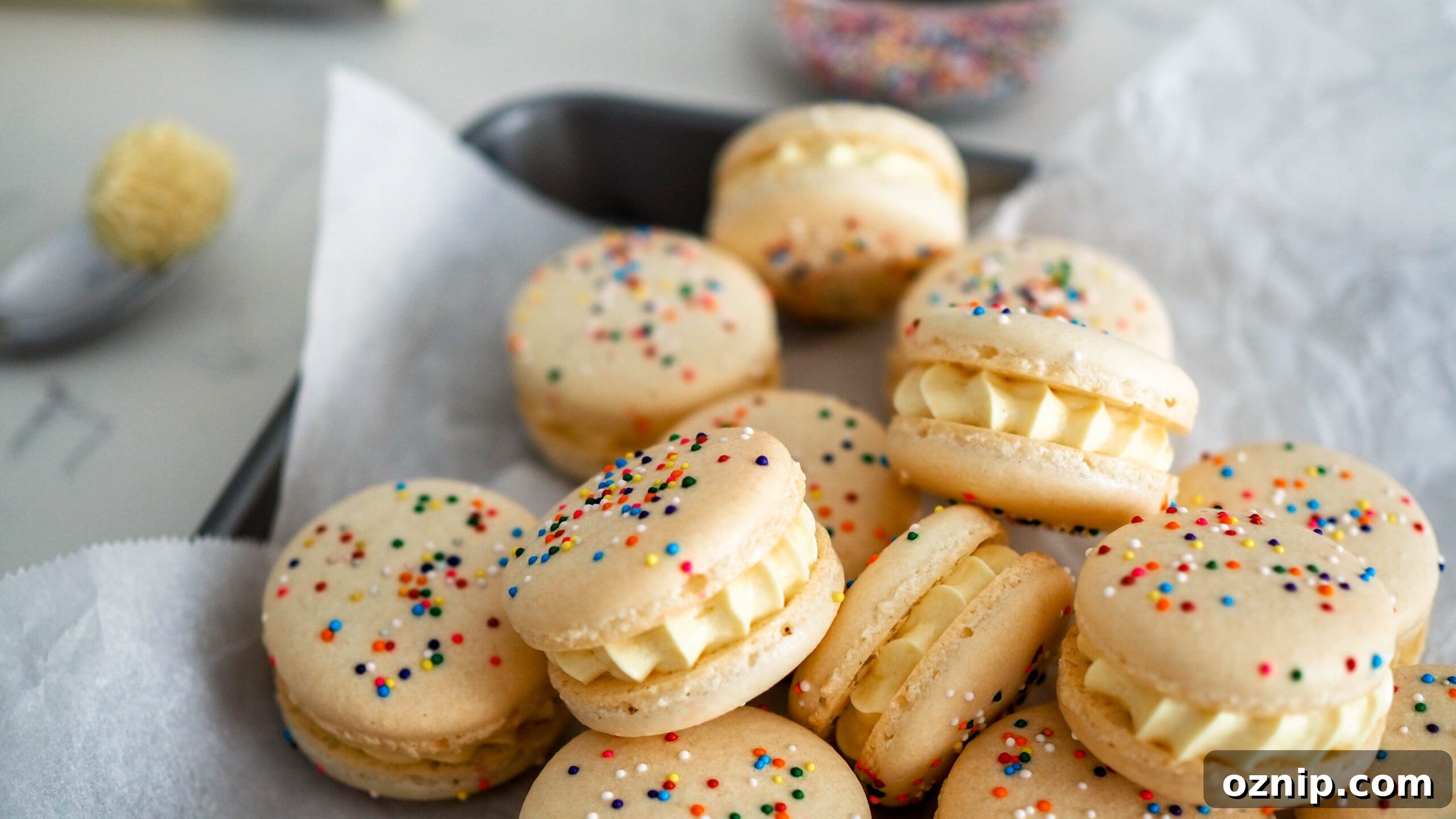
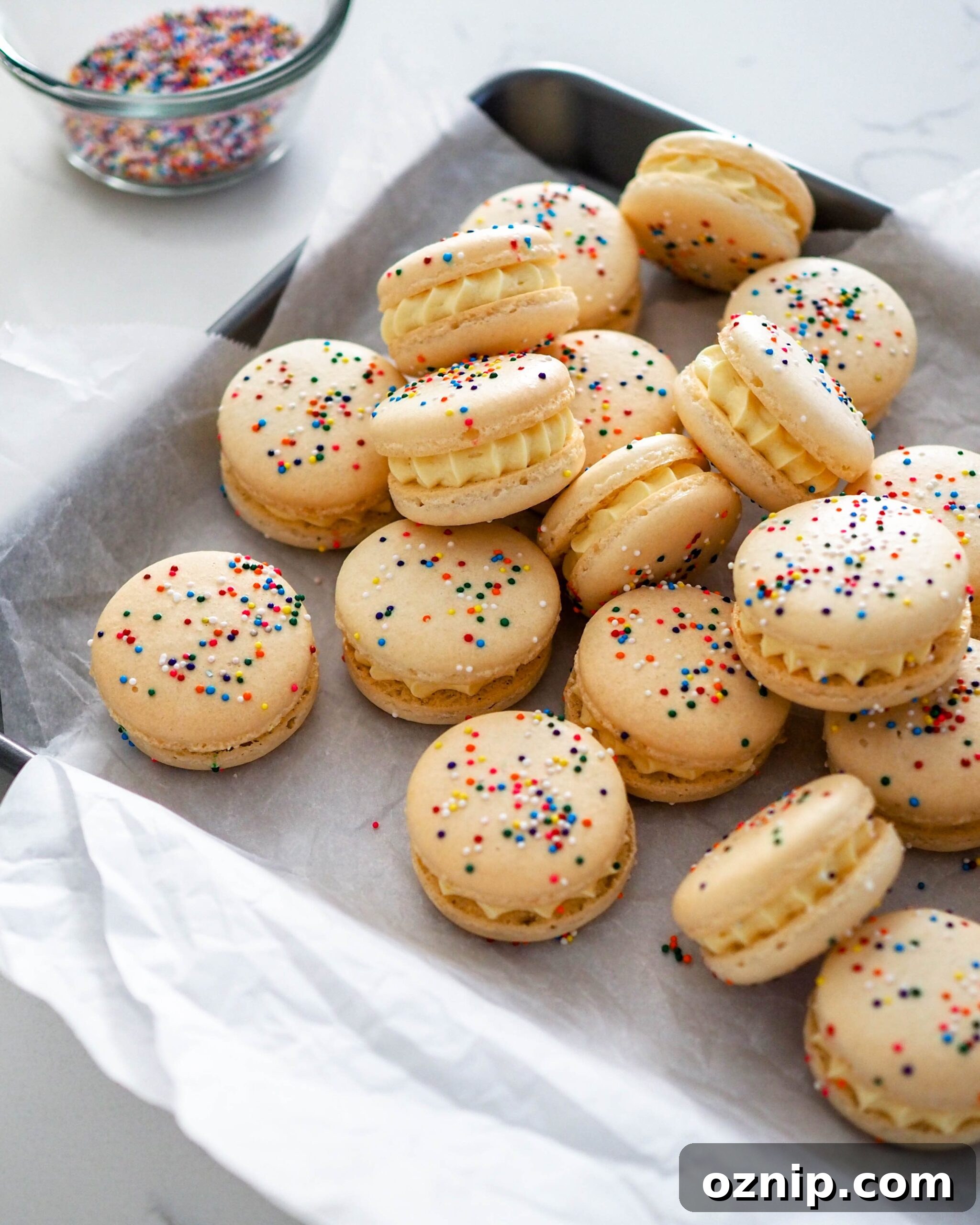
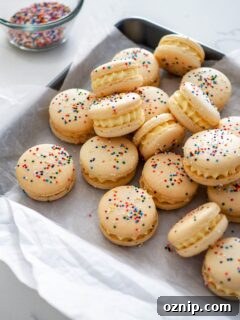
A refined twist on Funfetti cake, these birthday cake macarons are filled with a custardy French buttercream that tastes just like birthday cake batter. Macarons are precise, but this guide covers everything you need to make a beautiful batch. For visual step-by-step instructions, watch the author’s full French macaron tutorial video.
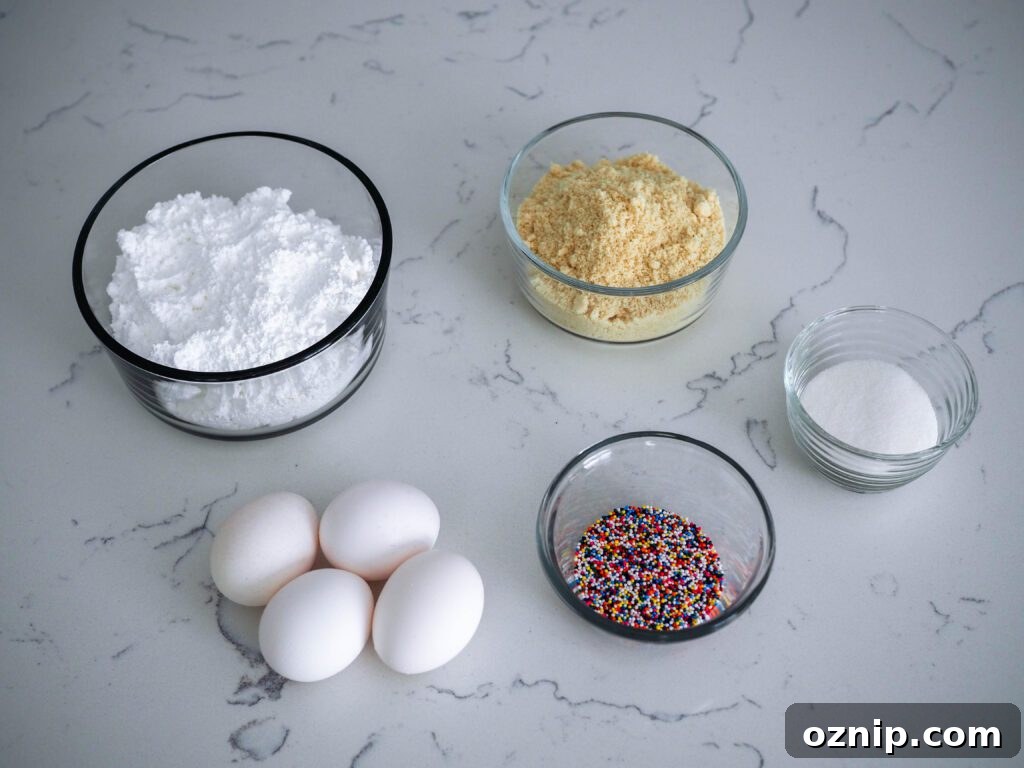
Ingredients for Birthday Cake Macarons
Macarons require relatively few ingredients, but they demand careful technique. The birthday cake flavor comes from a doctored French buttercream that mimics cake batter.
- Almond flour
- Powdered sugar
- Eggs (whites and yolks separated)
- Granulated sugar
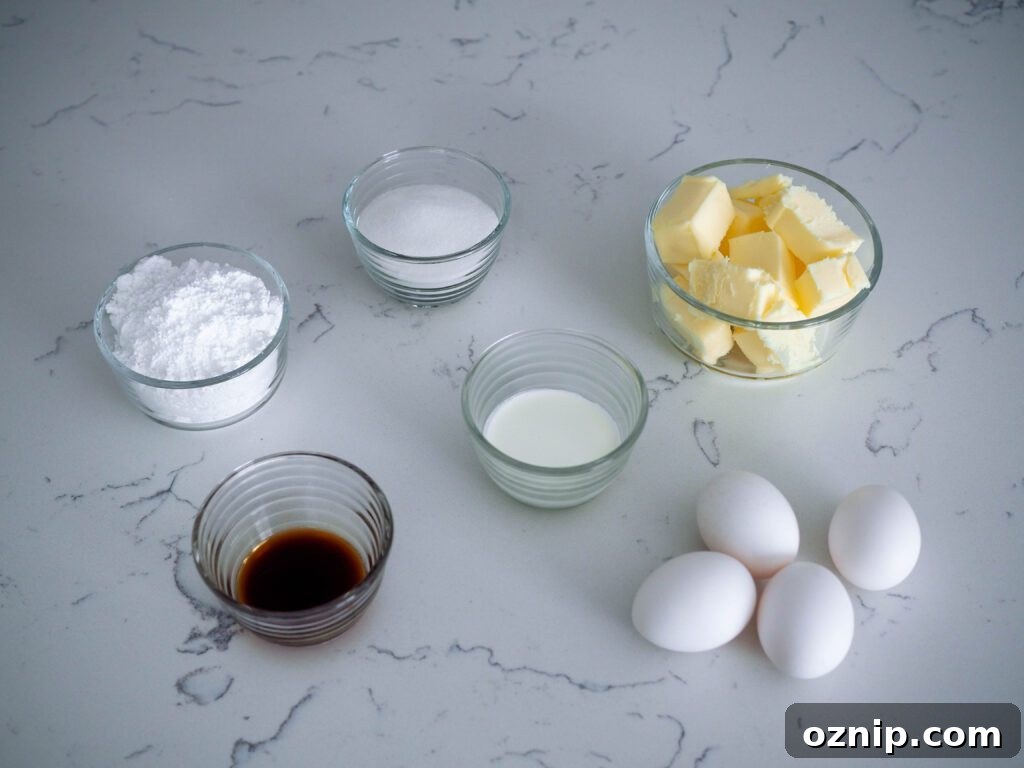
- Vanilla extract
- Rainbow mini nonpareil sprinkles
- Salted butter
- Powdered sugar (for buttercream)
- Heavy cream
Are Macarons Hard to Make?
Macarons have a reputation for being fussy because many variables affect the result: humidity, oven calibration, mixing technique, and ingredient weights. Expect a learning curve; it can take several attempts to achieve consistently perfect shells.
The good news is that once you learn how your kitchen behaves, macarons become much more predictable. With practice, they are a reliably rewarding treat.
If you’re new to meringue-based techniques, consider starting with a similar but more forgiving recipe—like ladyfingers—to build confidence before tackling macarons.
Tips for Prepping French Macaron Shells
Patience and precision are key. Even imperfect-looking shells still taste delicious, so don’t be discouraged by cosmetic flaws while learning.
My top tip: be patient during every stage—whipping the meringue, folding the dry ingredients, piping, and drying the piped shells before baking. Each step affects the final texture and appearance.
Recommended Supplies for Making Macarons
Equipment and oven behavior vary from home to home. A light-colored aluminum baking sheet often gives the most consistent results in many ovens, though a darker pan can work in others. Silicone macaron mats or parchment paper help produce even shells. If you have persistent issues after several attempts, try changing one variable at a time—pan type, mat, oven rack position, or parchment versus mat—to identify what your setup prefers.
The Perfect Meringue Base
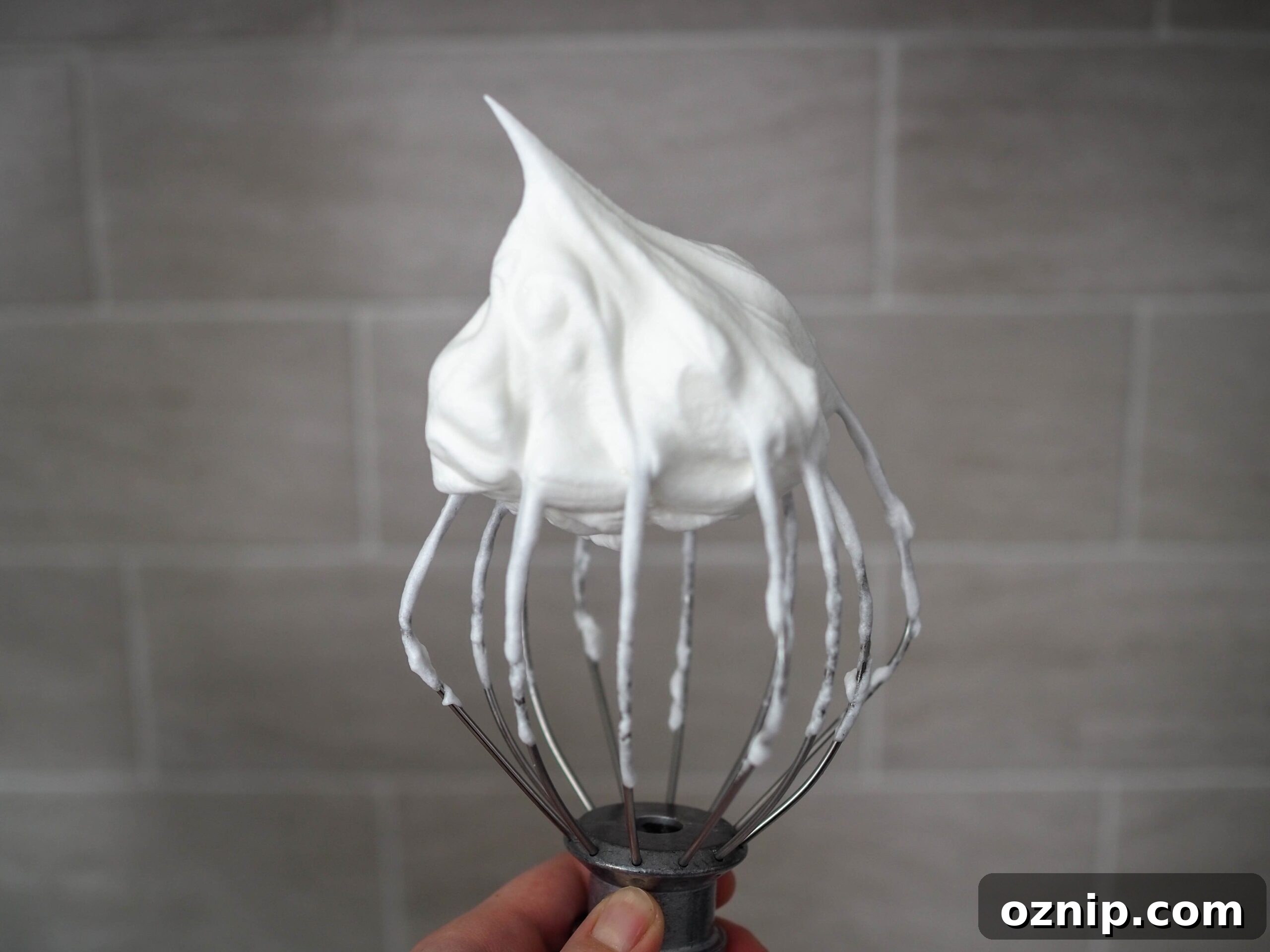
A stable meringue is indispensable. French meringue usually benefits from room-temperature egg whites, but with proper mixing technique you can also succeed with colder whites. Begin whipping the whites on low to incorporate air, then increase to medium until the whisk leaves tracks in the foam. Add granulated sugar slowly, about a teaspoon at a time, and finally whisk on high until the meringue holds stiff peaks.
Test for stiff peaks by inverting the whisk—if the peak stands upright or curls with a sharp tip, the meringue is ready. If the tip looks soft or bubbly, whisk briefly more and test again.
Macaron Batter Consistency and the Macaronage Process
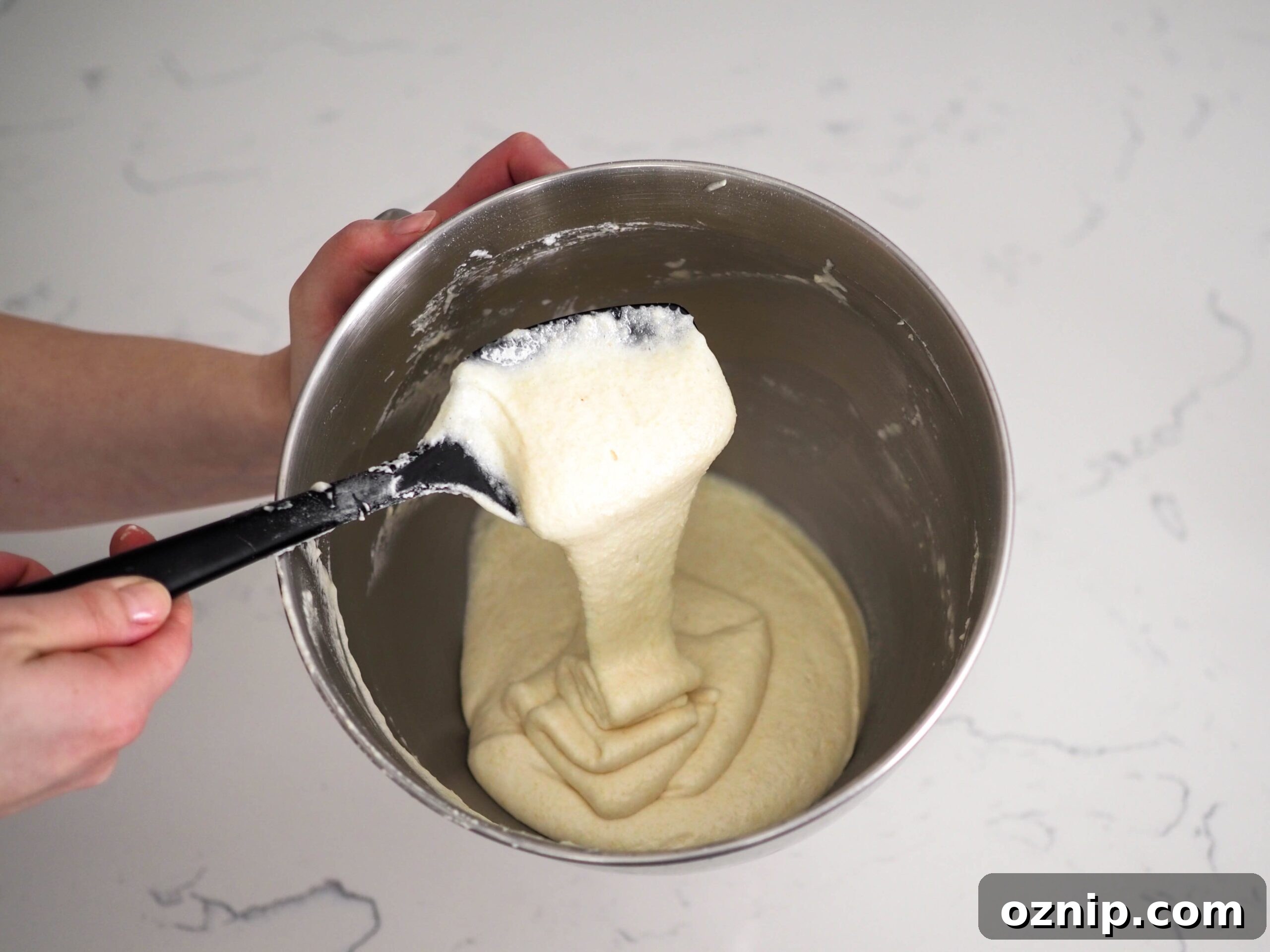
Macaronage is the controlled folding process that transforms whipped meringue plus dry ingredients back into a flowable batter. The goal is to remove just enough air to allow the batter to flow while retaining structure to form feet during baking.
As you fold, the batter will gradually thin. The right consistency is a batter that flows off the spatula in a single ribbon that stacks on itself and then becomes glossy and blends back in within 10–15 seconds. If it takes longer than 15 seconds to absorb, fold more; if it absorbs too quickly, it may be overmixed; if it absorbs immediately, there’s insufficient air and you should restart.
A Practical Tip to Avoid Wasting Egg Whites
Egg sizes vary, so instead of removing a small amount of egg white to hit an exact weight, adjust the dry ingredients slightly to match the actual egg white weight you have. For example, if your egg whites weigh 127 g instead of 120 g, increase almond flour by 7 g. This simple adjustment stops you from wasting egg whites and makes the process less stressful.
Why Weigh Ingredients
Yes—use a kitchen scale. Macarons are sensitive to proportions, and weighing ingredients gives consistent results. Scales are affordable and long-lasting; using grams instead of cups will greatly improve your success rate.
Quick Tips for Making French Buttercream
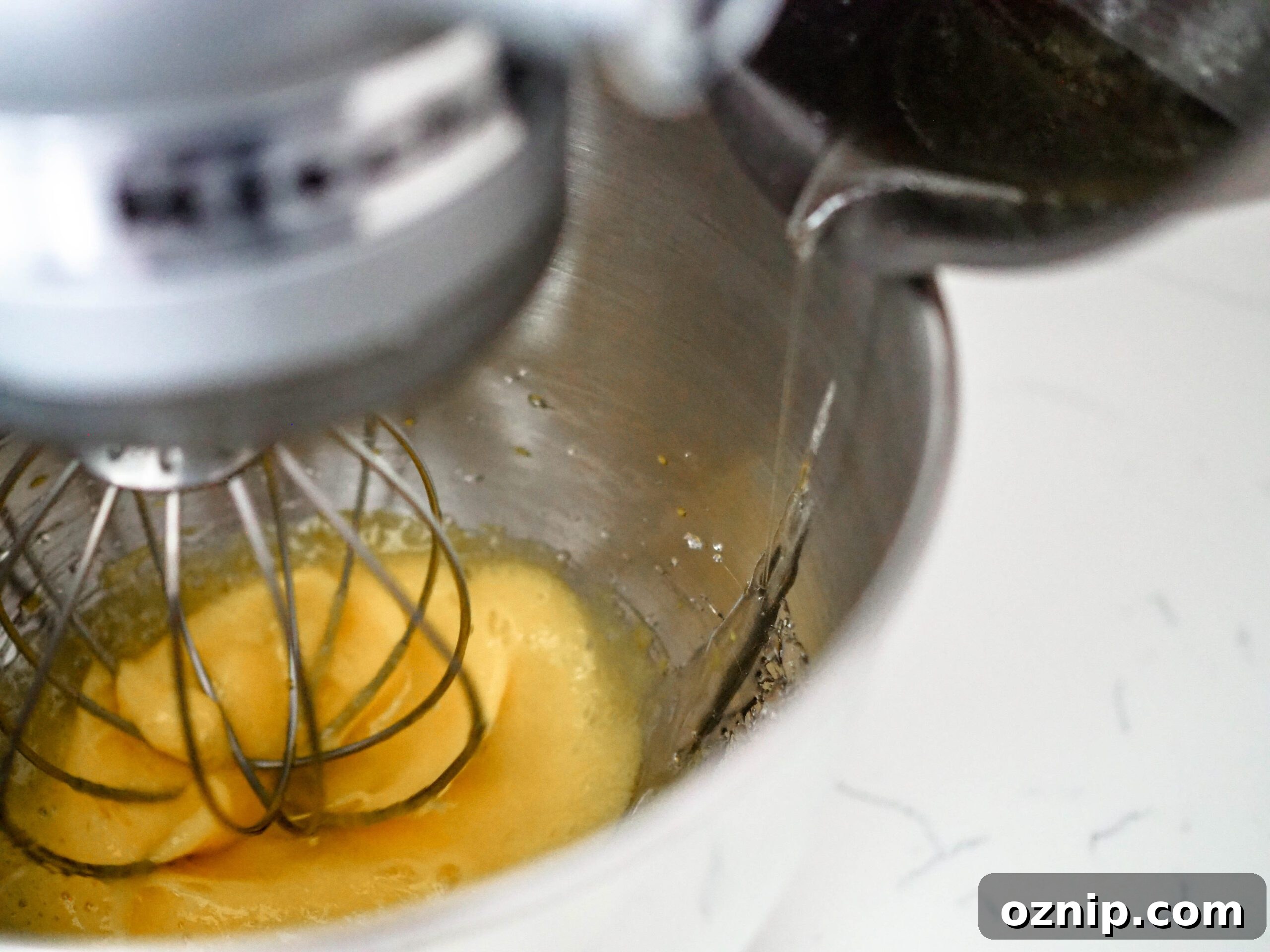
French buttercream is made by whisking hot sugar syrup into egg yolks, then incorporating butter. Pour the hot syrup down the side of the mixing bowl rather than onto the whisk to avoid splattering and grainy texture. If the buttercream appears to curdle while adding butter, switch to a paddle/beater attachment and beat until smooth before continuing.
Using salted butter in this recipe produced a custardy, cake-batter flavor that works exceptionally well here. To balance saltiness, powdered sugar and a touch of heavy cream are added to the buttercream, creating a silky, familiar cake-batter taste.
Other Recipes You May Enjoy
If you enjoy these macarons, look for other confetti-style desserts and related recipes on the author’s site, including confetti cupcakes, mini confetti layer cakes, and a straightforward ladyfingers recipe that’s a good stepping stone to macarons.
Dish Cleanup
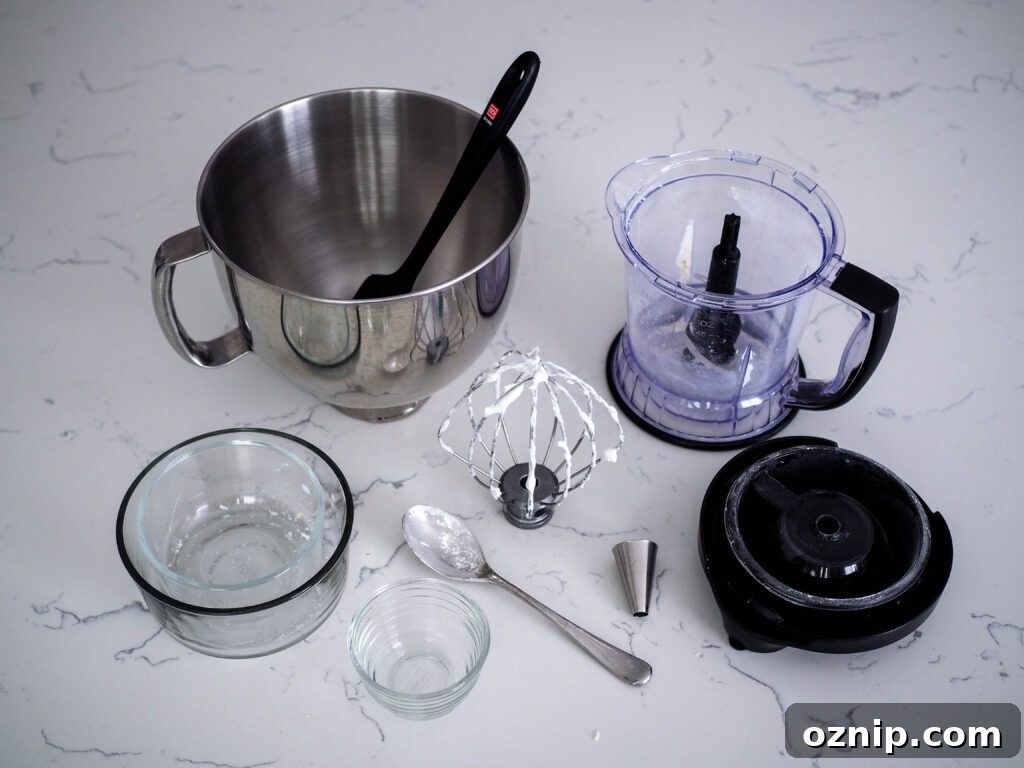
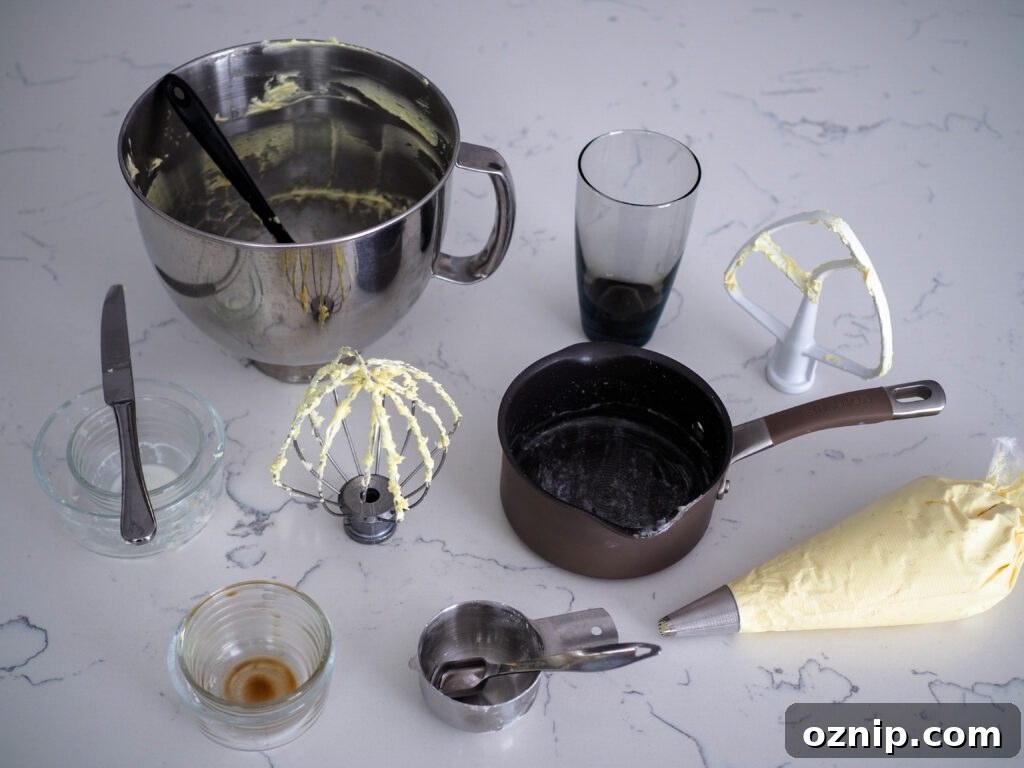
Cleaning up after macarons rates fairly high: expect multiple bowls, a mixer, spatulas, pans, and piping tools. Shells alone don’t make many dishes, but the buttercream adds extra bowls and attachments. Overall, plan for a substantial but manageable cleanup—similar to making a cake from scratch.
Thanks for stopping by! If you make these birthday macarons and enjoy them, please leave a review to help others know how they turned out.
Birthday Cake Macarons
1 hr
30 mins
30 mins
2 hrs
Macarons
French
30 filled macarons
Ingredients
French Macaron Shells
- 120 g almond flour
- 200 g powdered sugar
- 120 g egg whites (from 3–4 large eggs)
- 50 g granulated sugar
- ½ teaspoon vanilla extract
- 1 Tablespoon rainbow mini nonpareil sprinkles
Birthday Cake Batter French Buttercream
- 4 large egg yolks
- ½ cup (100 g) granulated sugar
- 3 Tablespoons (45 ml) water
- 1 cup (226 g) salted butter, softened
- 1 Tablespoon (15 ml) vanilla extract
- ½ cup (55 g) powdered sugar
- 2 Tablespoons (30 ml) heavy cream
Instructions
Making the Macarons
- Prepare two baking sheets with silicone macaron mats or parchment paper. Fit a piping bag with a round tip and set aside.
- Pulse almond flour and powdered sugar in a food processor until very fine, then set aside.
- Separate eggs and reserve yolks for buttercream. Place egg whites in the mixer with the whisk attachment and whip on low until foamy, then medium until the whisk leaves trails. Add granulated sugar a teaspoon at a time. Whip on high until stiff peaks form.
- Add vanilla and any gel coloring and whisk briefly to incorporate.
- Fold half the dry mixture into the meringue until incorporated, then fold in the rest. Continue folding until batter flows in a single ribbon and becomes glossy, absorbing back into the bowl within about 10–15 seconds.
- Pipe rounds about 1–1.5 inches in diameter onto the prepared sheets. Rap the sheets on the counter to release air bubbles and pop any remaining bubbles with a toothpick.
- Sprinkle the tops with nonpareils; some may not stick and that’s fine. Let piped shells dry in a well-ventilated area for 20–60 minutes, depending on humidity, until the tops are dry to the touch.
- Preheat oven to 320°F (160°C) and bake one tray at a time on the center rack for 16–19 minutes. The shells are done when the centers no longer move if gently nudged. Cool completely before removing from mats.
Making the Buttercream
- Place the reserved egg yolks in the mixer and whisk on low.
- Combine sugar and water in a small saucepan and heat until the syrup reaches 245°F (118°C), the firm-ball stage.
- With the mixer running on low, pour the hot syrup down the side of the bowl, avoiding the whisk tines to prevent splatter and graininess.
- Increase the mixer speed to medium-high and whip until the bowl is no longer warm and the yolks are pale and fluffy.
- Gradually add cubed salted butter, one piece at a time. If the mixture looks curdled, switch to a paddle/beater and beat until smooth. Add vanilla.
- Incorporate powdered sugar and heavy cream, then beat for two minutes until light and fluffy. Transfer to a piping bag.
Assembling the Macarons
- Pair shells of similar size. On one shell with the flat side up, pipe a dollop of buttercream about two-thirds the width of the shell.
- Top with the matching shell and twist gently to seal. The shells develop their best texture and flavor after maturing in the fridge for 24 hours, though they can be enjoyed immediately.
Notes
Store finished macarons in an airtight container in the refrigerator for up to one week for best freshness.
The buttercream recipe makes enough to fill two batches of macarons and can be difficult to halve accurately. If you won’t use it immediately, freeze extra buttercream for up to six months; thaw overnight in the fridge, bring to room temperature, and rewhip before using.
Nutrition
|
Calories: 156 kcal
|
Carbohydrates: 15 g
|
Protein: 3 g
|
Fat: 10 g
Thanks for trying this birthday cake macarons recipe. If you make them, consider sharing a photo and your feedback with the recipe author to help other bakers succeed.