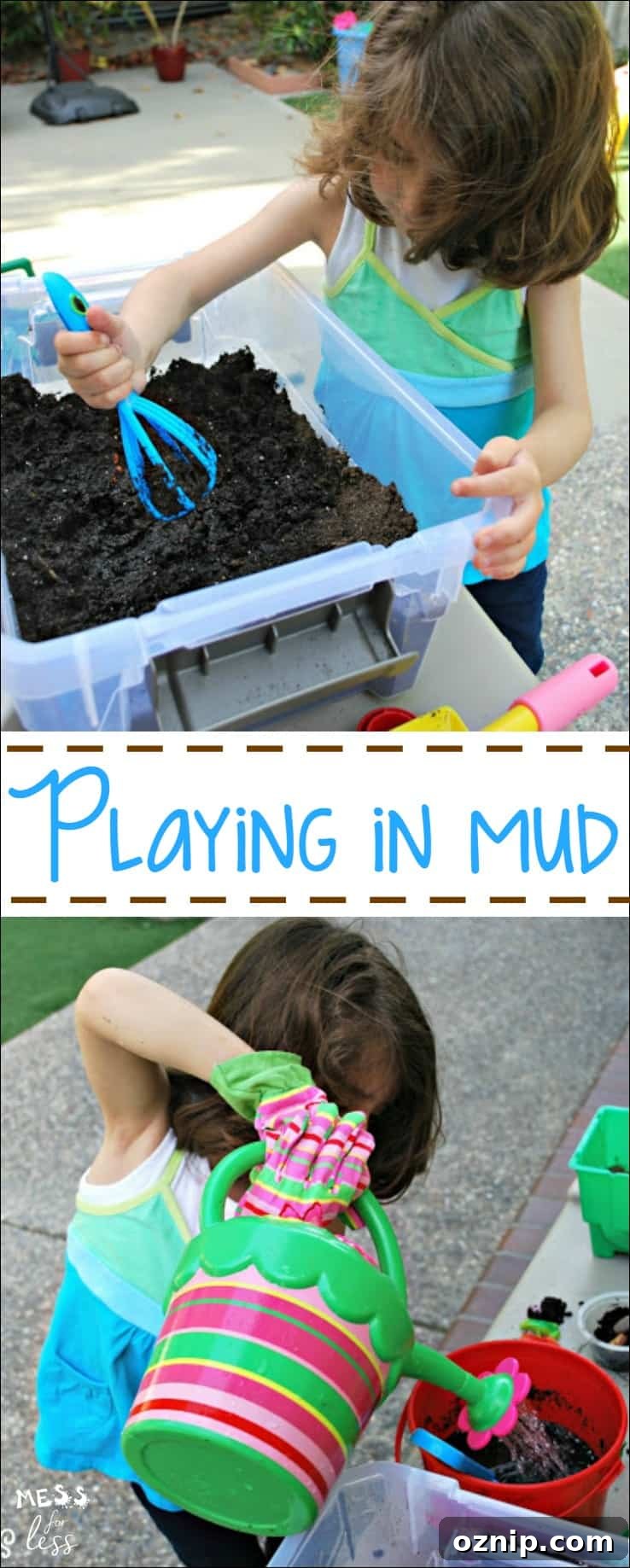
With warmer days on the way, my children are eager to spend more time outside exploring and playing. Recently they had an absolute blast making and playing with mud in the backyard. While it may sound simple, this activity offers rich sensory play, creative opportunities, and hours of open-ended fun. It’s one of those summer activities for kids that works just as well in spring or fall—whenever the weather invites outdoor exploration.
We often set up a garden-style sensory bin, which is easy to adapt depending on what we want the children to explore. One of the simplest variations is to mix soil and water to create mud. Children enjoy the tactile sensation of damp earth, and the process of adjusting soil and water helps them make observations, test ideas, and practice fine and gross motor skills.
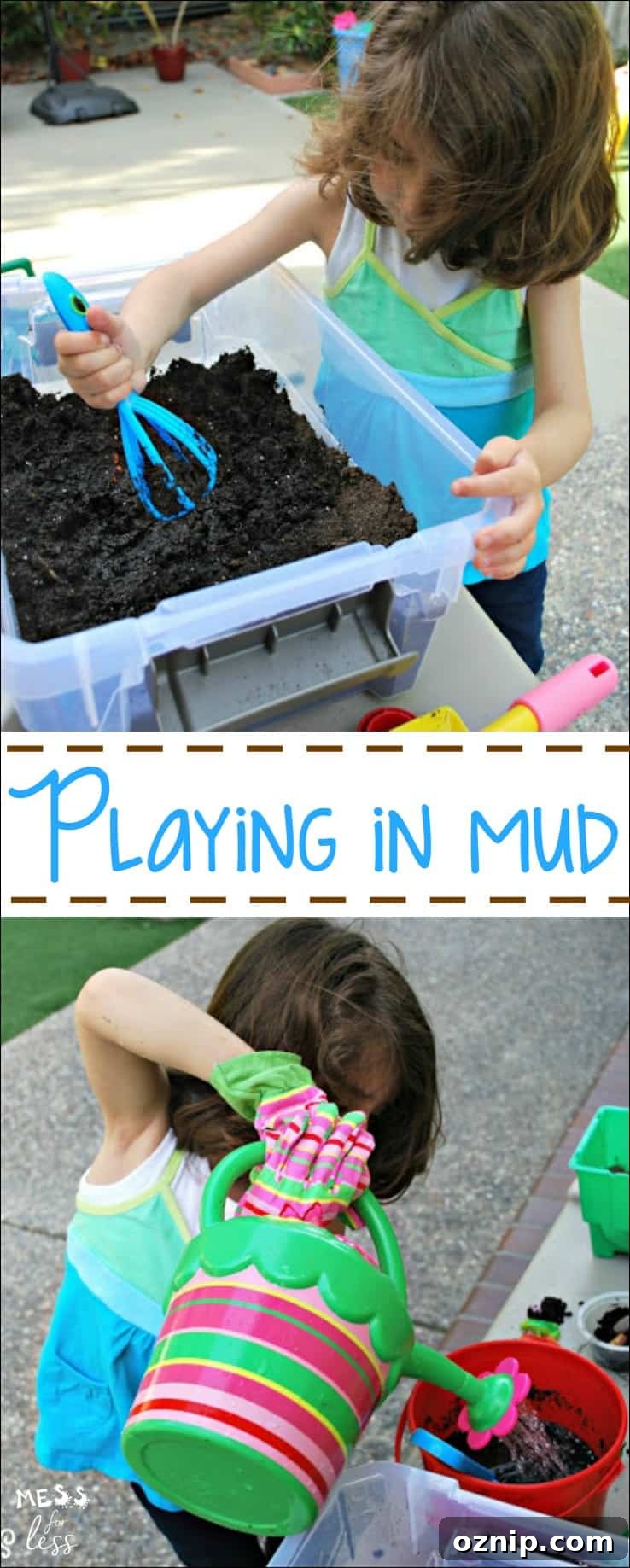
Playing with Mud
What you’ll need:
- Large bin or container filled with soil
- Buckets for scooping and mixing
- Shovels or spoons for digging
- Water (a little at first, more as needed)
- Sand or beach toys for shaping and molding
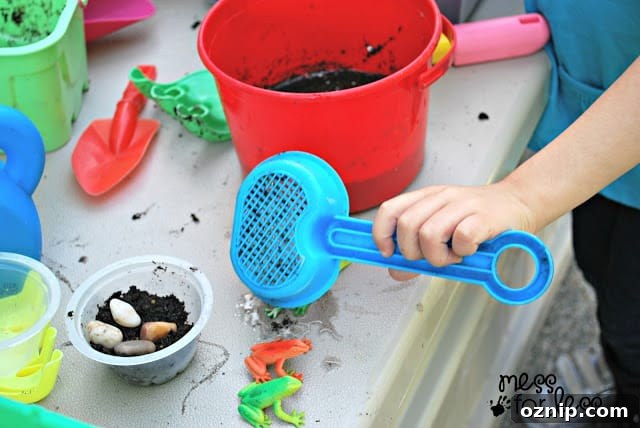
- Small toys for imaginative play (we used plastic frogs)
To set up, I filled a shallow bin with soil and let the kids add water themselves. They started by pouring a little water, feeling the texture, and deciding whether it was the consistency they wanted. If it felt too firm, they added more water; if it was too wet, they waited or added more dry soil. This trial-and-error approach gives children a sense of control and encourages problem solving while they play.
Once my daughter was happy with the mud, she added several toy frogs and began stirring them around. Stirring mud takes surprising arm strength and coordination, so this simple action is a great workout for small muscles and a fun way to practice hand-eye coordination. The kids loved watching how the consistency changed as more water was added, noticing how thick, sticky mud behaved differently from thin, soupy mud.
They experimented by scooping mud into buckets, then adding water to see what would happen. One game turned into “frog soup,” where toy frogs became the main ingredient. This kind of imaginative play helps children invent stories, role-play, and build language skills as they narrate their ideas and negotiate roles with siblings or friends.
They also enjoyed scooping, pouring, and filling—activities that reinforce early math concepts such as volume, measurement, and cause and effect. For example, children can observe how much water it takes to turn dry soil into mud, or how quickly a mud mixture drains when it’s poured into a different container.
One of the best aspects of playing with mud is that it’s open-ended. There’s no single “right” way to play, so children lead the activity. They test hypotheses—what happens if I add more water?—and learn from the outcomes. Mud play combines sensory exploration with imaginative storytelling and physical activity, offering a low-cost, high-impact play option for families.
After play, a quick rinse and a change of clothes usually does the trick. Encouraging outdoor, messy play like this helps children develop resilience, curiosity, and a healthy relationship with the natural world. Dirt and water might seem humble, but together they provide a powerful learning environment.
If you enjoyed this mud play idea, consider trying other sensory activities that use simple materials and encourage exploration.