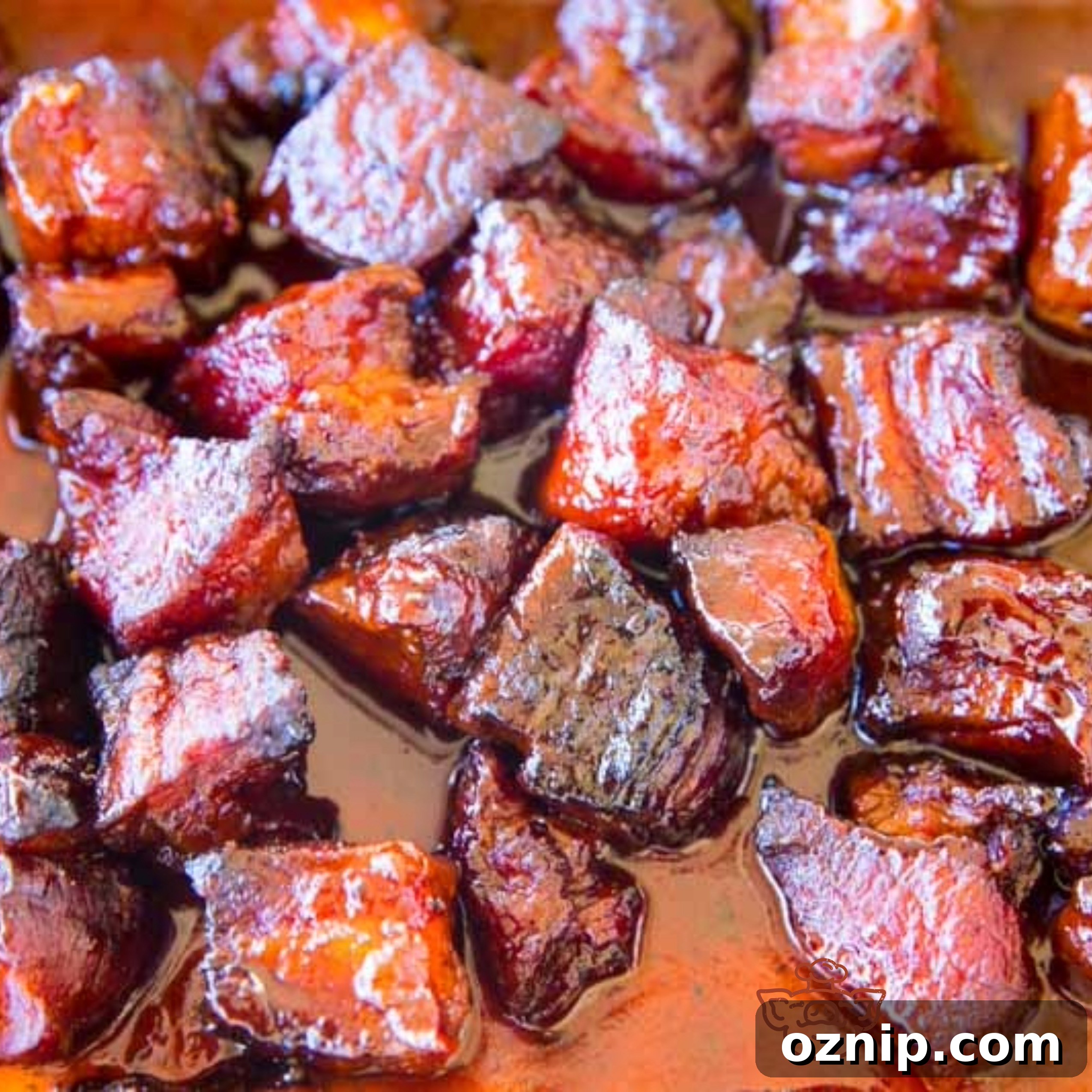
If you know the nickname “meat candy,” you already have an idea of what makes pork belly burnt ends so addictive. These little bites combine the richness of pork belly, a savory crust from a bold rub, and a sticky caramelized glaze. The result is tender, succulent morsels with a glossy, flavorful finish.
They may look like the work of a pro pitmaster, but making true pork belly burnt ends is straightforward once you understand the process: trim carefully, season generously, smoke patiently, and finish with a braise that creates that signature sticky sweetness.
This version was developed on a ceramic-style cooker that offers precise temperature control, but the techniques here will work on any reliable smoker. Gather good charcoal, your choice of wood for smoke, and plan for several hours of slow, deliberate cooking.
Fire up the smoker, pour a bold glass of red if you like, and let’s make Big Green Egg Pork Belly Burnt Ends that will disappear as soon as they hit the table.
Why Pork Belly Burnt Ends?
Customizable: This method adapts easily—make them spicy, sweet, tangy, or balanced to your taste by changing rubs, glazes, or spritzes.
Ideal Texture: Pork belly’s marbling renders to silky softness, producing consistently tender bites unlike some other burnt ends that can be chewy.
Party Favorite: These are crowd-pleasers. Bring a tray to a gathering and they’re likely to vanish quickly.
Where to Find Pork Belly
Pork belly used to be harder to find, but it’s now common at many retailers. Look for a fresh, well-marbled slab that will stand up to the long smoke and glaze.
Where to Source Your Belly
Reliable sources include warehouse grocers, local butcher shops that can order or cut a slab for you, large specialty grocers, and ethnic markets where pork belly is a staple. Choose the best quality you can find within budget.
If you can’t find whole slabs, ask the butcher to order one or to slice what you need. Buying a whole or half slab gives you the most control over thickness and trimming.
What to Look For: The Selection Process
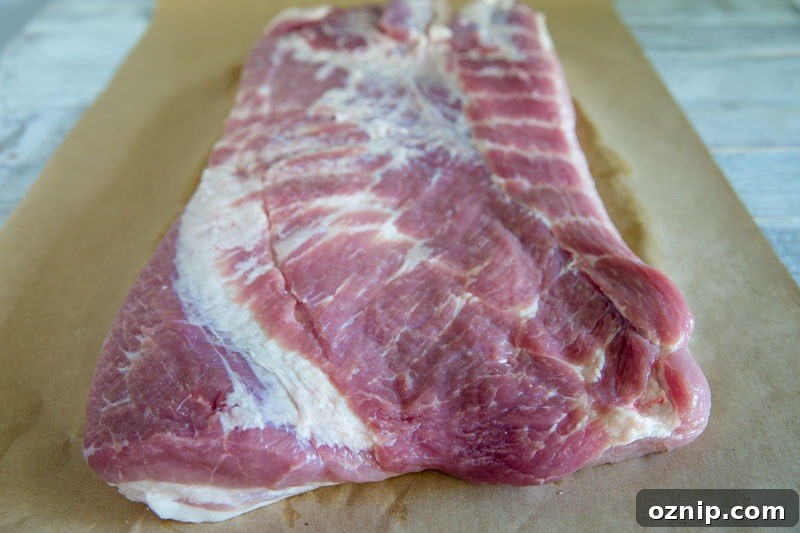
At the counter, evaluate the slab for even fat and meat layers. Aim for a zebra-striped appearance—balanced fat and lean—so cubes retain structure during the cook and render down into luscious bites.
The “Flop” Test: A gently flexible slab indicates freshness and good texture. Too soft or overly fatty slabs can over-render.
Uniform Thickness: Look for 1.5–2 inch thickness if possible. Uniform height ensures cubes cook evenly.
Skinless is Best: For burnt ends, use skinless pork belly. If your slab includes skin, remove it carefully before cubing; otherwise the skin can become tough and unpleasant.
Prep the Pork Belly
Prep determines the final quality. Clean, trim, and cube the belly so each piece becomes an ideal bite-sized burnt end.
The Cleanup: Trimming for Maximum Flavor
Lay the belly meat-side up and remove any loose fat and silver skin. You want the fat layered inside the meat, not a thick membrane outside. Removing silver skin helps the rub reach the meat and promotes even bark development on every side of each cube.
The Geometry of a Perfect Bite
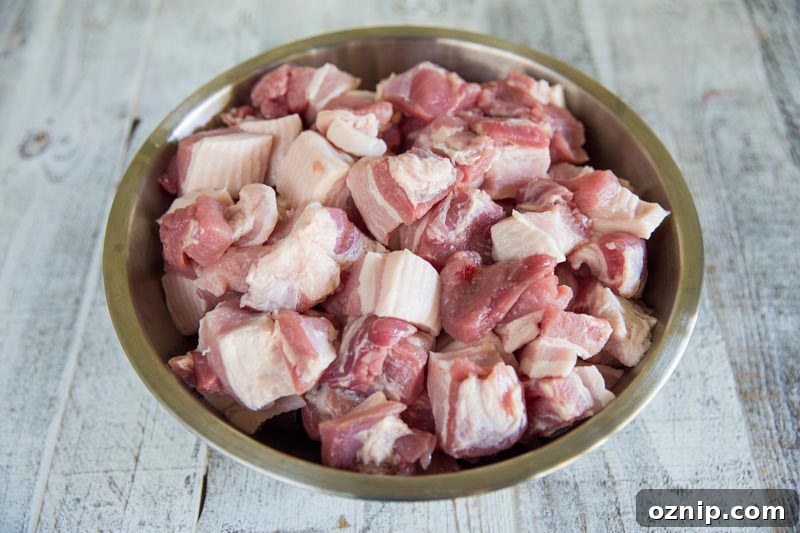
Slice into roughly 1″ cubes. This size is the sweet spot: small enough to render and caramelize fully, yet large enough to stay juicy after shrinking during the cook. Uniform cubes ensure consistent cooking.
- Shrinkage Factor: Expect some rendering; 1″ cubes finish at a comfortable bite size.
- Surface Area: Cubing before smoking exposes more edges to rub and smoke, building more bark and glaze surface.
- Even Cooking: Keep a consistent size so pieces finish together.
Pro Tip: The “Cold Cut”
Pork belly is easier to cut when cold. If the fat softens while you’re working, chill the slab for 10–15 minutes so you can make clean, even cuts.
Seasoning the Pork Belly
Because pork belly is rich, it benefits from a generous seasoning approach to balance the fat and create contrast.
The Binder: Why Mustard?
Yellow mustard is an excellent binder. It leaves a tacky surface that helps the dry rub adhere and contributes to a better bark without imparting a mustard flavor after cooking.
The Rub
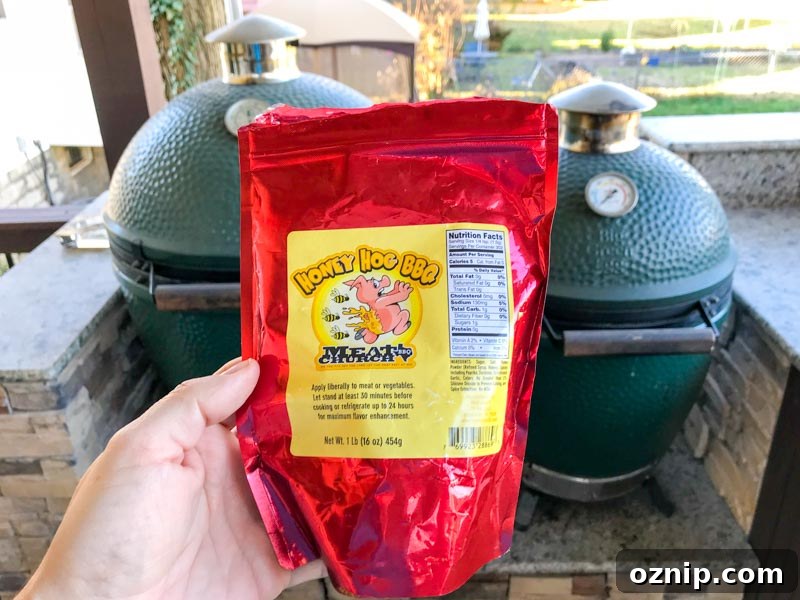
Use a robust sweet-savory rub. If you don’t have a commercial blend, a simple homemade rub works well: brown sugar for caramelization, paprika for color, coarse salt, black pepper, garlic and onion powders, and a pinch of cayenne for heat.
Rub Bath and Wire Rack
Coat the cubes in mustard, then give them a thorough toss in the rub so every side is covered. Arrange the seasoned cubes on a wire cooling rack set in a baking sheet. The rack promotes airflow and makes it easy to carry the whole batch to the smoker.
Let the seasoned cubes rest about 20 minutes so the rub tackifies—this improves smoke adhesion and bark formation.
Set Up the Big Green Egg
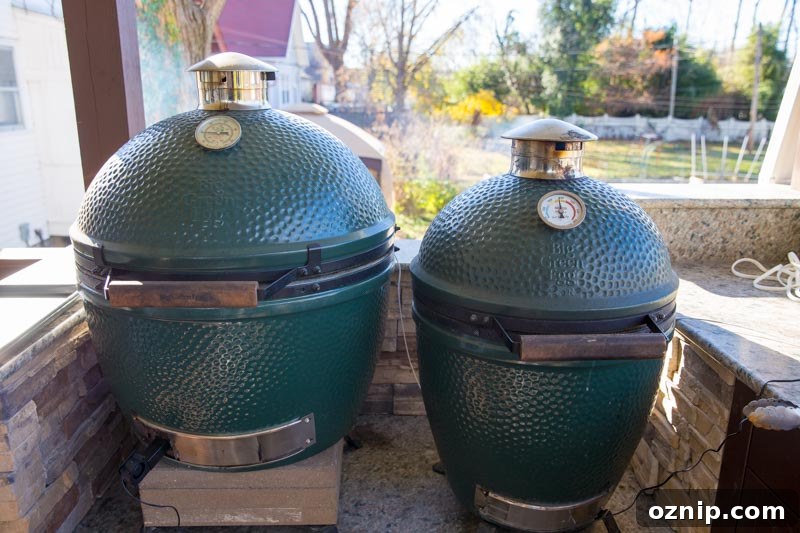
Set your smoker for indirect cooking with a heat deflector in place. Indirect heat prevents flare-ups and gives the pork belly a gentle, even environment to render fat and take smoke.
Target Temperature
Aim for about 275°F. This temperature renders fat efficiently without excessively prolonging the cook.
Smoke Choice
Use a bold hardwood like hickory for a classic smoky profile that complements the pork’s richness. Use larger chunks rather than fine chips to maintain a steady, thin blue smoke.
Placement and First Smoke
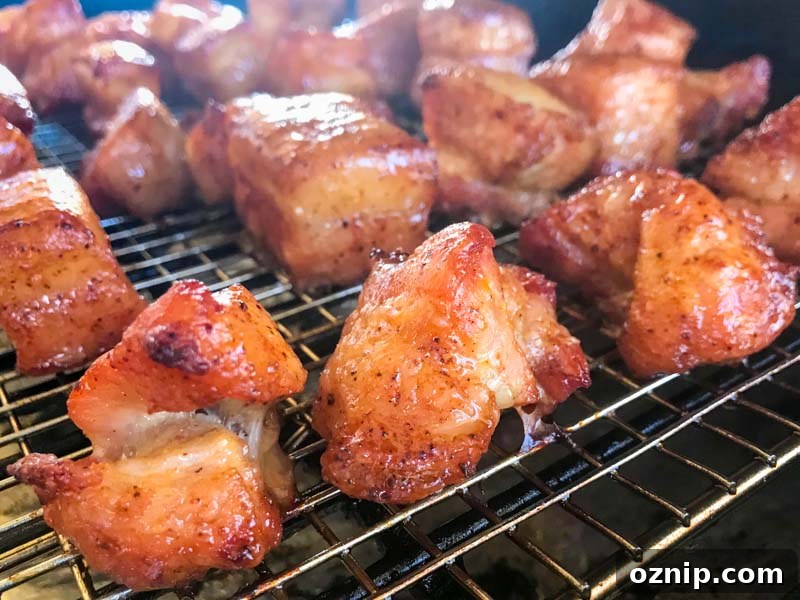
When the smoker is producing clean smoke, place the wire rack of cubes on the grate with a bit of space between each piece. Smoke undisturbed for about 2 to 2.5 hours, until a dark bark forms and pieces have a deep reddish color.
Spritzing the Pork Belly
After the first hour, begin spritzing to maintain surface moisture and add a touch of sugar. Pure apple juice is a great spritz; its natural sugars help deepen color and encourage glaze development.
Why Spritz
- Humidity: Moist surfaces catch smoke more effectively.
- Sugar Boost: Apple juice adds micro-layers of sugar that caramelize into the crust.
- Temperature Control: Light spritzes slow surface darkening so the fat has time to render.
Schedule
Spritz every hour for about three hours total, using a fine mist to avoid washing away the rub.
Monitoring Progress
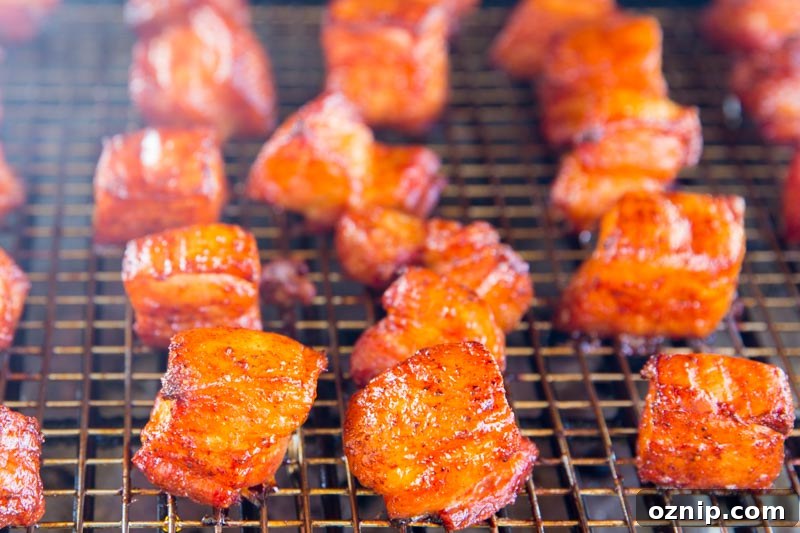
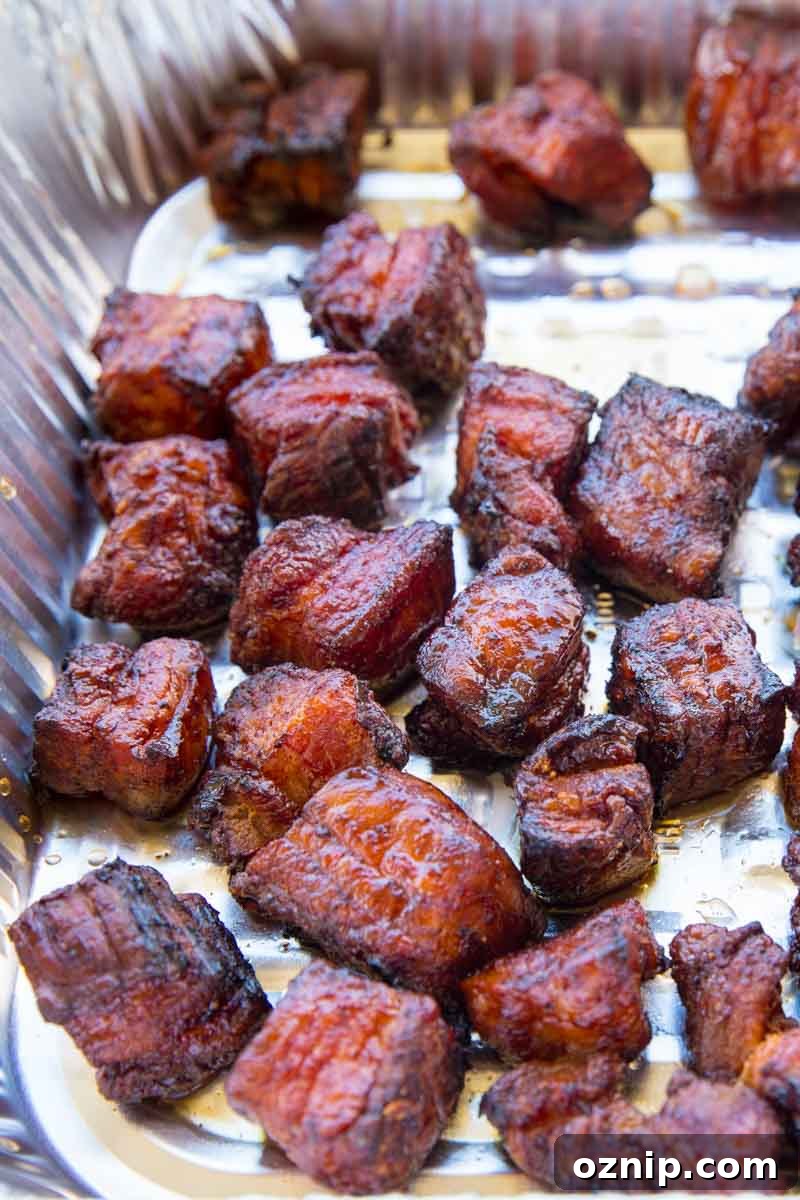
After about three hours you should see dark, jewel-toned cubes. They’ll be slightly firm yet jiggle when the rack is moved—signs the collagen is breaking down and the pieces are ready for the braise.
Braise the Pork Belly
When the pieces reach roughly 190°F internal, transfer them to an aluminum pan for a braise. This step finishes the rendering and produces that buttery, pull-apart texture.
The Flavor Bath
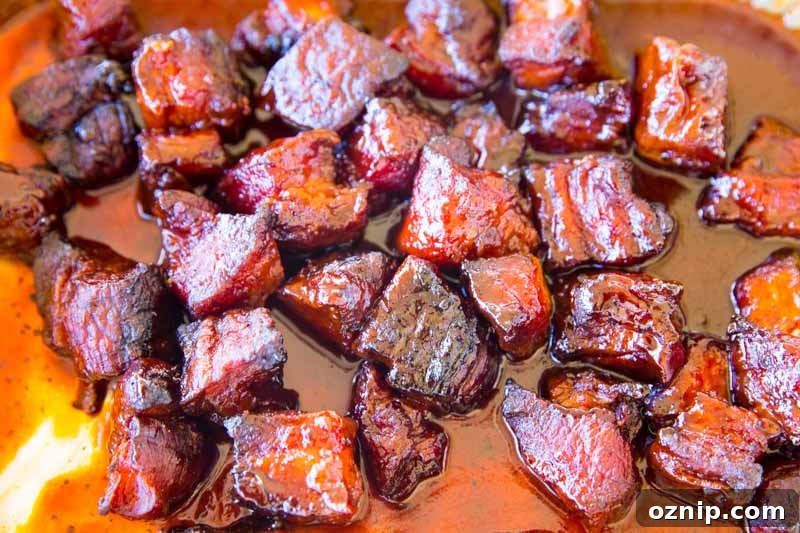
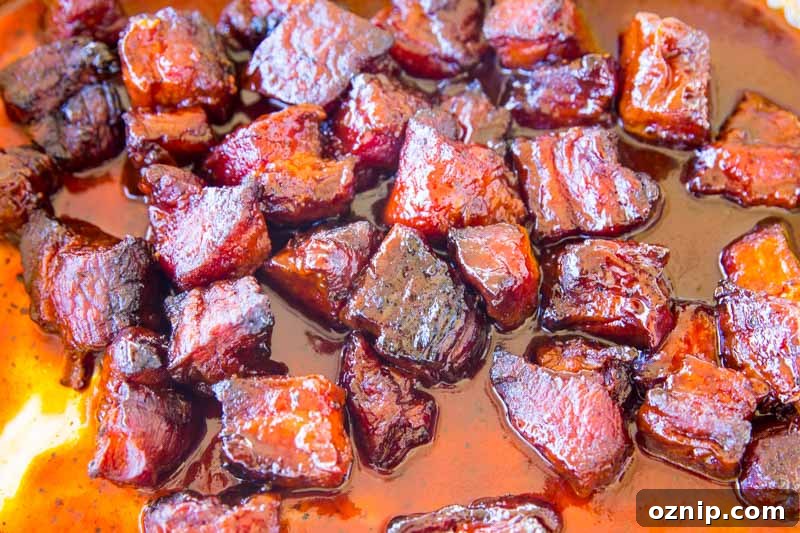
Coat the cubes with your favorite BBQ sauce, drizzle with honey for shine and sweetness, and add pats of unsalted butter. The butter emulsifies with the sauce and honey creating a glossy, clingy glaze.
Finish in the Smoker
Cover the pan tightly with foil and return to the smoker at 275°F for 1 to 1.5 hours. Target an internal temperature around 205–208°F so connective tissue fully dissolves and the texture becomes almost spreadable.
Sticky Finish
For a tackier glaze, remove foil for the last 10–15 minutes so the sauce reduces and clings to the meat like a second skin.
Finish the Pork Belly and Serve
When the glaze has thickened to a mahogany lacquer and the cubes are probe-tender, remove the pan. Let the burnt ends rest 5–10 minutes so the glaze sets and they cool enough to handle without losing their shine.
Serving Suggestions
- Appetizer: Serve with toothpicks—perfect for parties.
- Over Rice or Slaw: A bed of plain rice or tangy slaw balances the richness.
- Wine Pairing: A bold red with dark fruit notes pairs well, cutting through sweetness and fat.
The Result
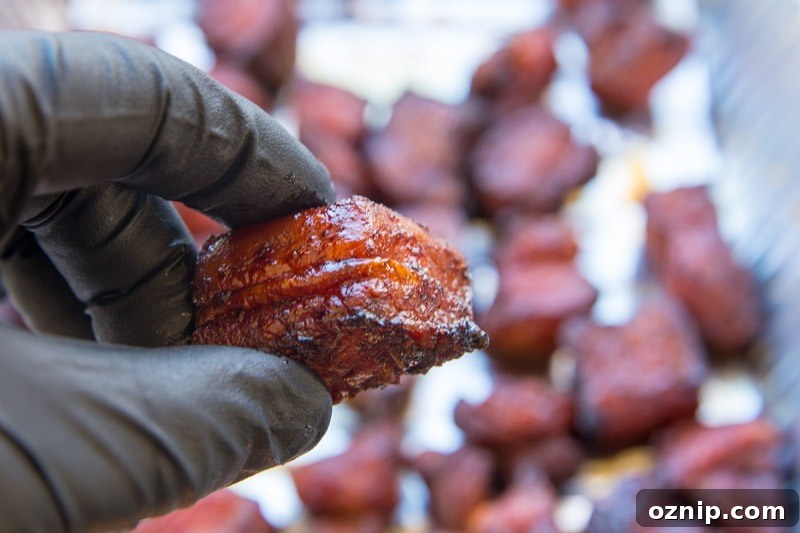
A simple slab of pork belly becomes an indulgent treat: crisped edges, smoky flavor, sticky-sweet glaze, and an interior that melts on the tongue. These burnt ends are time-consuming but low-effort, and the payoff is worth the patience.
This recipe requires several hours but uses straightforward techniques. Take your time and enjoy the process—the results will be exceptional.
Big Green Egg Pork Belly Burnt Ends
Ingredients
- 8–10 pounds pork belly, cleaned and cubed
- 1/2 cup yellow mustard
- 1 cup BBQ rub
- 2 cups BBQ sauce
- 1/2 cup honey
- 1 stick unsalted butter
- 2 cups apple juice (for spritz)
Instructions
- Trim the pork belly, removing any loose fat and silver skin.
- Cut the belly into 1″ cubes.
- Coat the cubes in yellow mustard, then toss thoroughly in the BBQ rub.
- Arrange the cubes on a wire rack and let them sit for about 20 minutes to tack up.
- Preheat the smoker to 275°F and use hickory chunks for smoke.
- Place the rack in the smoker and smoke for about 3 hours, spritzing with apple juice every hour, until the pieces reach about 190°F internal.
- Transfer the cubes to an aluminum pan, toss with BBQ sauce, drizzle honey, and add pats of butter.
- Cover the pan with foil and return to the smoker for 1–1.5 hours until internal temp reaches 205–208°F and the meat is probe-tender.
- Remove foil for the last 10–15 minutes if you want a tighter, tackier glaze.
- Let rest 5–10 minutes, then serve warm.