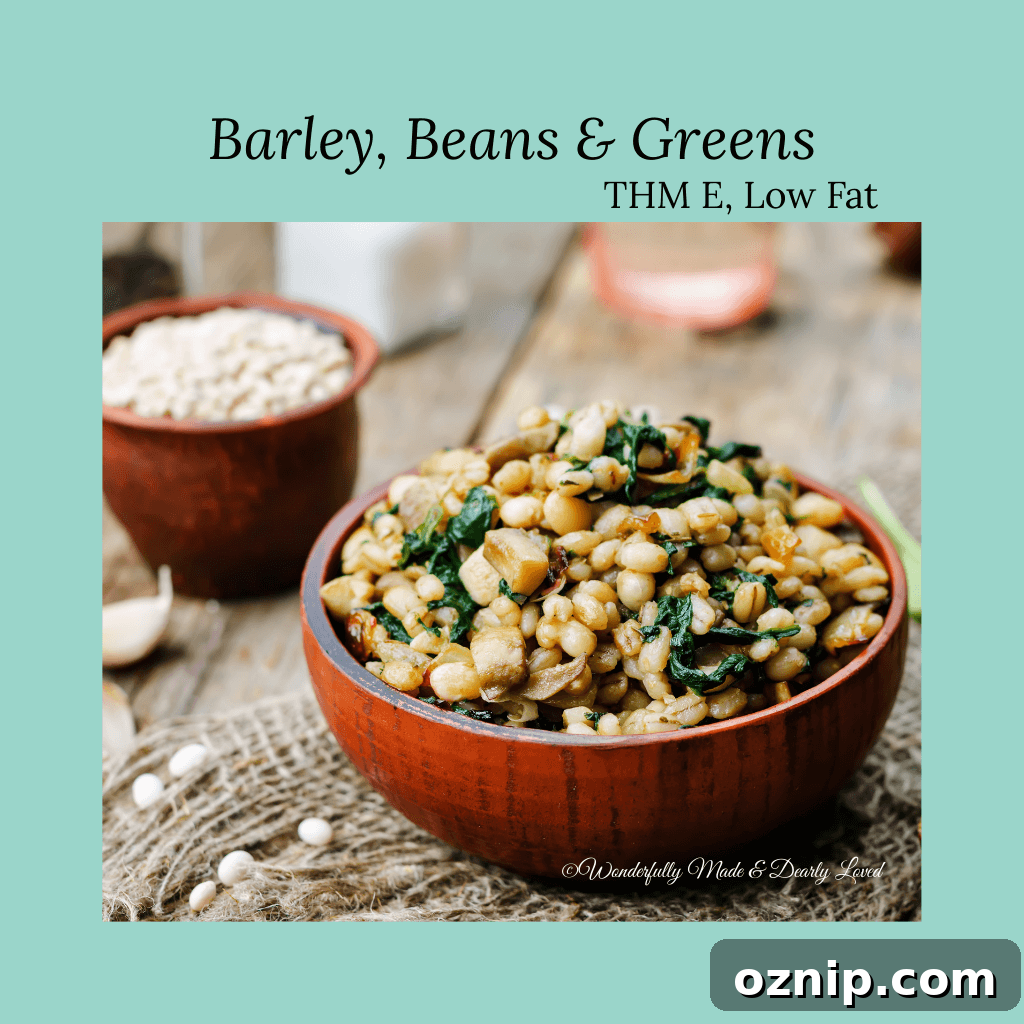
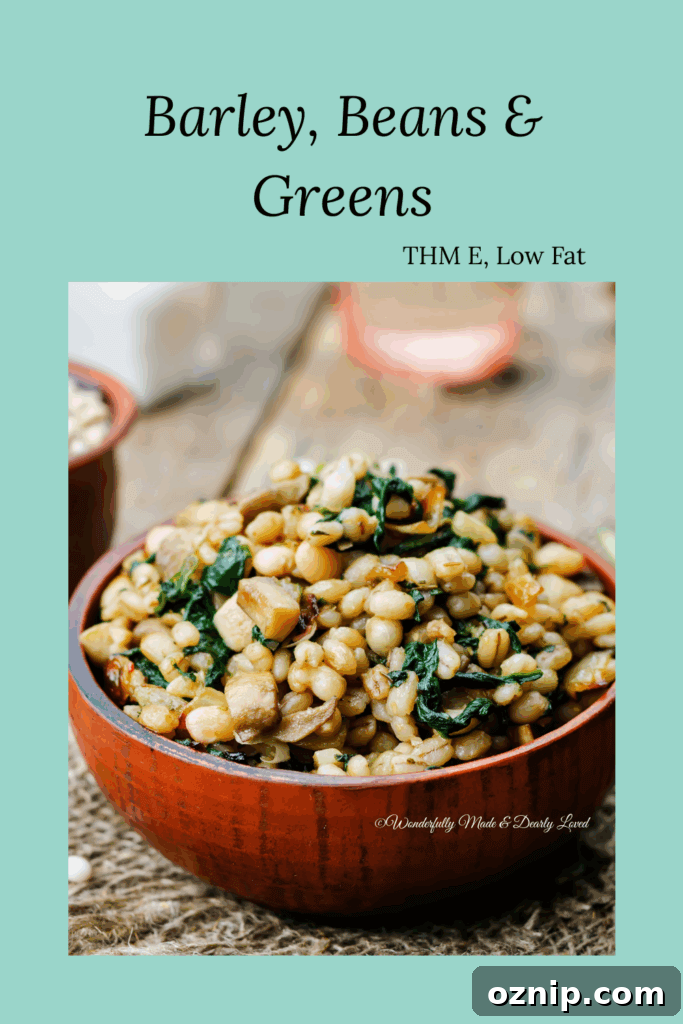
Barley, Beans and Greens is an excellent way to add variety, fiber, and balanced nutrients to your breakfast, lunch, or dinner bowls. This simple, versatile dish combines whole grains, legumes, and leafy greens to create a satisfying base that keeps you full and energized between meals.
We often enjoy a warm bowl of barley, beans, and greens for breakfast because it offers lasting energy and a pleasant mix of textures and flavors. It’s an ideal foundation for building a protein-forward meal by topping with egg whites, lean chicken, or a dollop of Greek yogurt.
Barley, Beans & Greens: A Smart, Nourishing Choice
This recipe aligns well with balanced meal plans that emphasize controlled fat portions, lean proteins, and generous vegetables. It was developed with practical everyday cooking in mind and can be adapted to fit different dietary approaches and available ingredients.
The recipe creator tends to keep fat portions moderate while prioritizing nutrient-dense ingredients, making this dish a workable choice for anyone aiming to eat more whole foods without excess calories.
How to Use Barley, Beans & Greens for Breakfast
For breakfast, try topping your bowl with about 1/2 cup of cooked egg whites for a lean, high-protein addition that helps sustain fullness until lunch. If you need more protein, add a small portion of diced chicken breast, a scoop of Greek yogurt, or another lean protein source.
A Versatile Recipe You Can Easily Tweak
This recipe adapts to whatever leafy greens you have on hand. Swap Swiss chard for spinach, kale, collard greens, or beet greens without changing the character of the dish. Bell peppers, cherry tomatoes, and fresh herbs can be adjusted or omitted based on preference and seasonality.
Health Benefits
Combining barley, beans, and greens creates a nutrient-packed meal that supports digestion, sustained energy, and overall well-being. Below is a concise look at the primary benefits of each main ingredient.
The Benefits of Barley
Barley is a nutritious grain rich in vitamins, minerals, and plant compounds. It contains both soluble and insoluble fiber, which supports healthy digestion, aids in maintaining steady blood sugar levels, and can help reduce hunger between meals. Using whole-grain barley, such as hulled barley, preserves more nutrients and fiber than more processed varieties.
Pearled Barley vs. Hulled Barley
Pearled barley has had the outer hull and some bran removed, which shortens cooking time and produces a softer texture. Hulled barley retains its bran and is considered a whole grain, offering greater fiber and nutrient density. If possible, consider soaking or sprouting barley before cooking to improve digestibility and nutrient availability.
The Benefits of Great Northern White Beans
Great Northern beans provide a solid source of plant-based protein and fiber, along with key nutrients like folate, iron, potassium, and magnesium. These elements support heart health, steady energy, and a healthy digestive system. Rinsing canned beans reduces excess sodium and prepares them for quick use in this recipe.
The Benefits of Swiss Chard
Swiss chard contributes vitamins A, C, and K plus minerals such as magnesium, potassium, and iron. These nutrients support immune function, bone health, and cardiovascular health. Swiss chard is also rich in antioxidants that help protect cells from oxidative stress. Substituting other leafy greens will preserve many of these benefits while offering slightly different vitamin and mineral profiles.
Barley, Beans and Greens is a nutrient-dense dish that makes a practical addition to a health-focused eating plan.
Cooking Barley, Beans and Greens in an Electric Pressure Cooker
Using an electric pressure cooker makes preparing whole-grain dishes quick and convenient. The recipe below is written for a 6-quart electric pressure cooker and uses simple steps to create a well-balanced side or main course.
Find More Recipes and Community Inspiration
Join like-minded home cooks and recipe sharers in online groups and communities to discover variations, tips for cooking in pressure cookers, and creative ways to use leftovers.
Barley, Beans & Greens Recipe
- 1 cup barley, pearled (soaked overnight)
- 2 1/2 cups low-sodium chicken broth
- 2 cups bell peppers, diced small
- 1/2 tsp garlic powder
- 1/2 tsp onion powder
- 1 tsp dried basil
- 1/4 tsp red pepper flakes
- 3 cups Swiss chard leaves, coarsely chopped
- 1 can Great Northern beans, rinsed and drained
- 1 cup cherry tomatoes, quartered (optional)
- 1/4 cup fresh basil leaves, thinly shredded (optional)
- Pour the chicken broth into the pressure cooker liner. Add soaked barley, garlic powder, onion powder, red pepper flakes, and dried basil.
- Place the liner in the cooker, seal the lid, and set to the Multigrain or equivalent setting. Reduce time to 18 minutes and allow for natural pressure release (NPR).
- While the barley cooks, dice the bell peppers and chop the Swiss chard leaves. Spinach or beet greens can be used as alternatives.
- After the pressure pin drops, open the cooker and check there is no residual pressure before removing the lid.
- Quickly stir in the rinsed beans, diced peppers, chopped greens, tomatoes (if using), and fresh basil (if using). Replace the lid and let the mixture sit on the warm setting for 5 minutes to wilt the greens.
- Serve warm alongside or topped with a lean protein such as grilled chicken or egg whites.
Follow the creator’s updates and community posts on social platforms to find more recipe variations, seasonal ideas, and tips for cooking whole grains and legumes efficiently.