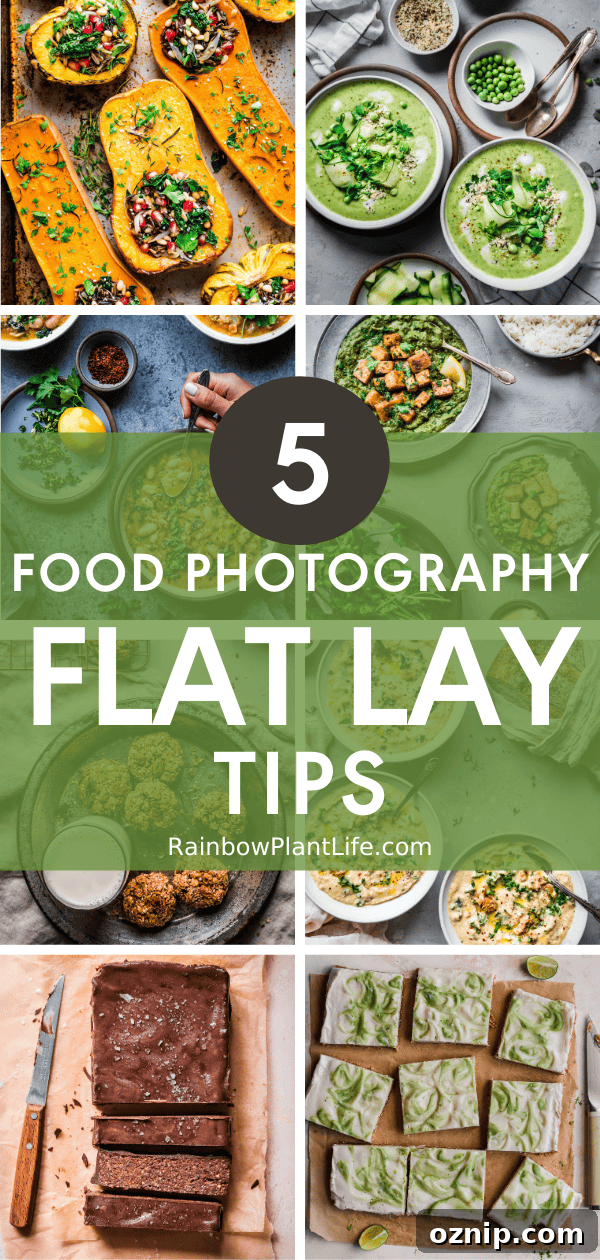
If you’ve spent time on Instagram over the past several years, you’ve likely seen how popular flat lay food photography has become: an overhead, bird’s-eye view of a meal or dish. While snapping an overhead photo of your avocado toast may seem simple, creating an engaging and professional-looking flat lay takes planning, styling, and careful attention to lighting.
Good lighting is essential, but this guide focuses on styling, props, and camera basics that make flat lays succeed. These practical tips will help you make more compelling images by choosing the right surfaces, using the proper gear, arranging props thoughtfully, and making smart camera choices.
If you’re beginning with food photography, build a foundation first—then expand into more textured or colorful surfaces as you gain confidence. Try the suggestions below and leave a comment if you found them useful.
-
First things first: choose the right surface
The surface or backdrop is especially important for flat lays because it occupies so much of the frame. Unlike three-quarter or straight-on shots—where the surface often appears only in the background or is blurred—the surface in a flat lay is a primary element that sets tone and mood.
A light, neutral surface paired with white dishes tends to create a bright, airy feel. A darker surface will make the scene moodier and more dramatic. So decide the vibe you want—rustic, summery, ethereal, moody—and pick a surface that supports that mood.
On the left, chocolate mousse feels romantic on a light pink surface; on the right it reads dark and moody on a bluish-gray surface. The surface helps define the scene’s mood.
Beginners will benefit from neutral-toned backgrounds—white, off-white, and gray—because they are versatile and don’t compete with the food. Neutral surfaces let the subject stand out and make it easier to practice composition and editing without distraction.
If you’re not ready to invest in professional surfaces (which can be costly), you can repurpose items at home. Good neutral options include:
- An old, worn baking tray or cookie sheet (great for dark, rustic looks)
- A wooden table or chair surface—if the grain and color don’t distract
- Unbleached parchment paper, slightly crumpled for texture
- Neutral linen towels or even plain pillowcases
Unbleached parchment paper, slightly wrinkled, makes a natural surface for baked goods.
As you grow more confident, try textured or colored backdrops to vary the mood and creativity of your shots.
2. Use a tripod
A tripod significantly improves flat lay photography. For overhead shots you’ll need either an overhead arm extension for your tripod or a tripod with a horizontal column or articulating arm to position the camera directly above the scene.
The benefits are numerous: a sturdy tripod minimizes camera shake so you can use slower shutter speeds and keep ISO low. You’ll achieve a consistent, true 90° angle for overhead shots and be able to replicate framing reliably between shots. With the camera secure, you can focus on styling and composition without juggling the camera.
Use a solid, dependable tripod—flimsy models can still allow movement when paired with heavier cameras. Also consider using a small level on top of the camera setup to ensure the camera is perfectly horizontal; even a basic hardware-store level works well.
Bonus: Tethering your camera to a computer or laptop lets you view images in real time in an editing program, so you can fine-tune composition, exposure, and cropping as you shoot. This often leads to faster improvements in the final result.
3. Add dynamism with creative prop styling
Flat lays can look flat—literally—because everything sits on one plane. Use prop styling to add depth and energy. Here are three effective strategies:
(a) Add props of varying heights and sizes. Include glasses, bowls, or stands so elements sit at different levels. You can elevate a bowl on a small ramekin or place one tart on a wire rack to create variation and guide the viewer’s eye.
Stacking and subtle elevation create visual intrigue by introducing multiple heights into the composition.
(b) Arrange similar props in opposing directions. Pointing utensils or linear elements in different directions creates tension and movement. Opposing forks, spoons angled inward and outward, or staggered handles provide visual interest and hold attention.
Utensils pointing in different directions create multiple focal points and visual intrigue.
(c) Intentionally crop props so they’re not fully in frame. You don’t need to show every object completely. Leaving parts of plates, glasses, or linens outside the frame suggests a larger scene and invites curiosity, making images feel more natural and dynamic.
Partial elements—like a cropped glass or glimpses of bowls—create a sense of discovery and focus attention on the hero element.
4. Choose aperture intentionally
A common issue beginners face is inconsistent sharpness. That can come from camera shake, but it often comes from using too wide an aperture. Aperture controls depth of field: a wide aperture (low f-number, e.g., f/2.8) creates shallow depth of field, while a narrower aperture (higher f-number) increases the area that remains in focus.
Flat lays typically benefit from more of the frame being in focus because the scene is on one plane. I generally recommend mid-range apertures for most flat lays—somewhere between f/5 and f/8—though many photographers use f/11 or higher for editorial work or when every detail must be sharp. Experiment with a range of apertures (for example f/2.8, f/4, f/6.3, f/8) to see what best suits your style and subject.
If your subject sits significantly above the surface—such as a cake on a tall stand—wider apertures can create a pleasing separation between elevated items and the background elements, producing a soft, airy feel. But if you want everything on the surface to be legible, choose a narrower aperture.
An elevated bowl creates distance from the surface, which can produce a softer background when shot with a wider aperture (example shot at f/4.5).
5. Build interest with layers
Layering ingredients, props, and even human elements gives your flat lays depth and richness. Here are three simple ways to layer effectively:
Use ingredients as layers:
- Sprinkle flaky sea salt over a cookie for texture
- Add chopped herbs on top of a finished dish
- Brush a thin layer of oil and sprinkle coarse sugar on a glossy pie crust
Sprinkling salt or pepper before baking introduces textural interest to the crust.
Use props to layer:
- Stack bowls slightly on top of each other
- Place a linen napkin beneath a plate
- Set one muffin on a piece of parchment while others sit directly on the surface
Stacking plates, tucking napkins, and elevating one bowl create layered interest throughout the frame.
Include human elements: Placing a hand in the frame—stirring, holding a glass, or reaching for a plate—adds narrative and a sense of presence. Human touches create relatability and add another visual layer.
If you found these tips on creating the perfect flat lay helpful, please leave a comment below.