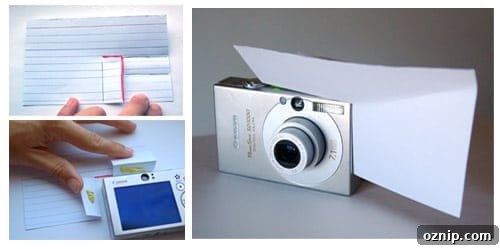
Tired of your indoor photos being washed out because of the flash on your camera? Use this photography hack to create a simple flash diffuser using an index card!

I’m not a professional photographer, but I love experimenting to get better pictures of my kids. I recently bought my first DSLR after using a Canon Powershot for four years. Switching cameras has been fun—and it’s also made me appreciate simple tricks that improve everyday photos.
I learned one small tip that I wish I’d known years ago: you can diffuse your camera’s built-in flash with nothing more than a white index card or a small piece of cardstock.

How to make your own flash diffuser!
I generally avoid using flash because direct light often looks harsh and washes out skin tones. But on cloudy days or in dim rooms, a little controlled flash can make a huge difference. A simple diffuser softens and spreads the light so your subject is illuminated without the flat, blown-out look of direct flash.
What you need: a white index card or small piece of white cardstock, a narrow strip of tape or a small rubber band, and a few seconds to set it up. The idea is to create a small reflector that sits in front of or above the flash head and scatters the light instead of blasting it straight at your subject.
via
How I do it (simple method):
- Cut or trim the index card so it fits comfortably in front of your camera’s flash without blocking essential sensors or the lens.
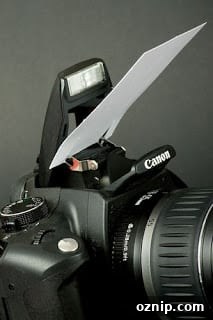
- Fold a small tab or leave a narrow strip to attach the card to the camera—use a piece of tape, a small rubber band, or tuck the tab into the camera’s hotshoe if your flash retracts or is protected.
- Angle the card slightly upward and forward so the flash hits the card first and the light reflects toward your subject. This creates softer, more even illumination.
- Take a few test shots and adjust the angle or distance of the card until the exposure and shadows look natural. You may need to raise ISO a little or open the aperture if the diffuser reduces overall light.
via
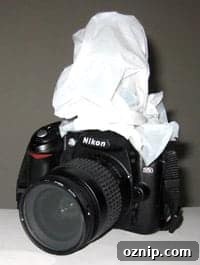
This technique is forgiving and inexpensive. Alternatives that work just as well include a small square of white tissue, a piece of a grocery bag, or any thin, white translucent paper. The goal is the same: diffuse and redirect the light so it wraps around your subject instead of creating a hard, direct beam.
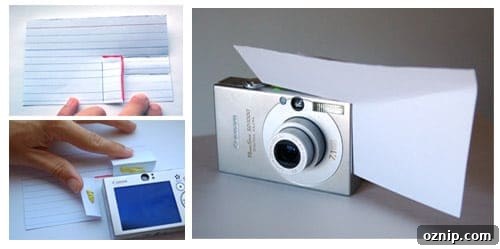
via
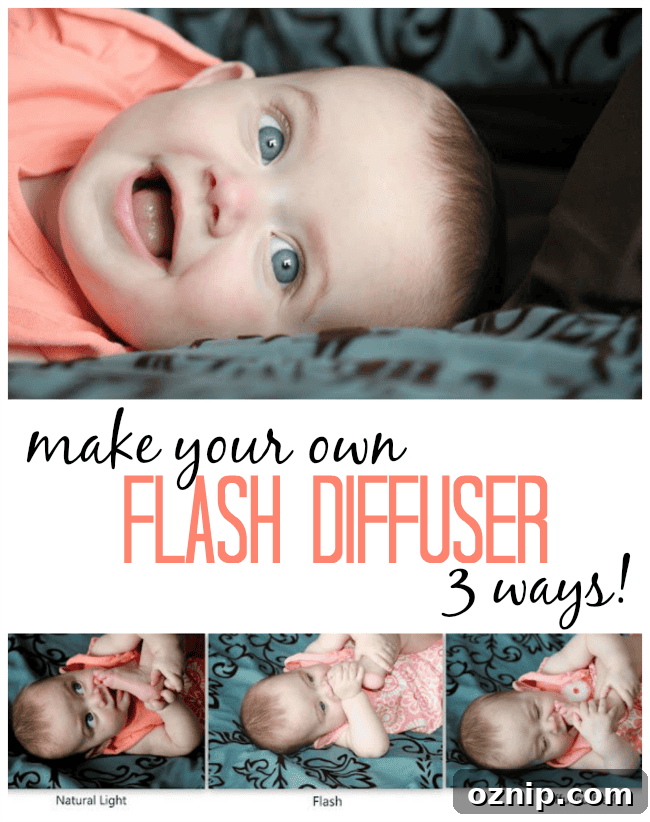
My test photos showed a clear difference: direct flash produced a washed-out, flat image, while the diffused flash gave softer contrast and more pleasing skin tones. The top image in this post was taken with a quick diffuser in place and turned out much more natural than the raw flash version.
Tips and cautions:
- Make sure the card doesn’t block autofocus assist lamps or sensors on your camera.
- If you have an external flash, consider bouncing the flash off a wall or ceiling for an even gentler light when possible.
- Use white or neutral-colored material. Colored paper will tint the light and affect skin tones.
- Keep testing—small angle changes and distances make a noticeable difference in how shadows fall.
This simple hack is ideal for casual family photography, newborn and toddler portraits, and snapshots where natural light is limited. It’s a low-cost way to get more flattering indoor photos without investing in expensive gear or learning advanced lighting techniques.
You might also like…

Homemade Cleaning Hacks